Have you ever looked at a Flamingo and wondered – Why are Flamingos pink? The answer lies in what they eat.
Share this article on
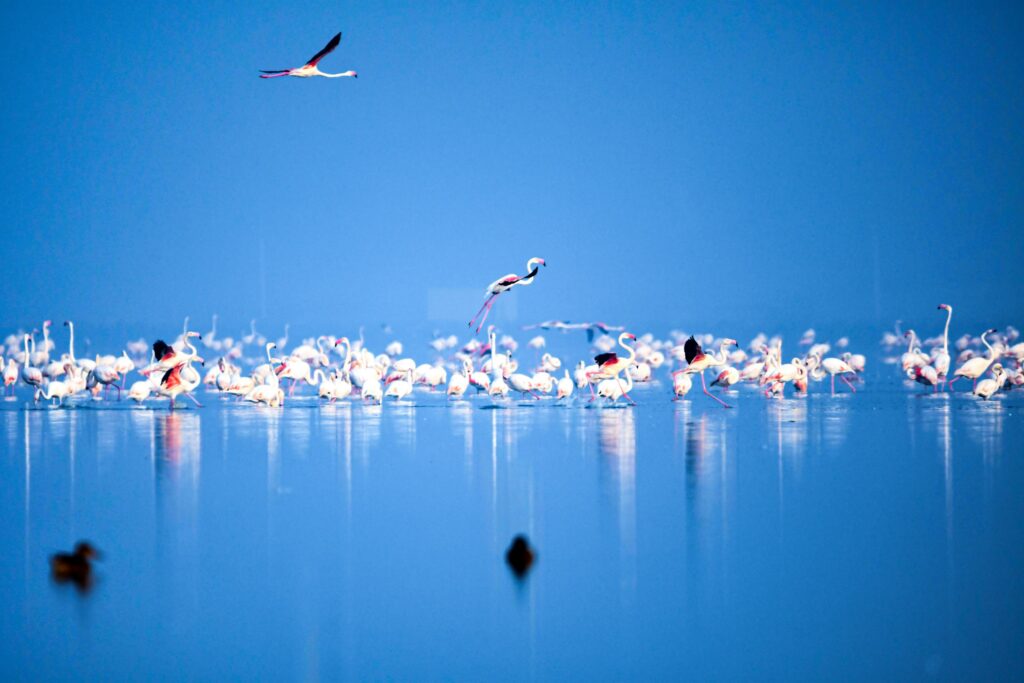
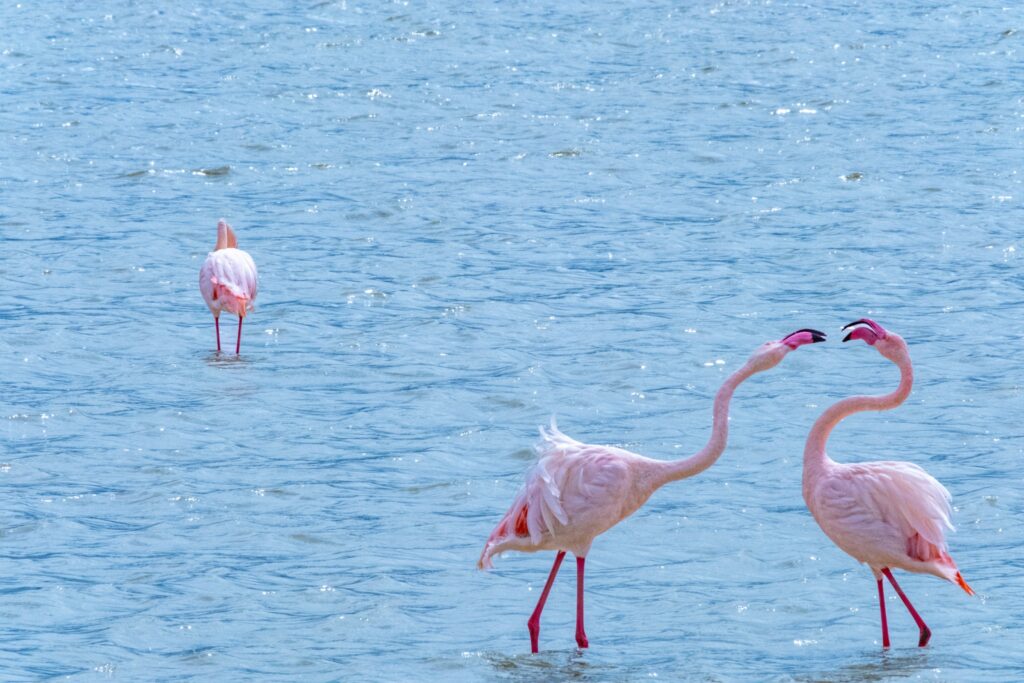
A “flamboyance” – that is the word for a group of Flamingos. And why not? A large pink sea of Flamingos on blue glistening waters is indeed a spectacular sight to behold.
Flamingos are large wading birds with bright reddish or pink plumage and long pink legs. The name flamingo comes from the Spanish or Portuguese word flamengo which means “flame-coloured”.
Flamingos migrate through hundreds of kilometers to spend their winters near the warmer tropics when the lakes freeze in their homeland. Bird enthusiasts, scientists and photographers from all across the world flock to these wintering sites for witnessing this majestic pink sensation. The shallow blue waters of the wetlands get shrouded in a veil of bright pink – a vision rare to find and difficult to forget.
The pink colour of the Flamingo is an intriguing phenomenon. Many might wonder – why are Flamingos pink? Why not blue or green or yellow or any other colour for the matter? And why do Flamingos change colour multiple times during their lifetime?
The Flamingo pink? It is not genetic but develops over time as the bird ages and depends heavily on its diet. The proverb “you are what you eat” probably cannot achieve a truer expression than it already finds in a Flamingo.
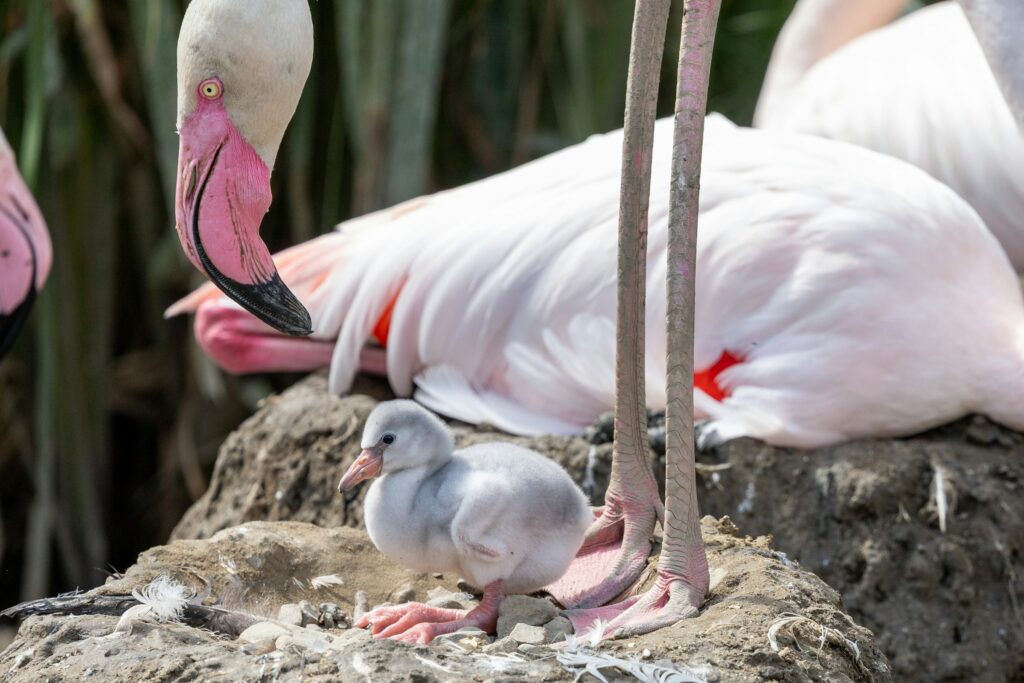
When Flamingo chicks are born, they are white or greyish in colour. As they age, they gradually develop the characteristic pink colour found in the adults. Flamingos change their colour even as an adult, moving from pink to white and back to pink throughout their lives.
Why are Flamingos pink? The colour hides in what they eat!
As already said before, the proverb “You are what you eat” finds its best expression in a Flamingo. The pink colour of the Flamingo comes from red carotenoid pigments in the food they eat.
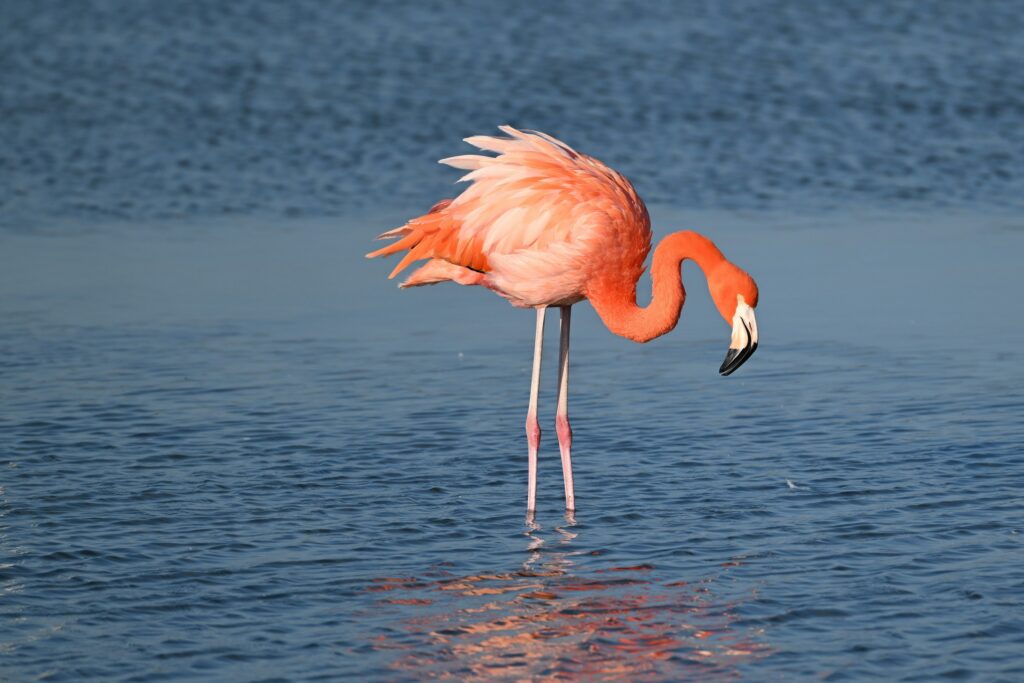
Flamingos are filter feeders. They stomp on the mud to stir their food up into a suspension then bob their heads in the water to create small tornado-like vortices. They use their curved beaks to collect water while moving their tongue in and out. The quick motion of the thick tongue acts as a pump, stirring the contents to create eddies. Their serrated beaks serve as strainers filtering out algae and small invertebrates especially crustaceans like the brine shrimp from the water.
The blue-green algae that comprises the main diet of Flamingos are rich in beta-carotene. Brine shrimps that the Flamingos feed on are also heavy on carotenoids like canthaxanthin and echinenone. All these carotenoid pigments in their food get metabolized and is absorbed by fats in the liver. These coloured fat molecules containing mostly the carotenoids canthaxanthin and astaxanthin are further transported to the skin and feathers where they show up as red colour.
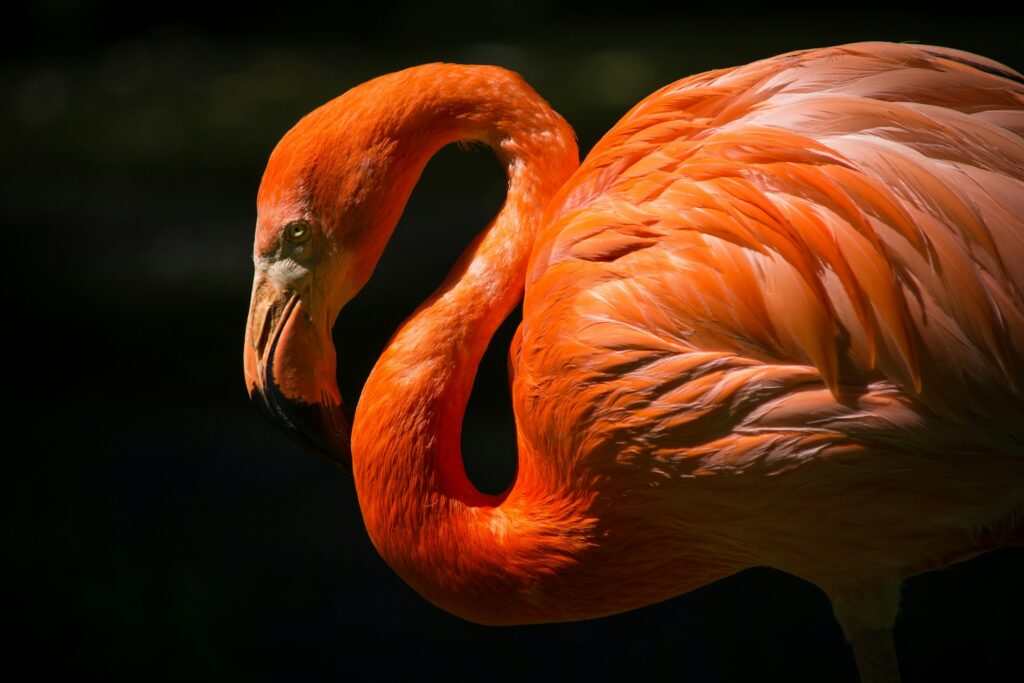
Flamingo pink is not just in the feathers!
The skin and feathers are not the only body parts of the Flamingo that turn red with carotenoids. Mucuous membranes, egg yolk and body fats are also coloured red.
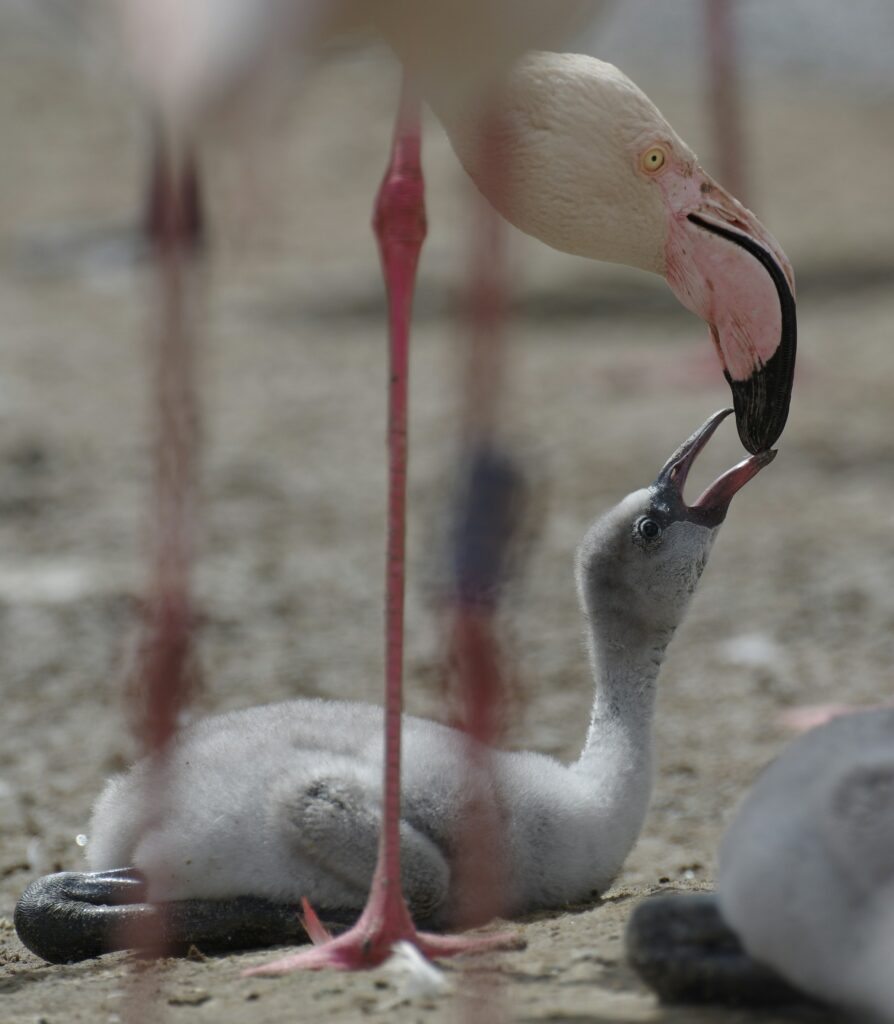
The crop milk produced by both the male and the female Flamingos are rich in carotenoids and bright red in colour. Like humans, the hormone prolactin induces crop milk production. But here’s the catch – crop milk production occurs in both parents.
Flamingo chicks are born with white downy feathers. Before the chicks are able to feed themselves their parents feed them with this nutrient rich crop milk exposing them to their first carotenoids which gradually start to appear as pink colour on their feathers.
Flamingos use “makeup” to get that Flamingo Pink shade
Yes, you read that right. Flamingos do use “makeup” to get the right kind of Flamingo Pink.
The uropygial gland secretes an oily substance called preen oil that birds use to preen their feathers for cleaning and turning them waterproof. Interestingly, in Flamingos the uropygial gland makes an orange-red oil. Flamingos frequently collect this reddish oil from the gland by rubbing their head against it and apply them to the sides of their neck, breast and feathers giving these body parts an even brighter red colouration. The act is similar to applying makeup and serves to enhance the pink colour in the Flamingo.
Carotenoid pigments often bleach in sunlight thus constant reapplication helps the Flamingo to stay pink even under the hot sun.
Why the race to stay pink?
Flamingos feed in inhospitable environments – water so alkaline and high in salt concentrations that it burns the skin. Yet in this caustic waters hides an expensive food resource – blue-green algae and crustaceans. The blue-green algae grows in warm, nutrient rich, stagnant or slow-flowing waters heavy with salt runoff. Along with them grows brine shrimps and other crustaceans that feed on these algae, all rich with carotenoids.
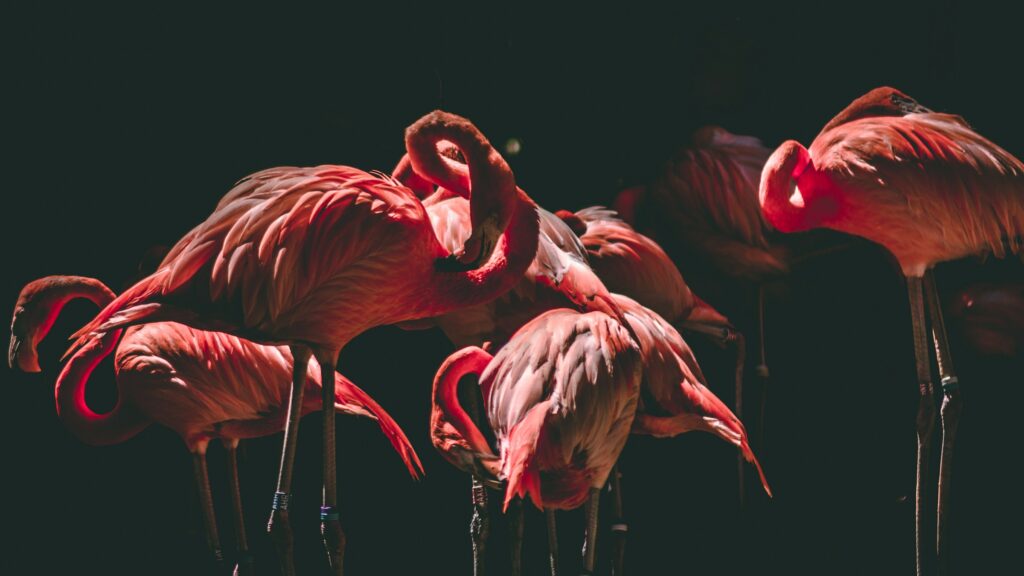
You might be wondering why go to such extents to stay pink when in reality the feathers are coloured something different. Well, the brighter the shade of pink the higher a Flamingo score as a mate. Deeper and more intense shades of pink indicate that the individual is an excellent forager, is healthy and hence more valuable as a mate. The pinkest of the Flamingos, both male and female, are most successful at wooing the best partners. The more colourful pairs start breeding earlier, get early access to the best breeding sites and have greater success at rearing healthy offspring.
Flamingos can change the shade of their ‘Flamingo Pink’
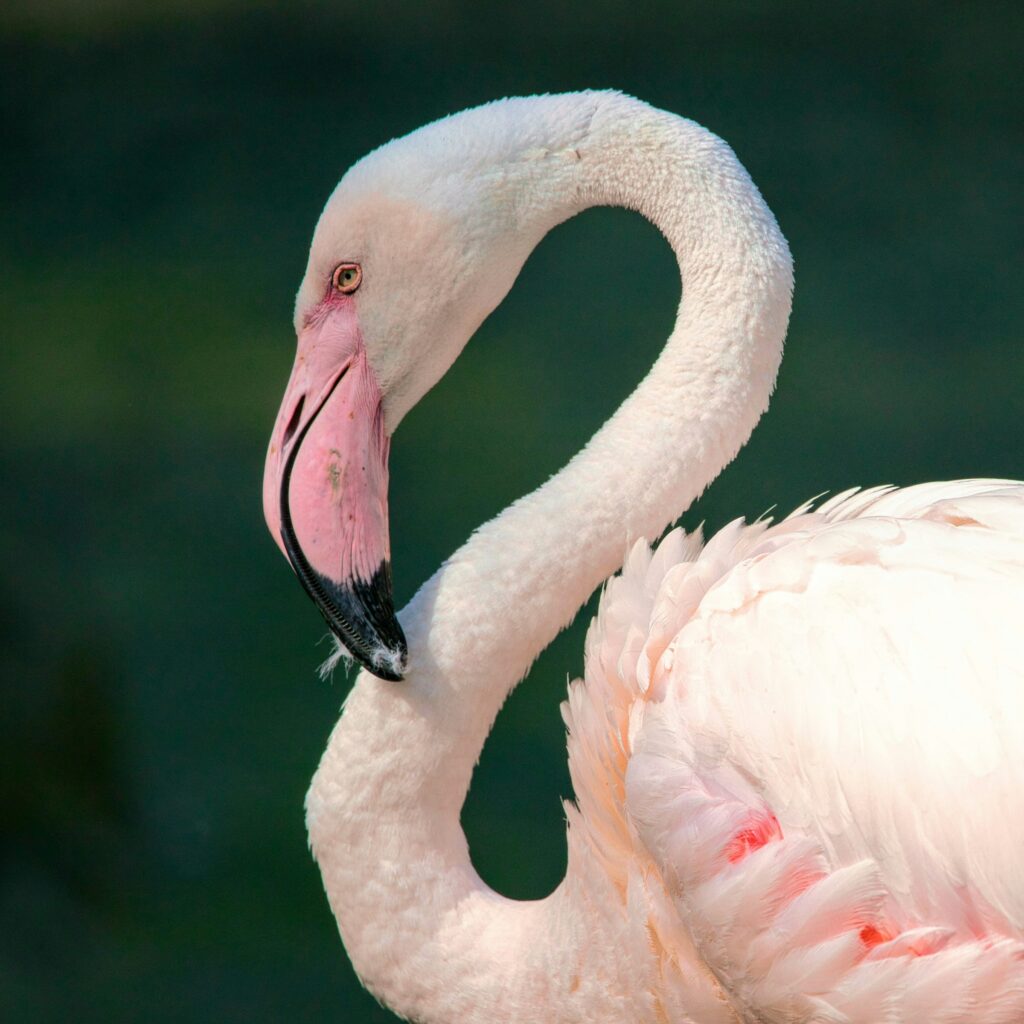
Since the pink colour of the Flamingo is not genetic but derived from their food, dietary changes influence the intensity of the pink colour on their feathers.
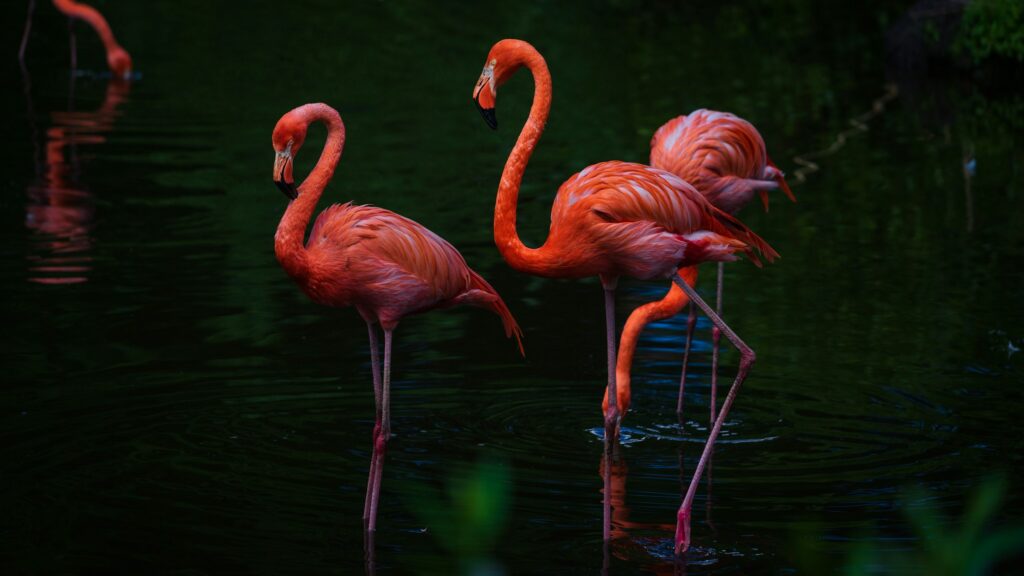
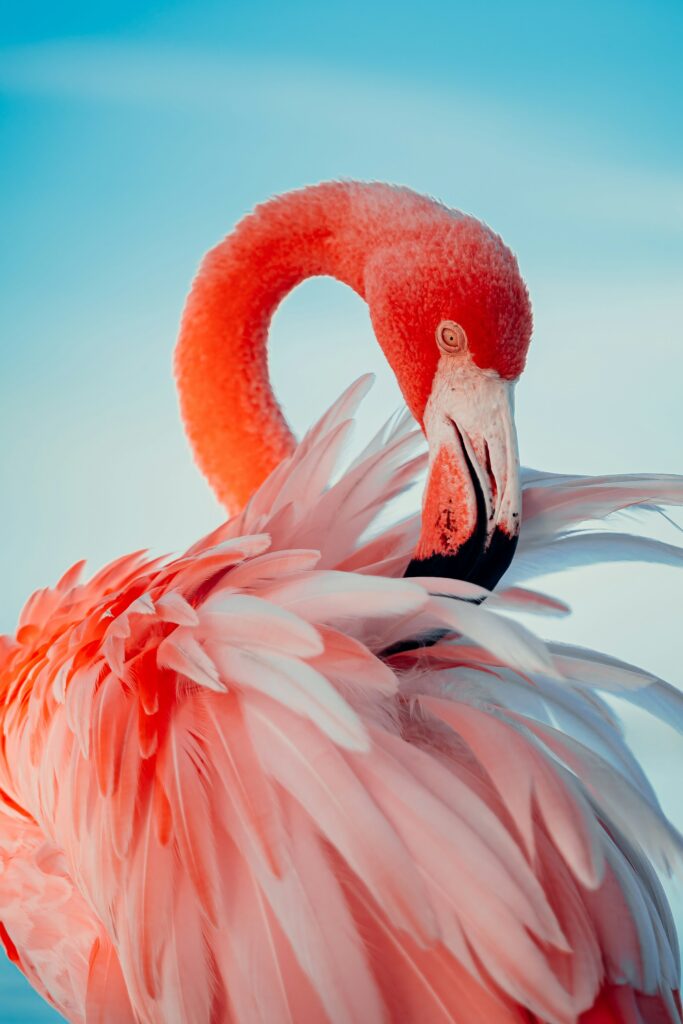
Different regions offer different types of habitats. Even the habitat characteristics change seasonally. Thus, the food source do not stay the same always and so does the shade of the Flamingo feathers. Flamingo species that inhabit the Caribbean take a darker shade of pink almost approaching red or a deep orange. This happens because the Caribbean population mostly feed on algae that have high concentrations of beta-carotenes. And, when beta-carotenes are consumed in high amounts the colour takes a deeper and darker shade of pink. Whereas, those Flamingo species that are found in the drier regions, like Lake Nakuru in Kenya, are a lighter shade of pink as the food is comparatively lower in carotenoids.
Flamingos do not stay the pink all their lives. The same Flamingo can change its colour in different phases of its life. If enough carotenoids are not obtained through food, white feathers appear after the pink feathers moult. When Flamingos rear their offspring, they lose their pink colour and turn white. It happens because most of the carotenoids in their food gets diverted to make the nutrient heavy bright red crop milk which is fed to the chicks. It is also a way to signal to other members that they are exhausted and not ready to mate again anytime soon.
Non-pink Flamingos, anyone?
There is total six different species of Flamingos in the world. They are – American Flamingo (Phoenicopterus ruber), Greater Flamingo (Phoenicopterus roseus), Chilean Flamingo (Phoenicopterus chilensis), Lesser Flamingo (Phoeniconaias minor), Andean Flamingo (Phoenicoparrus andinus), and Puna or James Flamingo (Phoenicoparrus jamesi).
Each one of them are a different shade of pink. The pink colouration even varies between different populations of the same species depending on its habitat. However, there has been very few reports of non-pink Flamingos appearing anywhere in the world. Once, during the April of year 2015, a black Greater Flamingo was observed around the eastern Mediterranean region in Cyprus and Israel. Carotenoid pigments in the plumage were replaced by dark melanin pigments because a genetic mutation blocked the carotenoid pigment deposition pathway in the individual.
Albinism can be found, though rare, which results in white Flamingos.
Yellowish Greater Flamingos are often observed in some wetlands of southern Spain. The colour is said to arise from iron oxide deposits found in the wetlands of the region.
The pink colour of the Flamingo is a curious phenomenon in itself. Another interesting question about Flamingos revolves around how they stand at ease for hours on just one leg. Find that out in the next article!
LATEST ARTICLES
- Microchimerism in Women: How Pregnancy Changes a Woman’s Body?

- Why do we like symmetrical faces?

- Mycoheterotrophic Plants – The Hackers of the Wood Wide Web
- Wood Wide Web: The Phenomenon, The Myth, The Legend

- Trees Never Really Die: Surrounding Trees Keep Tree Stumps Alive