
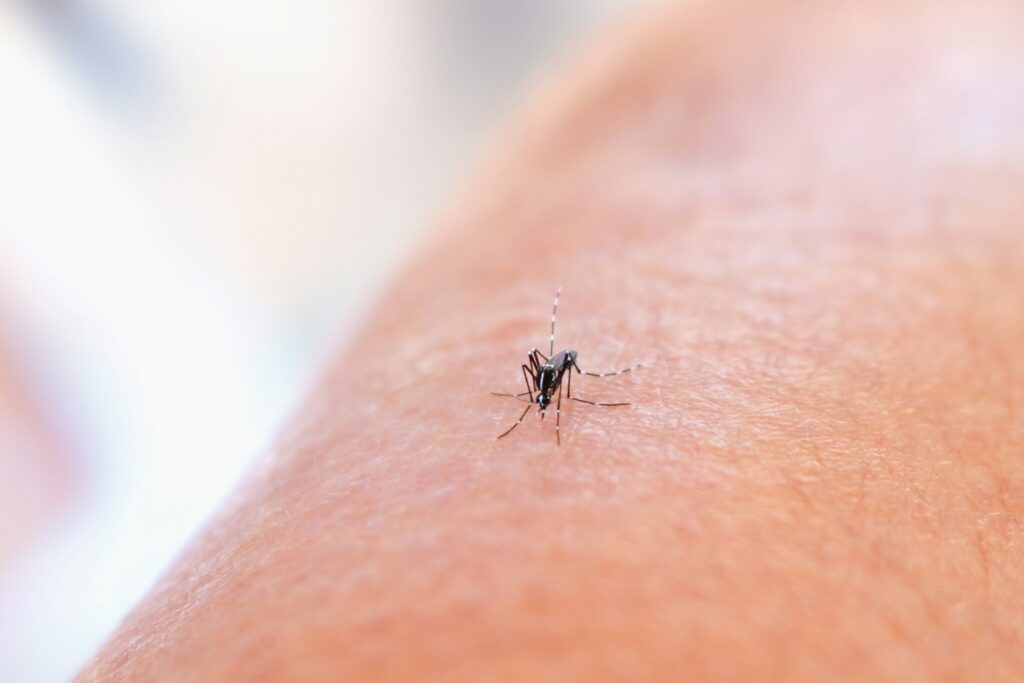
Mosquitoes bite some people more and it is because of chemical attractants released by their bodies.
Have you ever been in a situation where you are sharing the same space with other people, wearing the same type of clothing as the rest, sitting under the same light conditions and air flow, probably even eating the same food yet you happen to be the only person getting bothered by the mosquitoes? Or maybe everyone is getting a share of the same bothersome mozzie bites you suffer but your share somehow appears to be larger than the rest. And this type of situation is not random but repeats almost every time, at every place.
Well, you are not hallucinating. Some people are indeed more attractive to mosquitoes than others. As a result of which they are also bitten more by mosquitoes and you may be just one of them.
So, what makes some people attractive to mosquitoes and others not?
Research over the years has found some factors that influence human attractiveness to mosquitoes.
Let’s discuss them one by one to understand why mosquitoes bite some people more.
How mosquitoes locate humans?
Mosquitoes use heat, humidity, colour, CO2, lactic acid and other volatile organic compounds like acetone and ammonia to locate humans. The combination of different chemical compounds released by the human body serve as a ‘kairomone’ or chemical signal for mosquitoes which they read as a coded message.
Not all humans release the same attractants or release them in the same intensity. This variation is the leading reason behind differences in individual attractiveness to mosquitoes.
Some of this variation stem from internal factors like metabolic rate, genetics, skin and gut microbiota while others are dependent on external factors like diet, lifestyle and location. Even pregnancy is known to influence mosquito attractiveness of individuals.
Higher rates of mosquito bites increase the risk of contracting mosquito borne diseases. Mosquito attractive people are the first line to fall before a communicable mosquito borne disease spread in the entire human population. It is interesting to know that previous infection with Plasmodium, the malarial parasite, can increase attractiveness of infected individuals to Anopheles mosquitoes, the main vector of malaria.
Carbon dioxide calling!
The amount of CO2 a person releases depends on their metabolic rate, body mass, physical activity and respiration rate. The higher the amount of CO2 released by a person the higher their ability to attract mosquito bites.
The carbon dioxide call is real! In fact CO2 is the main molecule that induces flight takeoff in mosquitoes. It also acts as a signal to sustain flight over long distances in their journey to find a blood meal.
Lactic acid release by skin attracts mosquitoes
Humans release more L-lactic acid than any other vertebrates. High lactic acid levels in itself is used as a cue by mosquitoes to differentiate humans from other animals. On top of that the amount of lactic acid released by humans vary from person to person. Many factors like the distribution and density of sweat glands (eccrine glands), pH of the skin and metabolic rates influence the amount of lactic acid produced. Someone who releases more lactic acid is deemed as highly attractive to mosquitoes.
The scent of attraction
There are over 300 volatile organic compounds released by humans, known so far, that combine to make the unique scent of a human. Of them 270 are speculated to act as mosquito attractants.
Interestingly the human scent varies from person to person. For example, the ketone sulcatone which has a slightly citrus odour is a metabolic byproduct released by the human skin. The quantity secreted can influence the role it plays in mosquito attraction or repulsion. People who secrete more sulcatone are less attractive to mosquitoes than those who secrete less of the molecule.
The skin microbiota plays an important role in the production of secondary volatile compounds. They are nothing other than the metabolic byproducts of microbial action on our skin secretions. The microbial community residing on our skin act on the primary volatile compounds secreted from our sebaceous and sweat glands. This action modifies the scent profile of an individual. Many skin bacterial strains metabolize the skin secretions into substances that act as mosquito attractants. Thus, the microbes living on your skin can decide whether mosquitoes will bite you more or avoid you.
Diseases and disorders that modify the skin microbial community can alter the smell profile of the person and hence influence mosquito attraction.
Pregnancy makes women vulnerable to more mosquito nuisance
Pregnancy makes women prone to mosquito bites and infection from mosquito-borne diseases. Pregnant women release higher CO2 and heat due to higher metabolic rates which serve to attract mosquitoes.
The change in metabolism observed during pregnancy also influences mosquito attraction by means of volatile skin secretions. Apart from a nuisance in itself increased mosquito bites can have serious implications in case of gestational malaria and congenital Zika syndrome.
Your diet can make you attractive to mosquitoes
Our diet influences what we smell like. Even monozygotic twins, who has the same genetic constitution, smell different when they eat different. After all, we are what we eat! And smell decides how the mosquitoes around us behave.
Consuming alcohol and bananas can make us appear more attractive to mosquitoes. After digestion the metabolic byproducts are released through our skin and breath. Our gut and skin microbiota has an important role to play here. Certain foods are metabolized into substances that can indeed make us prone to mosquito bites.
Our genetics make the final call
Our genetics is the ultimate deciding factor behind everything that goes on in our bodies. Our genetic make up decides what proteins we produce, or how a certain substance will be dealt with once they enter our body, our immune response to pathogens, our metabolic rate, our body odour or even our gender and much more.
Gender can influence susceptibility to mosquito bites. In a 2017 survey an interesting data emerged – women perceived themselves as more attractive to mosquitoes!
A single nucleotide change in the ABCC11 gene can alter human axillary odour or armpit smell by influencing sweat production.
Human Leukocyte Antigen (HLA) alleles affect human body odour by altering the quantity and production of various volatile organic compounds. Body odour, an outcome of genetics, play a crucial role in attracting or repelling mosquitoes as we know now.
Unlike the popular opinion, human blood groups do not explain variations seen in mosquito attractiveness among people.
Malaria invites more malaria
As shocking as it may sound but it is true. Infection with Plasmodium, the malarial parasite increases attractiveness of the infected individual to mosquitoes. The parasite manipulates host physiology to change the odour profile imparting a characteristic ‘malaria smell’ to the person. The characteristic odour acts as a signal to mosquitoes that bite the infected individual and transmit the disease.
Compounds like heptanal, octanal, nonalal and other aldehydes and thioethers are released in higher quantities in malaria infected people informing the mosquito vector about the infection.
How to stay safe from mosquitoes?
Being a mosquito attractive person can come with a heavy price. Apart from the pain and itch of the bite there lies the danger of falling ill from mosquito-borne diseases. But certain behaviour and lifestyle changes can go a long way in protecting us from mosquito bites.
Start with prevention first. Stay away from known mosquito infested places. Mosquito control measures that target anthropophilic mosquito populations can protect people from mosquito nuisance.
Always use mosquito nets while sleeping for mosquitoes are most active after dusk continuing their night shift till after midnight. Wear full sleeves clothing, long trousers, socks and apply mosquito repellent creams or sprays while visiting outdoors.
Most importantly target the breeding grounds of mosquitoes to control their population. Although mosquitoes are associated with bogs and marshy lands many mosquitoes lay eggs in clean standing water stored in artificial containers. Clear out flower vases and other water storage containers regularly. Make sure that rainwater does not collect and stagnate in one place for too long. You can also employ mosquito eating fish varieties in your pond if you are looking for biological mosquito control.