
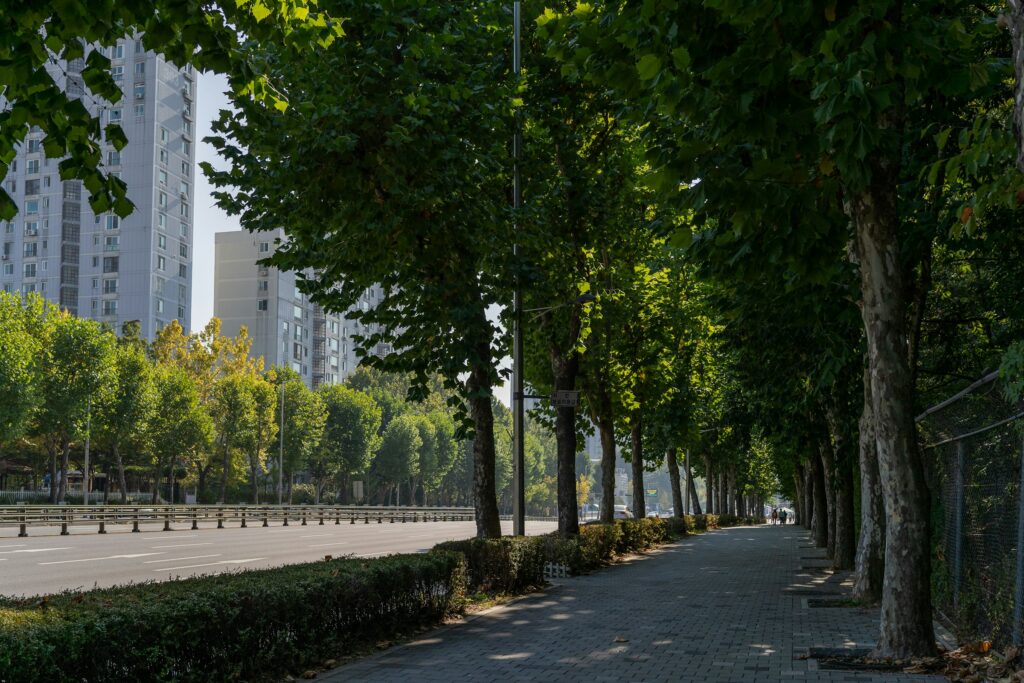
Trees can nearly halve urban heating, says study.
Global temperatures are rising and so is the toll of heat-related deaths and illnesses, mostly in the tropical belt. The impact is more intense in city areas due to the urban heat island effect. Urban areas record much higher temperatures than surrounding rural areas and the layout of a city is mostly to be blamed.
Industries, buildings, roadways and vehicles concentrate on a small land area in a city. Concrete, building materials and black asphalt all absorb radiation during the day and release the accumulated energy as heat at night. Air conditioning cools the interior space of the buildings but release the heat outside raising outdoor air temperatures. Vehicles and industries dump carbon dioxide and other greenhouse gases into the air above the city contributing to the local urban heating effect tremendously. The United Nations Framework Convention on Climate Change says that cities breathe out 70% of global CO2 emissions.
Besides tackling global warming, rising temperatures in cities needs to be addressed immediately. Urban Heat Island effect together with rising global temperatures are setting a deadly urban heat trap. If the problem of urban heating is not handled prudently, it will soon get out of hand.
Increasing daytime heat, reduced cooling at night and increasing air pollutants are already wreaking havoc on the health of city inhabitants. Health issues like heat cramps, exhaustion, difficulty breathing, heat stroke and other heat related mortality are on the rise globally. There were 489,000 recorded heat related deaths globally each year from 2000 – 2019, with 45% deaths occurring in Asia and 36% in Europe. The real numbers could be even more as many deaths go unreported. The situation is worse in poor and developing countries that are situated in heat prone areas of the globe.
Trees to the rescue
Increasing urban tree cover may be a feasible and effective way to tackle urban heating. The cooling effect of trees are known to all. Those of us that live in hot climates have at least once in our lives sought refuge under a tree on a hot summer’s day. And we all must have felt the stark difference in temperatures under the tree canopy to that outside in the open.
A study done on nearly 9000 urban areas worldwide, published in Nature, states that trees reduce urban heat island effect by almost 50%. That means the average temperature recorded with trees currently present in cities is nearly half the hypothetical temperature that could be reached without any trees present. This is no joke as temperatures have reached 50°C during the day in some cities due to the urban heat island effect.
How trees help reduce the urban heat island effect?
One of the prime aims of dealing with the urban heat island effect is reducing outdoor air temperatures. Trees are a cost-effective and eco-friendly way to tackle urban heating.
Tree cover shade heat absorbing surfaces like concrete and asphalt from incoming solar radiation hence reducing heating. Trees also cool the surrounding air by a natural phenomenon called evapo-transpiration. When the stomata of the leaves open during the day to absorb CO2 from the air for photosynthesis, water vapours leave the plant body through the open stomata via evaporation from the cell surfaces surrounding the substomatal cavity. The process is called transpiration and the water vapour cools both the plant body and the surrounding air by evaporative cooling. By shading otherwise exposed surfaces and evaporative cooling, urban tree cover can reduce air temperatures under the canopy by 1-2°C.
Cost and resource constraints
The impact of cooling by tree cover is most pronounced in urban areas situated in hot and arid climates. This is because these habitats have near zero tree cover and a slight increase in canopy helps mitigate the urban heat island effect by a large proportion. The air being hot and dry, evaporation happens faster and the cooling effect is higher than that in hot and humid climates. However, water constraint is a serious problem in arid regions and planting trees can put stress on water resources leading to water scarcity and associated difficulties.
Cities grappling with urban heat are mostly located in poor and developing countries. Undertaking large urban tree planting projects need huge funding which can put pressure on the economy. Moreover, land is expensive in urban areas and allocating land to planting trees means routing it away from other critical infrastructures essential for economic development.
Global climate impact of increasing urban tree cover
Cities comprise only 3% of the global land surface area so urban tree cover is not expected to cause much of an impact in the worldwide drive at containing global warming. However, urban tree cover can help mitigate the urban heat island effect by local cooling. A report by the Food and Agriculture Organisation of the United Nations states that if trees are planted strategically in urban areas, it can reduce air temperatures by up to 8°C.
Outdoor cooling from tree cover can reduce our dependence on air conditioners for indoor temperature control. Air conditioners not only drain energy but create emissions and increase air temperatures by releasing heat into the surrounding environment. Cooler outdoors enables the economically backward classes survive the summer heat as they cannot afford air conditioners.
Urban trees can help absorb CO2 from the local city air. Cities account for 70% of global CO2 emissions and trees are efficient carbon sinks as 50% of its dry weight is made of carbon. Moreover, urban tree cover can serve as effective habitat refuges for many birds, insects and small mammals. Sometimes urban green spaces even act as ecological corridors between surrounding biodiversity rich habitats enabling movement of animals.
RELATED POSTS
- Is lack of greenery in cities making us depressed?

- Microchimerism in Women: How Pregnancy Changes a Woman’s Body?

- Why do we like symmetrical faces?

- Mycoheterotrophic Plants – The Hackers of the Wood Wide Web
- Wood Wide Web: The Phenomenon, The Myth, The Legend
- Trees Never Really Die: Surrounding Trees Keep Tree Stumps Alive
