
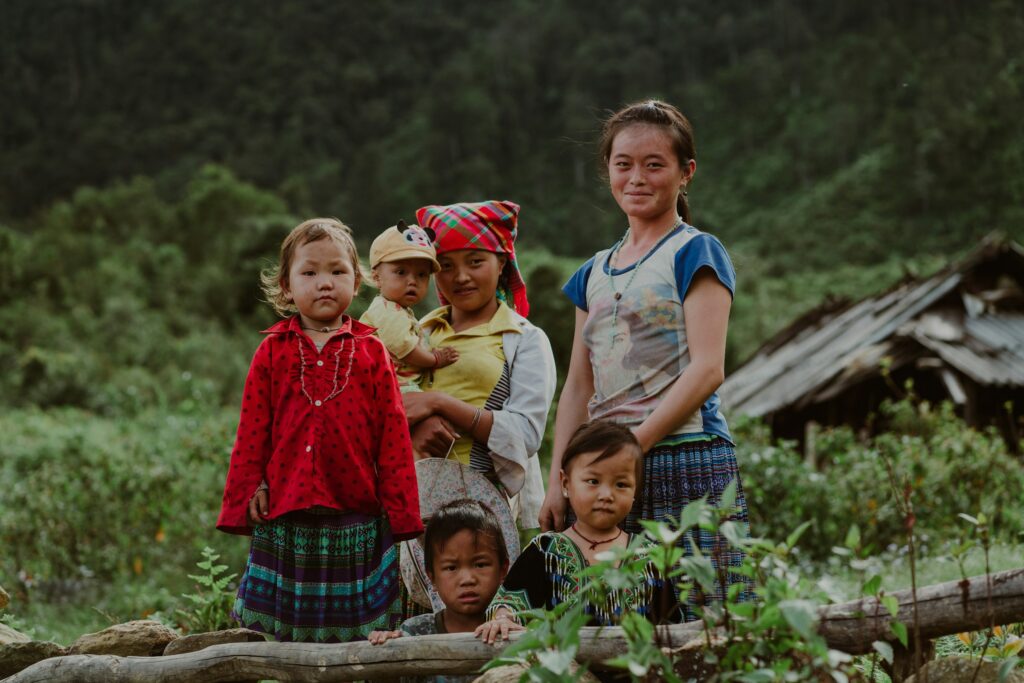
Cooperative breeding could be the reason why humans had a population boom and we overtook all our nearest relatives in numbers.
We do not know much about our cousins, the Neanderthals and Denisovans, with whom we shared time, land, food and even DNA. But we do know that they are extinct now while we still live and thrive on this planet.
What made us different that we survived while they could not?
There are many reasons. But something that stands out most when we compare ourselves to our nearest surviving relatives, the chimpanzees, are our high fertility rates and the ability to have multiple dependent children of different ages at the same time. Despite having a long gestation period and late attainment of sexual maturity, that ability may have contributed towards the human population boom in the early phases of our history.
Parental duties restrict chimpanzees from having another baby chimpanzee for the next 4-5 years until the current one is completely weaned. Whereas, there is no such restriction on us humans which gave us the edge over them and probably over other hominins that lived beside us in the past.
The dynamics in human population growth
The basics of population dynamics tells us that for a population to increase in size it must have high birth rates, less death rates and a high offspring survival rate to reproductive age. When it comes to survival, quality of offspring matters more than quantity, as lower quality offspring are eliminated by natural selection.
Since resources are limited it is not possible for a mother to have both higher number of offspring and higher quality offspring at the same time. Somewhere down the line a trade-off needs to be made between quality and quantity which limits fertility rates. But there are ways how this trade-off can be managed and our ancestors did just that.
Our ancestors cracked the code which none of our nearest relatives could. The code was social parenting or cooperative breeding. Cooperative breeding is found in other animals as well. However it is slightly different in humans.
Cooperative breeding allowed us to have more babies more often. Community care improved rate of survival of offspring to reproductive age. That is just how we increased in numbers and overtook our cousins in the game of survival to become the sole owner of the genus name Homo. Our numbers coupled with our adventurous nature drove us to reach every corner of the globe.
How cooperative breeding changed the fertility formula for humans
While cooperative breeding is common among other species something sets the human cooperative breeding equation apart from the rest. It is the reliance of the human mother for help with raising children on juveniles and grandmothers. Because juveniles and grandmothers do not compete against the mother for parenting opportunities.
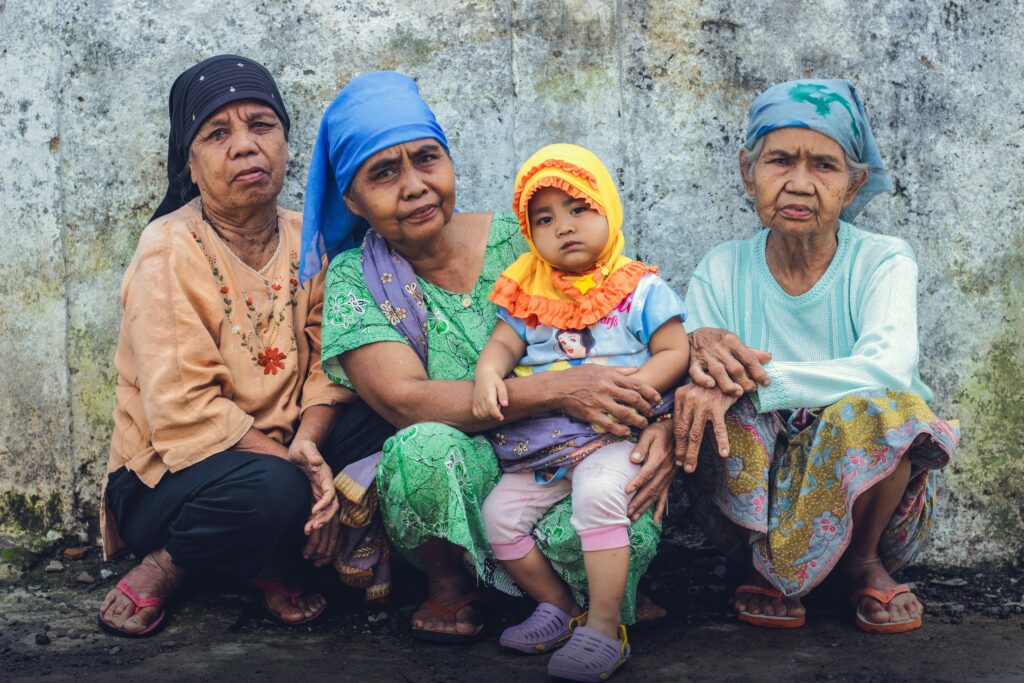
Cooperative breeding in non-human species on the other hand relies heavily on help from kin who sacrifice their own parenting opportunities to take care of the offspring of the new mother. Human mothers reproduce without restricting the reproductive opportunities of other fertile females in the group.
Since human children remain dependent on their mothers even after weaning is complete human mothers remain engaged in childcare post-weaning. Mothers allocate less time to other activities and focus more on child rearing. These other activities like foraging, domestic and field work instead are performed by helpers. Research shows that mothers provide only 50% of the care a child needs, with breastfeeding comprising a major proportion of it.
In traditional societies males help little with childcare. They instead provide for their family with food and economic assistance. In hunter gatherer societies males are the highest calorie and protein contributors which aid mothers immensely during times of lactation.
In agricultural societies it is seen that when a grandmother is present in the family males help less with childcare. When the father cannot provide for the family he takes care of the children. Older siblings sometimes directly care for the younger siblings or help with other domestic activities and foraging so that the mother can spend more time caring for her newborn. Grandparents live with or nearby to the younger generations in traditional societies which allows them to help rear their grandchildren.
Assistance from juveniles and grandparents during childcare enables mothers to give birth at younger ages and also shortens birth intervals. Offspring survives better and has enhanced growth when helpers share parental duties with the mother. All of the above factors together improve birth rate, and the ultimate outcome is an increasing population size.

Cooperative Breeding and the Human Population Boom
Division of labour in parenting duties allows the fertile females of the population to have more children that survive to reproductive age and procreate. It is this social parenting that enabled our population to grow despite conflict between tribes, death, famines and diseases that often wiped out villages.
However, cooperative breeding relies largely on genetic relationships where how much help a receiver gets depends on the proportion of genes shared with the helper. Here, direct and indirect benefits received rely heavily on genetic relatedness, influencing the cost of a helpful gesture. Thus, full siblings get more help from older siblings than half-siblings. Paternity certainty plays a major role where male assistance in childcare is concerned because there is no benefit for the male in caring for a child fathered by someone else. Families are constructed based on genetic relatedness which forms the basis of cooperative breeding in humans or any other cooperatively breeding species.
Mutualism, kin selection and reciprocal altruism that contribute to the complex structure of community life are also responsible for the prevalence of social parenting seen in humans.
Later with time there were advancements in agriculture, medical science, technology, law and order situation and the overall social construct of the community that improved survival rate, quality of life and reduced death rate. However, cooperative breeding was a critical factor contributing towards our population boom in the early phases of human evolution.
The dilemma of having more children in modern times
It is not enough to have more children, they must also be taken care of properly. In modern times child care is just not limited to proper nutrition, disease avoidance and survival. Modern child care encompasses quality of life, education, economic opportunities and all-round development for children to establish themselves for a successful life ahead.
As families go nuclear often transitioning to single parenting in many cases social parenting cease to be restricted to just kin alone. Mothers who are engaged in economic pursuits are unable to allot time for children. Instead, they turn to certain institutions specializing in childcare where transactions are monetary. Thus, there is no question of direct or indirect benefits arising in such circumstances.
In developed nations fertility rates are low because raising a child is expensive and parents are conceiving late mostly because of economic and time constraints. Generation gaps remain large and mothers also do not have siblings (uncles and aunts) who can help with childcare. Children are limited to just one or two only, so care of the newborn from older siblings are also limited. Childcare from grandparents still remain high in modern societies where working mothers are engaged in their economic pursuits.

It appears that an industrially developed nation is the perfect recipe for a declining population. Over 40 countries of the world mostly in Europe and East Asia have declining population sizes. Interestingly almost all of them are developed nations. It almost sounds ironical because it was the Industrial Revolution that not only revolutionized the economy but brought about a revolution in the human population increment game along with it. Human population exploded after the Industrial Revolution due to improvements in hygiene and infrastructure that led to higher birth rates.
It poses an important question before us. Will industrial development of a nation lead its population size to collapse?
LATEST ARTICLES
- Microchimerism in Women: How Pregnancy Changes a Woman’s Body?

- Why do we like symmetrical faces?

- Mycoheterotrophic Plants – The Hackers of the Wood Wide Web

- Wood Wide Web: The Phenomenon, The Myth, The Legend

- Trees Never Really Die: Surrounding Trees Keep Tree Stumps Alive

- Craving salt? The reason is partly Psychological