
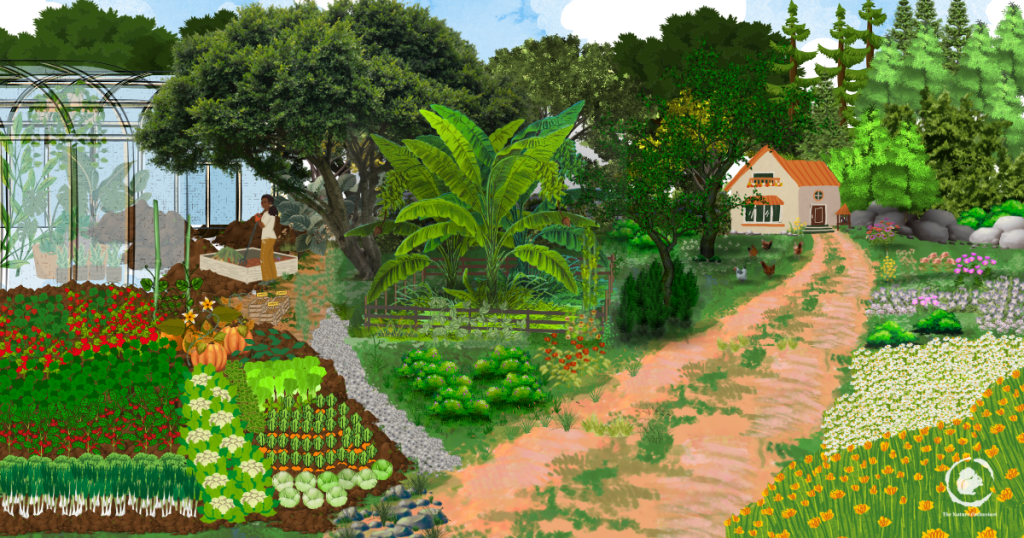
We vouch for sustainable practices in agriculture to develop Climate Resilient Agriculture Systems in the face of rapid climate change, exploring new avenues to find solutions. Can Permaculture with its holistic approach be one?
Humans have been the most powerful and skilled ecosystem engineers the planet has witnessed. They are also the greediest lot which makes them the most foolish. The elephant, the beaver and the ants – the largest to the smallest, have manipulated and maneuvered the elements of nature to suit their needs but none have succeeded to do it at so large a scale, pushing the planet to its limits like man has. Man’s competition is man himself and man’s ruin will also be man alone.
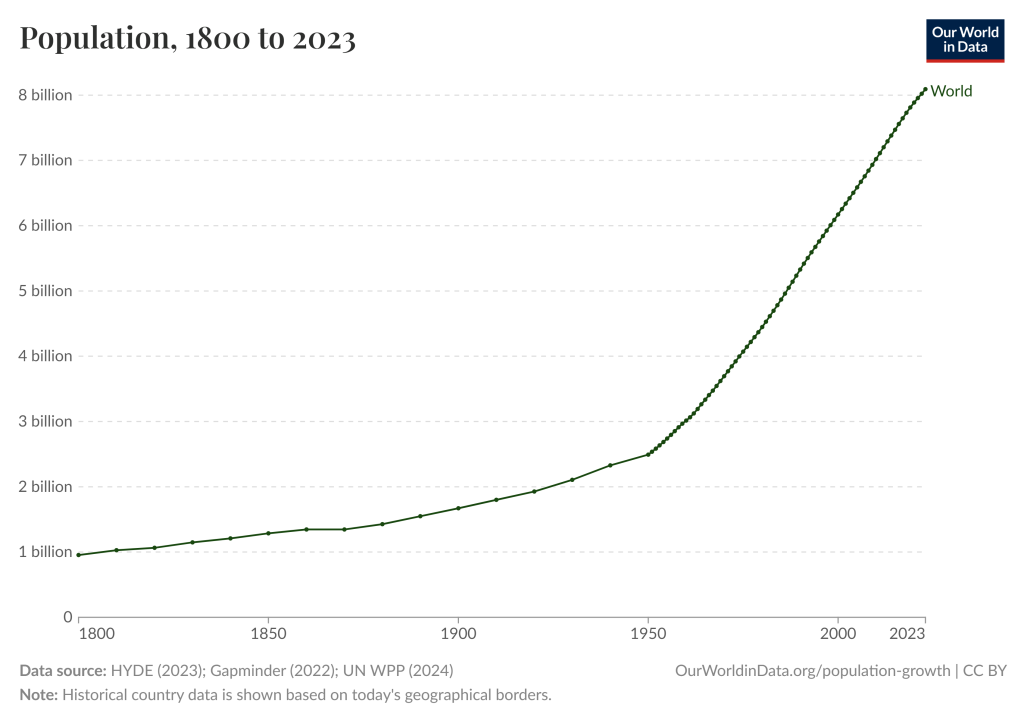
Modern agriculture with its high yielding crop varieties, synthetic fertilizers, mechanized cultivation, fossil fuel use and chemical pesticides to wipe clean pests that had been the farmer’s greatest foe for centuries came as a blessing to mankind. It promised to put an end to world hunger and people welcomed the Green revolution with open arms. Little did men realize that what seemed like a blessing was a curse in disguise. Population growth accompanied modernization of agriculture. If you look closely, the population growth curve aims for the sky at the years 1950 – 1960, right at the time of the green revolution. Presently, the tally stands at 8 billion strong and we are predicted to push the score to 9.7 billion by 2050.
Modern agriculture affected nature in ways hard to imagine. As more lands were brought under cultivation ecological diversity was lost. We have meticulously paved the way to extinction for millions of species. Soil, water and air quality have plummeted to such lows that we have been able to define the term ‘unsustainable’ in a brand new way.
Commercialization of agriculture have put us in a vicious circle. By producing more food it gave the impression that the world was capable of supporting more people and it did so too to a certain point without much visible harm to the planet until the realization that the system was running at a loss dawned upon us. To support this growing population and its demand we cut down forests making room for agriculture, straining the oceans clean of its inhabitants for protein, draining the ground of its water to irrigate crops and pumping the oil reserves dry of its liquid gold to fuel our days. What have we replaced them with? Monocultures for tropical rainforests, plastics for oceanic wildlife, toxic chemicals for groundwater reserves and greenhouse gases for petroleum.
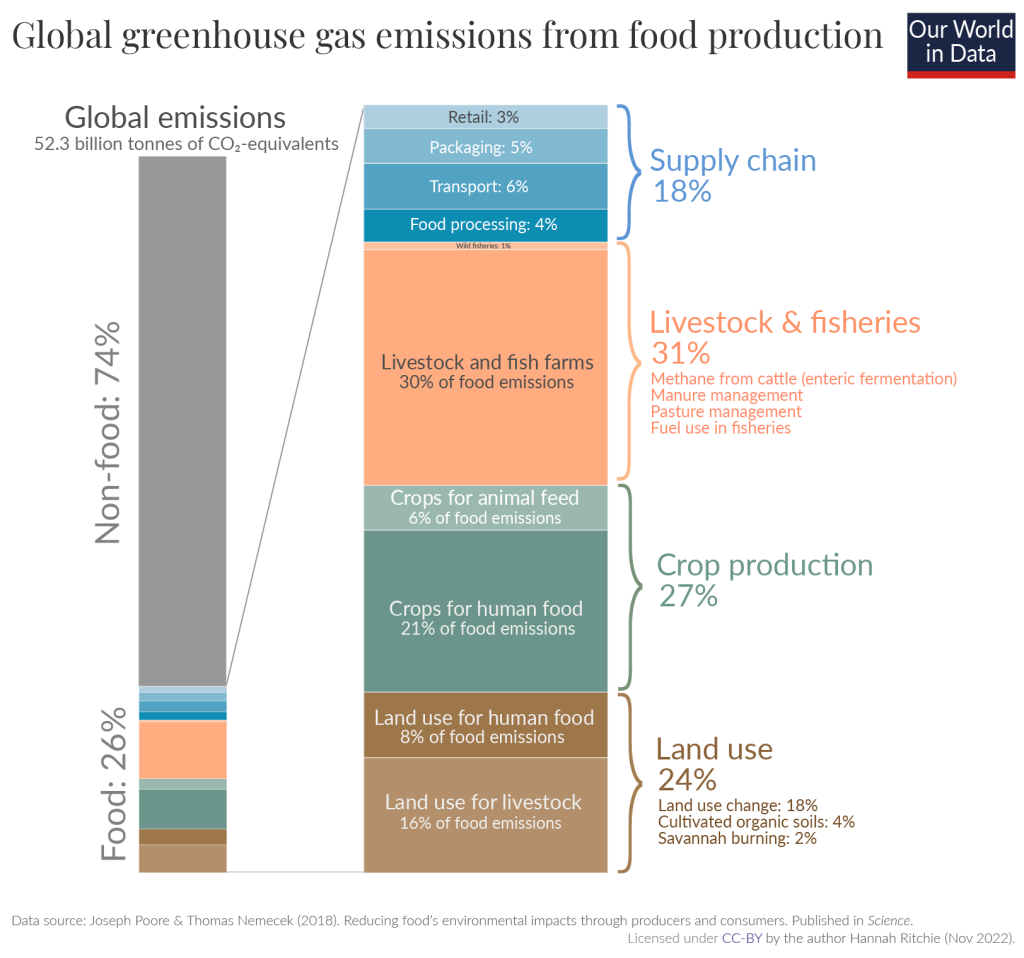
Agriculture contributes to 26% of the global greenhouse gas emission. If we consider the food system as a whole, it amounts to 37% according to recent estimates. The irony here is that agriculture is a major contributor to climate change and agriculture is also the sector which is most vulnerable to this climate change.
We, being the intelligent species that we are, have come up with many potential solutions to reverse climate change or rather to cope with the inevitable transformation by building climate resilient systems. In agriculture the solutions include agroforestry, organic farming, polyculture, animal integration, cover cropping, crop rotation and many more.
But there is one more that often misses the attention of scientists – Permaculture. The core philosophy of permaculture lies in working with nature not against it. This seems to be good way to start – slowly working towards building a more harmonious and compassionate relationship with nature.
Can Permaculture be the solution to developing a Climate Resilient Agriculture system?
Downsides of commercial agriculture
High energy demand and environmental pollution
Commercial agricultural systems demand energy and resource investment in the form of fossil fuels, pesticides, fertilizers and water leaving a large carbon footprint. Large farm areas require ample watering and in areas with limited water supply it lowers the water table draining the soil of its normal moisture content hence making it prone to wind erosion. Pesticides and chemical fertilizers have their long-term effect on human health and are often the root cause of several types of cancer.
Production of synthetic fertilizers is an energy demanding process. After application in the field, they break down releasing greenhouse gases and leach into the groundwater and enriches surface waters leading to harmful cyanobacteria blooms.
Deteriorating soil health
Continuous cropping of land with the same crop varieties strips the soil of essential nutrients and minerals eventually making the top soil layer unsuitable for agriculture. Excessive tillage breaks down the soil structure making them mineral deficient and prone to wind erosion. Fertilizer use and low soil organic matter makes soil unsuitable for mycorrhizal growth and other beneficial soil microbes.
Annual cropping and unsustainable waste management
Commercial agricultural systems mostly cultivate annual varieties of crops which require to be removed from the field after the crops are harvested. The plant residues are often dumped in open areas and left for decomposition to take over which then emits bad odour and releases methane into the atmosphere, a potent greenhouse gas contributing to global warming. In other areas the dried plant residues are burnt (stubble burning) which releases the carbon sequestered by the plant back into the atmosphere as carbon dioxide, another major greenhouse gas.
Simplified landscape, biodiversity loss and decreased pest resistance of crops
With changing climate new diseases are predicted to surface and old ones are projected to expand their range as the temperate belt shrinks polewards and tropical belt ingresses in. Warm and humid climates are a haven for diseases and pests. Monoculture farms are easy targets for pests and we have seen several instances where acres of agricultural landscapes were devastated by pest outbreaks. Simplicity of commercial agroecosystems and lack of genetic diversity in cultivated crop varieties makes them incapable of resisting novel pest outbreaks.
Converting forested areas or wetlands to agricultural farms destroys complex ecosystems leading to loss of rich biodiversity ultimately simplifying the landscape to just a few species serving human interest. Ecosystem services are lost and such practices further contributes to climate change.

How Permaculture proposes to mitigate the negative effects of commercial agriculture
A nature friendly approach
The concept of permaculture evolved in the 1970s but have been modified over the years with more inputs pouring in as the concept gained popularity among people spread across different regions and background. In the words of David Holmgren, permaculture systems are ‘consciously designed landscapes, which mimic the patterns and relationships found in nature, while yielding an abundance of food, fibre, and energy for provision of local needs’.
Designing agricultural ecosystems by mimicking natural ecosystems requires close observation of natural phenomenon. It is more about handing over the reign of control to the ecosystem itself, allowing it to take its own course and organize itself.
Most agricultural systems promote a top-down approach where the working of the system is under total control of humans. Permaculture on the other hand works on a bottom-up approach allowing nature’s forces act towards influencing human decision making. Leaving a dedicated area of the farmland undisturbed, protected from human intervention, permits the natural environment of the place to work unhindered. Close observation and analysis help build an understanding of how nature works in the region which enables the farmer to find custom solutions to problems essentially unique to his farm.
Permaculture is more like a conceptual framework that integrates existing methods blending traditional indigenous knowledge with modern scientific understanding of natural phenomenon to reach an optimum where the system is both nature friendly and productive. The practitioner gets to reap the benefits of the system as yield with minimum external input depending more on the ecosystem services provided by nature, renewable sources of energy and recycling of matter within the farm.
Permanency and recycling
Permaculture or permanent agriculture, as the name suggests, is a permanent agricultural system that does not involve annual harvests chopping the fields clean of its crops. It thus eliminates the need to get rid of plant residues after harvesting the crops. The plant remains are recycled into the system as valuable fertilizers through the process of composting. The harvested plant can also be cut and left on the soil surface which forms the mulch layer. This top layer retains moisture, and the decomposing plant remains creates a substrate for earthworms and beneficial bacteria that recycle the nutrients back into the soil. Such types of soil are called living soil. Permaculture promotes the choice of local perennial crop varieties which can provide fruits and vegetables as long as the plant lives contributing towards building a permanent food supply system. Using a combination of annual and perennial crop varieties diversifies the system and also provides a yield all year round.
Machines for crop harvesting, pesticide spray or fertilizer application which is a common sight in commercial agriculture doesn’t fit in the permaculture picture. The permanency of the system extensively reduces the use of machines, depending more on human labour which eventually reduces to minimum once the system is fully established and running.
Agroforestry systems like permaculture takes time to reach their full potential compared to modern farming but by taking care of issues like soil erosion, soil water and organic content, stabilizing the flow of ecosystem services, mitigating climate change and maintaining biodiversity in the present secures the future of agriculture by increasing climate resilience of the system and kick-starting a self-sustaining cycle of food cultivation that is both highly productive and also more harmonized with nature.
Permaculture eliminates the concept of waste
Nothing goes to waste in this system just like in nature. The goal of the set-up is to build a closed loop network that is self-sufficient in itself. That which is discarded by one entity of the system is raw material for another. Manure from cattle in large farms, fish excreta from fish tanks and bird droppings serve as organic fertilizers to the crops. Even human excreta could be used after properly processing it. Dry toilets are promoted in areas with water scarcity and the waste generated is used as compost to feed the farm soil. Fallen dead leaves of trees are organic fertilizer for the soil while earthworms thriving on those dead leaves, helping recycle the trapped nutrients back into the soil, are food for the chickens in the farm. Plant residues, kitchen waste are recycled into the system as fertilizers after composting. Permaculture also proposes the utilization of grey water for watering plants which is a good way to conserve water in areas where water is scare.
Taking care of soil health
Modern farming has damaged soil health extensively. Permaculture techniques help improve soil texture, moisture, organic matter content, organic carbon content and promote the growth of helpful microbes.
Growth of mycorrhizal fungi is high in soils rich with organic matter while mineral nitrogen fertilizers are known to hamper their growth and decrease their diversity. Enriching soils with organic fertilizers like manure can help plants survive drought conditions, for the mycorrhizal hyphae increases root surface area. Mycorrhizal fungi associate with plant roots and help the plant to access water that roots alone cannot reach. They also enhance phosphate uptake from soil by secreting enzymes that help with the dissolution of insoluble soil phosphates that otherwise remain locked in the soil unavailable to plant use. Phosphate is a limiting nutrient and association of plant roots with mycorrhizal hyphae is a deciding factor in the survival of the plant is phosphate limited landscapes.
Vast areas of tropical rainforests are cleared for monoculture farms. Tropical soils are usually low in nutrients as most organic matter is in the plant body and intensely cultivating on the cleared land strips them of their little remaining fertility. Permaculture could help restore such degraded areas to some extent by improving the soil health first, gradually moving towards a biodiversity rich food forest which also provides a source of income to the affected communities.
Natural pest control
Chickens and ducks feed on a variety of foliage eating organisms like grasshoppers, insect larvae, slugs and snails thus keeping their numbers in check. They also forage on seeds of weeds that compete with crop plants for nutrients and sunlight, discouraging their establishment. They promote soil aeration by their scratching and digging behaviour and enrich soil with nutrients by their excreta which serve as natural fertilizers.
Increasing plant diversity to strengthen plant-pollinator networks also supports the pest-predator network. Parasitoid wasp species play an important role in agricultural pest control by their predatory behaviour and also pollinate flowers at the same time.
Integrating complexity building resilience
Complex ecosystems are more resilient to disturbances. Observe the tropical rainforests – rich biodiversity builds numerous interconnections between different species at various levels promoting optimal niche utilization and maximal resource use enhancing productivity. A group of species serving the same or similar ecosystem functions form guilds or functional groups. Diversifying the types of ecosystem services provided by an ecosystem and the number of species within each functional group increases redundancy and resilience of such systems.
Mimicking the same structural and functional complexity in the permaculture practice makes such agroecosystems more resilient in the face of disturbances and climate change. Let’s consider an example where there are two permaculture farms in Kenya, one with just Leucaenea as shade providing species and another with both Leucaena and Acacia as shade providing species. A fungal disease affects the Leucaena species in both farms eventually killing the trees while the Acacia emerges resistant to it. In the farm with just the Leucaena, the sudden loss of shade affects all the other plants in the farm. But the farm with the surviving Acacia trees fares through the crisis. Complexity preludes resilience.
Fostering ecosystem services
Companion planting of flowering shrubs attract wild pollinators that promote the overall pollination rate of all flowering plants and trees growing in the patch. Pollination increases fruit set and for many fruit varieties high pollination rates are necessary for a proper fruit to develop. Take strawberries for example, they grow to be symmetrical only when all the ovules set seed after pollination and properly shaped strawberries fetch good market price which benefit the farmer economically. In commercial farming the farmer mostly relies on managed honeybees for pollination and many have suffered loses when their hives were ravaged by disease outbreaks. Outsourcing the function of pollination to wild pollinators reduces dependence on managed bees and eliminates the risk of losing entire colonies to disease outbreaks.
With the current state of the world where we are seeing a rapid decline of wild pollinator populations, permaculture appears to offer a beacon of hope because the key to maintaining pollinator populations is to preserve their habitat, provide for their foraging by restoring the diversity of the landscape and minimize pesticide use. Permaculture seems to be doing just that. We have seen several instances where planting wildflower strips between crops or leaving the surrounding landscape undisturbed maintains wild pollinator populations and enhances pollination of crop plants.
Networking to maximize resource use
The complexity of the permaculture system promotes maximal utilization of available resources with minimal to no input from outside. Multiple layering allows cultivated plants to utilize sunlight, nutrients and water to the maximal potential. The top layer of trees creates shade which makes an environment suitable for shade loving plants to thrive. Transpiring tall trees modify the environment below by lowering the temperature and increasing the humidity which makes it suitable for other plant species to grow in the middle layers. Leguminous vines use tall woody trees as supporting structures to grow, fixing atmospheric nitrogen into the soil in return enriching the soil nitrogen content which benefits all the plants growing in the community.
Water harvesting
Commercial farms depend heavily on irrigation having no such mechanism or design to harvest the rainwater which often washes off the fields eroding the topsoil of its nutrients. With climate change becoming a major problem we are seeing a change in rainfall pattern. The duration between two rainfall episodes is increasing while intensity of rainfall in each episode is highly variant. There may be one episode when the rain is restricted to a light drizzle while another is more like an outburst pouring torrentially, threatening to cause a flood. Agricultural systems should be designed to deal with such sporadic rainfall patterns and maximize the amount of water stored without allowing this essential life-giving resource to runoff.
Permaculture systems offer to mediate this problem by using a combination of strategies like rainwater harvesting from rooftops, creating a pond at the site with the lowest elevation, planting along contour lines to slow down the flow of water allowing the water to soak into the soil. Making use of swale-berm systems stops the flow of rainwater permitting the stagnant water to slowly absorb into the soil thus maximizing the absorption of rainwater by the land. This combination of systems cuts down dependence on artificial irrigation. The formation of rain-fed ponds supplies water for cultivation during drought seasons.
Clean energy and carbon sequestration
As the fossil fuel reserves deplete with each passing day we push more strongly for a shift towards clean and renewable sources of energy like the sun, water and wind. Making the agricultural sector the first one to become fossil fuel independent will be a great achievement on its own.
Building a permanent agricultural system also helps with long term carbon sequestration tremendously reducing the carbon footprint of the system.
Promoting self-reliance and cutting down costs
The aim of permaculture is to make communities self-reliant. If the produce from permaculture systems is shared within the community, the locality can cut down on imports of food. This will tremendously reduce the resources spent behind managing agricultural transportation and food processing sector. Eliminating the need of transport of food items to long distances will cut down on transport costs, carbon footprint of the item and energy expenditure. Food processing emerged as a solution to preserving food items for longer periods so that they retain their nutritional profile and taste even after a long journey from the farm to the market. Local self-sufficiency will reduce the need for food processing as fresh produce are brought to the doorstep of the customer hence transferring the responsibility of food management to the buyer. It will reduce plastic pollution as a lot of plastic wastes are generated from food packages.
Permaculture challenges to turn this whole “organic is costly” game upside down. Producing organic food is actually cost-friendly. It is deliberately made costly because the majority of farmers use commercial cultivation techniques characterized by uncontrolled use of chemical fertilizers and pesticides to increase production without leaving any chemical free zone for the organic farmer to materialize a fully organic harvest that meets the prevalent market standards to be certified as organic. The average organic farmer has to work more towards keeping his farm soil and water free of the chemicals percolating from neighbouring commercial farms. The demand for organic food is high compared to their supply which raises its market price. If permaculture is popularized it will reduce food production costs by a large margin and more importantly the food will be organic.
Eating healthy
Emerging scientific evidence and increasing general awareness about the detrimental health effects of consuming processed food either canned or wrapped in plastics are pushing people to find solutions to these problems. Permaculture offers one. Imagine a community where local produce from permaculture farms within the community are brought into the local market. People get to enjoy the freshness and nutritional benefits of organically cultivated freshly harvested fruits, nuts, grains and vegetables. Locally grown food tailored to the climate of the region and the nutritional requirements of the inhabitants can solve several health issues without the need for dedicated medical attention.
The global community need to change their food consumption habits by shifting from packaged food and processed fast foods to consuming fresh food if they want to remedy the health issues that currently bothers a large majority of them or address their concern towards plastic pollution. Importance should be given to local food varieties rather than subscribing to this overly observed ‘trendy’ obsession towards consumption of exotic varieties and super-foods sourced from farms thousands of miles away.
Promoting and preserving local crop varieties
Local plant varieties have evolved with the landscape changes of a region and are more adapted to the ecosystem of a region compared to new varieties that have been recently introduced and share little ecological or evolutionary history with the place. Greater adaptation makes local varieties more resistant to pests and diseases common to the region. Exotic varieties do not possess the above qualities but also threatens to introduce novel pests and diseases to a locality that can destroy highly adapted local varieties. So, exotic varieties should be cultivated with care. Some local varieties are regional specialists solely growing in a particular habitat under specific climatic conditions and should be prioritized.
A boon for small scale farmers
Permaculture can be a profitable option for small scale farmers and marginalized communities that cannot afford the luxuries that commercial large-scale farming demands. Instead of depending on one or two crops, permaculture will allow them to diversify production on a small land area and increase the overall food yield from the farm. Small landowners are the worst hit by pest outbreaks and climate anomalies. The climate resilient permaculture system is the right solution for them. The green crescent agroforestry initiative in the African Sahel, which shares many attributes with permaculture, is an outstanding example of how sustainable agriculture systems promises to uplift marginalized communities from the grips of climate change.
Permaculture ensures economic stability of farmers in the face of erratic weather conditions. Even if one crop fails there are others that can provide a steady source of income.
Conclusion
The concept of working with nature is very inspiring. Permaculture promises a sustainable way to evolve into a climate resilient future of agriculture. The techniques can be modified according to the geography, ecology and climate of a place to suit the region and the needs of its inhabitants. The flexibility of permaculture makes it an ever-evolving concept that can be tailored to fit the requirements of the time and also serve as an umbrella under which both new and old techniques can be included to enrich it. Individual entities like organic farming, companion cultivation, multilayer farming, polycultures, agroforestry and others are integrated into the permaculture structure.
By mimicking the complexity and network of natural systems we can build an artificial system that is both nature friendly, useful and climate resilient. But care must be taken in choosing plant varieties and local varieties should be prioritized because any wrong choice would prove harmful in the long run. Like, promoting invasive species in the name of climate resilience can make things go wrong in many ways.
More and more farmers should endorse permaculture. It definitely cannot solve all the problems we have created as a species for ourselves and for this planet. However, it can be a way to slow down the rate of our progress to a polluted carelessly engineered ruined mess of a planet. We cannot bring back all those millions of species we meticulously paved the way to extinction for, but we can at least try to preserve what remains of the blue planet. It can all start from building a more harmonious and compassionate relationship with nature at the grassroot level of our survival system – agriculture.
Further reading
Holmgren, D. Permaculture—Principles and Pathways beyond Sustainability; Holmgren Design Services: Victoria, Australia, 2002.