
The first thing that comes to our mind when we hear the term “bioplastic” is that they are plastics which are made out of biological sources or are more nature based compared to conventional plastics. But even conventional plastics are natural materials: they are made from petroleum which is a naturally occurring organic substance – a fossil fuel. So, what makes “bioplastics” any different from conventional plastics? That is the exact question we are going to answer in this article. Let’s get to the point without further ado.
What are bioplastics?
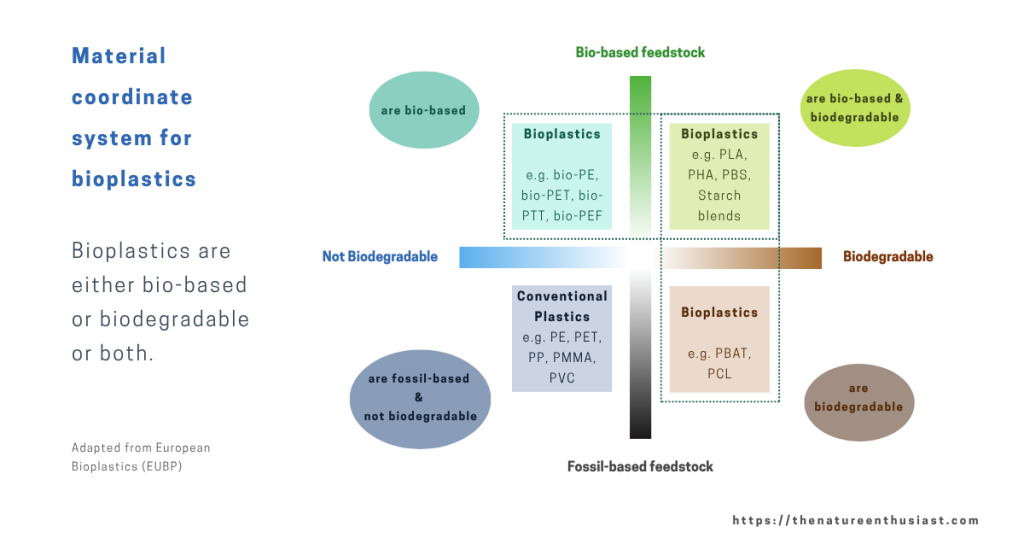
European Bioplastics define “bioplastic” as any plastic material that is either bio-based, biodegradable or both. Whereas the International Union of Pure and Applied Chemistry (IUPAC) discourages the use of the term “bioplastic” as it can be misleading. They prefer the term “bio-based polymer” over bioplastics. Thus, according to the IUPAC definition, “bio-based polymers” are derived from biomass or issued from monomers derived from biomass which can be shaped by flow at some point in its processing into finished products.
In short, bioplastics are bio-based plastic polymers derived from renewable sources that may be biodegradable. It should be remembered that not all bioplastics are biodegradable and some can be equally harmful to the environment as their fossil fuel-based partners.
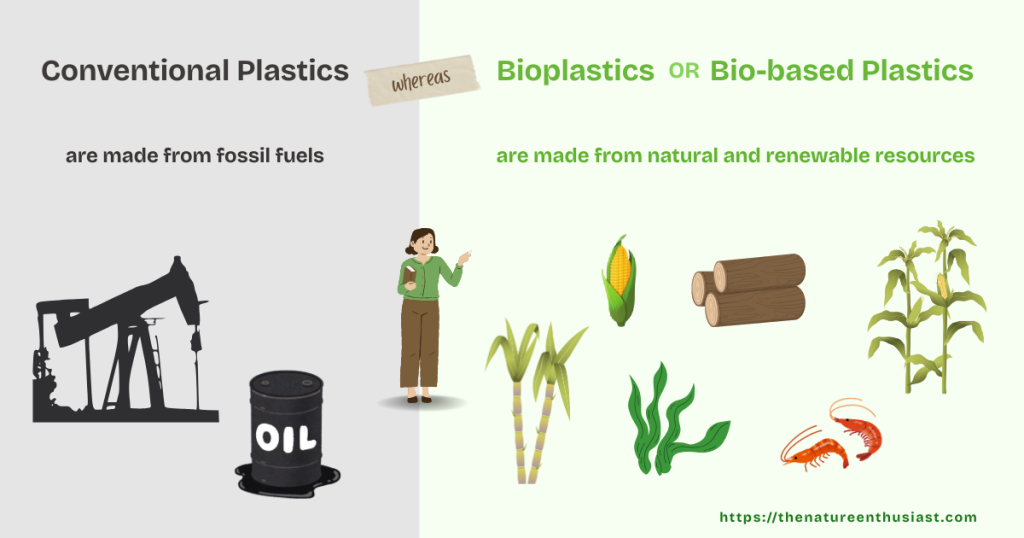
Bioplastics are very similar in physical properties and function to traditional plastics but several times more sustainable and environment friendly. And that is just what makes them so much more preferable to conventional plastics. Right now, bioplastics make up only 1-2% of all plastics but the numbers are projected to grow.
Types of bioplastics
Bioplastics can be broadly divided into two main categories based on their time since inception – old economy bioplastics and new economy bioplastics.
Old economy bioplastics
They are the oldest category of bioplastics and existed before the advent of synthetic plastics. Old economy bioplastics include materials like rubber, cellulose acetate, cellophane and linoneum. They are bio-based but may or may not be biodegradable. The level of biodegradability is dependent on the nature of treatments they undergo to reach their final form in which they are marketed to the customer. Take for example, rubber, used to make vehicle tyres and footwear: while the sap of the rubber tree is biodegradable, vulcanized rubber – the form in which it is mostly used – is not because of the presence of sulphur crosslinks. Instead, vehicle tyre abrasion is a major source of microplastic pollution.
Cellulose acetate used in cigarette filters is biodegradable, but the rate depends on degree of acetylation of cellulose and the types of modifications made to the material. Linoleum made from linseed oil, pine resin, saw dust and various other such natural substances, used in making floor tiles is biodegradable, environmentally friendly and recyclable. Cellophane made from plant cellulose used for film packaging can biodegrade between 30-120 days.
New economy bioplastics
They are the nascent categories produced by the latest research and innovation. New economy bioplastics can be further subdivided into two categories based on their chemical composition, material source and biodegradability.
Drop-in bioplastics
They are bio-based and non-biodegradable. In molecular composition and structure, they are just like conventional plastics only made from renewable resources like sugarcane, corn starch and cellulose instead of fossil fuels.
Materials included in this category are bio-PE (bio-polyethylene), bio-PA (bio-polyamide), bio-PET (bio-polyethylene terephthalate), bio-PP (bio-polypropylene) and bio-PTT (bio-polytrimethylene terephthalate). Since these materials are similar to conventional petroleum-based plastics in molecular structure and composition they can be produced without any alteration in production machinery used to make conventional plastics (hence the name drop-in!).
They are also recyclable like their conventional plastic counterparts. They have a lower carbon footprint in comparison to conventional plastics but come with the same end-of-life disposal difficulty due to their persistent nature.
Chemically novel bioplastics
As their name suggests, chemically novel bioplastics have chemical compositions different from conventional plastics. They can be bio-based or fossil-based and biodegradable or non-biodegradable depending on their source material and chemical structure. They are further categorized depending on whether they are bio-based or fossil-based and their biodegradability.
Bio-based and non-biodegradable – Examples include bio-PEF (bio-polyethylene furanoate) which is made from renewable resources like plant sugars as a replacement for PET. It can be recycled and have a lower carbon footprint but is non-biodegradable. It can however undergo limited degradation in industrial composting systems at 58°C between 250-400 days.
Bio-based and biodegradable – Examples include PLA (polylactic acid), PHAs (polyhydroxyalkanoates), PBS (polybutylene succinate) and different starch blends. Chitin-based bioplastics, seaweed-based bioplastics and fungal mycelium-based bioplastics also fall under this category as they are both bio-based and biodegradable.
Fossil-based and biodegradable – Examples include PBAT (polybutylene adipate terephthalate) and PCL (polycaprolactone). PBAT can be produced from bio-based feedstock in the future as research is underway.
Advantages of bioplastics
- Bioplastics are made from bio-based sources thus decreasing load on fossil fuels.
- Many bioplastics are biodegradable and can be decomposed in either home composting or industrial composting facilities.
- Most bioplastics are made from naturally occurring biopolymers (like cellulose), hence eliminating the extensive treatments necessary for synthesizing the polymers from petroleum used in making conventional plastics which is a highly energy demanding process in itself.
- Bioplastics have lower carbon footprint in production and reprocessing compared to conventional plastics.
- Bioplastics have properties similar to petroleum-based plastics which make them suitable for a variety of uses. Some of them even fare better than conventional plastics, for example, seaweed-based bioplastic films have natural anti-microbial properties which make them a preferable option for food packaging and for use in pharmaceutical products.
- Bioplastics are eligible for chemical recycling where the polymers are broken down into monomers to recreate the polymer chain again. This preserves the properties of the bioplastic and enables it for usage multiple times.
- Bioplastics can alleviate the harmful effects of plastic and microplastic pollution in aquatic environments as some biomicroplastics (BMPs) have been found to totally disintegrate in seawater.
- Bioplastics like bio-based PLA (polylactic acid) and fossil-based PCL (polycaprolactone) are biocompatible and biodegradable which makes them a preferable option in biomedicine.
- By using microalgae, employed to treat wastewater, bioplastics can be produced which takes one step further towards sustainability and the circular economy model.
- Bioplastics release much less to almost no toxic chemicals when compared to conventional plastics thus making them a safe option for current and future use.
- Bioplastics which are contaminated with other materials and hence deemed unfit for recycling can be incinerated to produce renewable energy. And this energy is carbon neutral as the raw materials are obtained from plant biomass which had trapped atmospheric carbon dioxide during its lifetime.
Disadvantages of bioplastics
- Since most bioplastics are made from bio-based materials sourced from agricultural products, ramping up bioplastic production in the future may possibly put pressure on agriculture. It shall negatively impact environmental health and increase food prices ultimately harming the economically weaker sections of the society.
- Biodegrable bioplastics, especially starch-based ones, release methane (CH4) in addition to CO2 on decomposition, which is a several times more potent greenhouse gas.
- Bioplastics production still uses quite an amount of non-renewable energy resources which doesn’t make bioplastics any more environmentally friendly than their fossil counterparts. In fact, PHP and PLA uses more non-renewable energy and has a higher global warming potential compared to fossil counterparts like PET and PP.
- Bioplastics are currently labeled under “other plastics” and thus are collected separately from conventional plastics. But due to misinformation and lack of public awareness they often end up in landfills and incineration facilities. Most waste collection facilities do not want to deal in bioplastics because of their higher cost of disposal.
- A misconception on part of the general public and miscommunication from the manufacturers about the term “biodegradable” is the root cause behind deliberate littering of bioplastics. People are under the impression that “biodegradable” translates to compostability under domestic settings which results in a careless attitude towards handling of bioplastic waste. Most bioplastics can be degraded in industrial composting facilities alone. And the amount of time they take to completely decompose is much longer than the duration for which they are kept at the facility – the outcome being incomplete degradation.
- The cost of bioplastics is still higher than petroleum-based plastics which makes the later more preferable over the other.
Conclusion
So, is bioplastic a greener alternative to conventional plastic? The answer is both yes and no. Yes, because it does have some strong positive points over conventional plastics. And, no, because not all bioplastics are a green alternative. We need to select specific types over others considering their sustainability, biodegradability and life cycle analysis (LCA) report. More research and funds should be directed towards the innovation in bioplastic production technologies to reduce environmental impact, energy consumption, improve biodegradability and also towards developing proper disposal and waste management systems.
Depending on the path taken bioplastics can be the future alternative to conventional plastics. But for now, the best way to reduce plastic pollution is decrease our consumption and handle our plastics more effectively.