
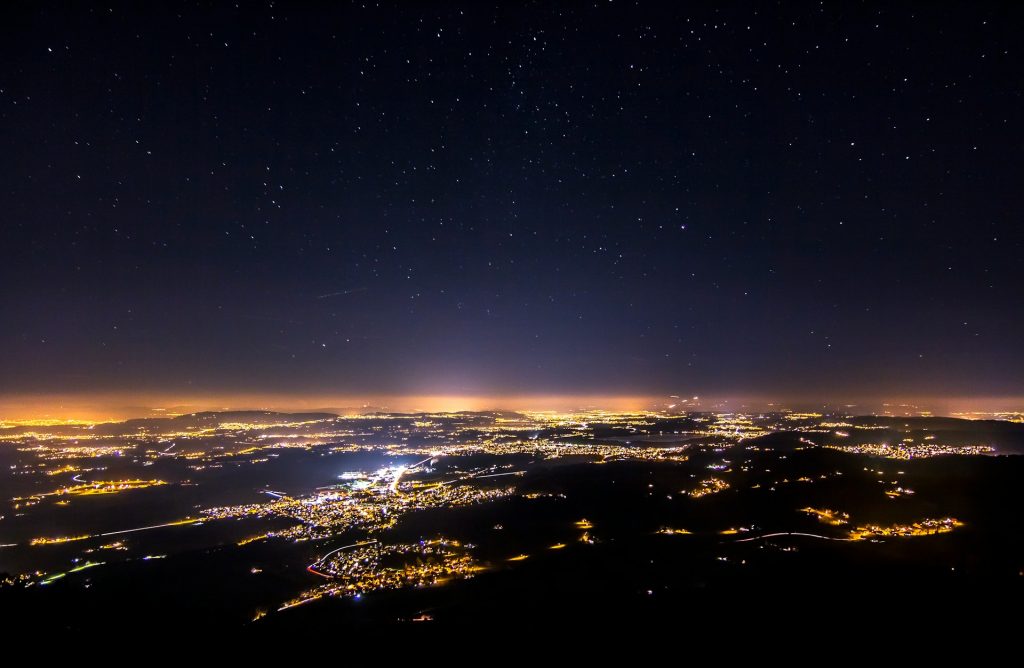
Natural darkness is necessary. ALAN is not only a death trap for nocturnal insects, birds, amphibians, mammals and marine life but increased intensity of nighttime lights is interfering in our daily sleep cycle as well.
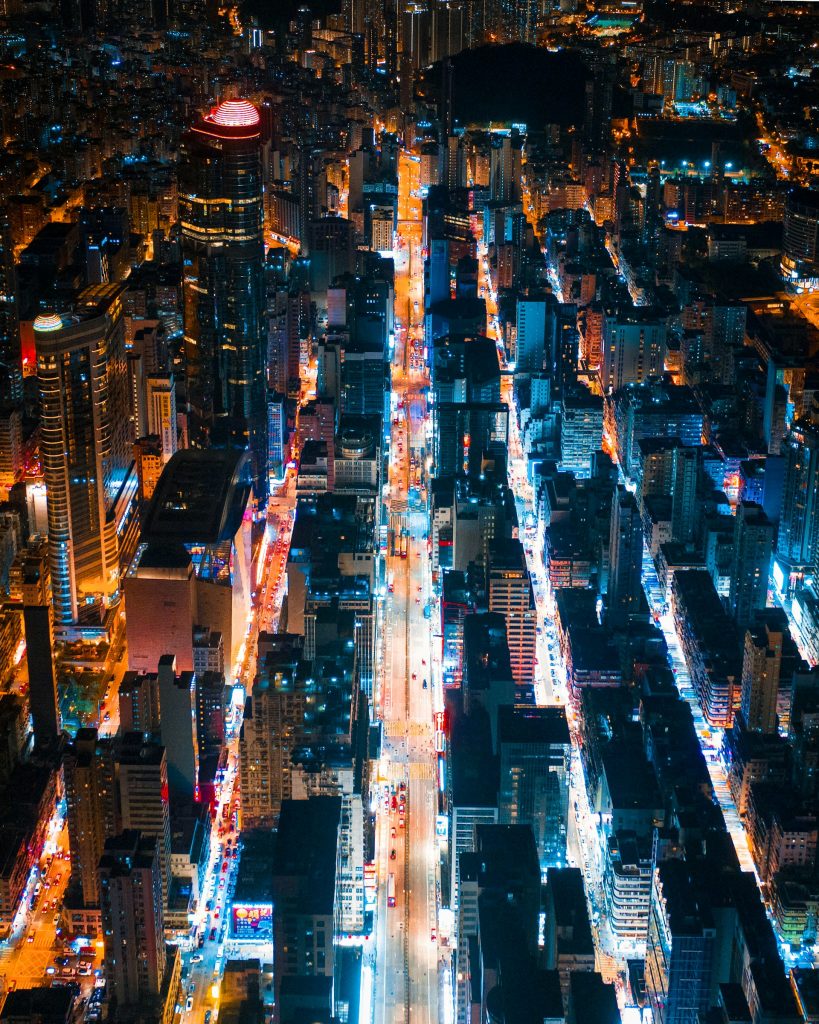
Nightlights. Bustling streets. Music. Aromatic food. Crowds. Laughter. These are some of the words that come to our minds when we think of nightlife in some of the biggest cities in the world. It has a touch of romance and magical illusion to it as well.
Nights are always shrouded in mystery, allure, adventure and dark secrets.
But in the darker quarters of the world, life of another kind unfolds in the night – the nocturnal life of animals. They crawl, fly, walk, slither, hop, shimmer and dance. They even have their nightly concerts where they explore different tonal variations possible of sound, starting from clicks and quacks to whistles and howls. The nightly soundscape of a pristine forest is a delicacy for the ears and is sure to make one’s hair stand on end.
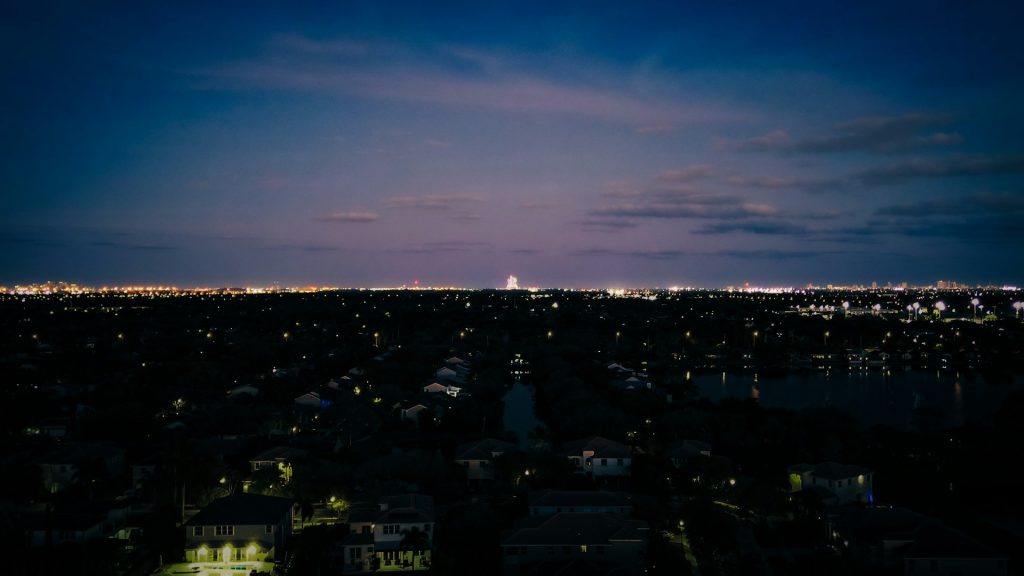
With the expansion of human habitation there is hardly much pristine habitats left on this planet. Human presence, both direct and indirect, has penetrated deep into the most secret societies of nature. A more immediate effect of human settlements, an obvious outcome which we tend to stay oblivious about is night light – a necessity for us but a killing machine for many other lives.
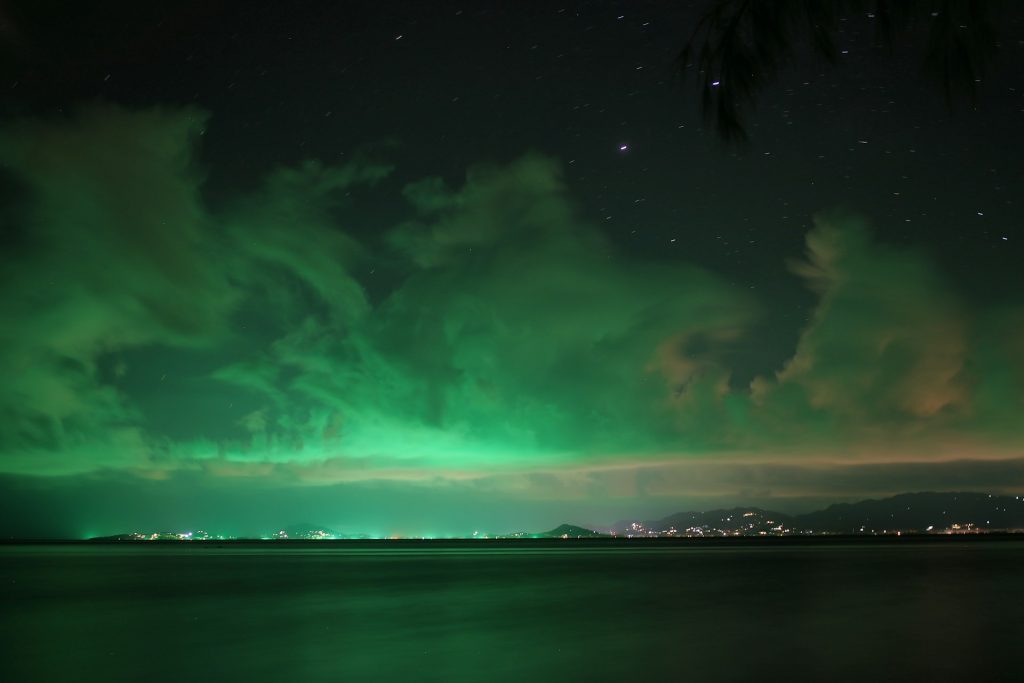
It is light, first from fire then from electricity, that enabled us to conquer the night and put the darker half of the planetary cycle to better use. Light could scare away nocturnal predators and keep them off our territories. Lights enabled us to extend the amount of time we stay active and hugely increased our efficiency as an intelligent species. But the last few decades saw a tremendous increase in the intensity of artificial light at night (ALAN), so much so that satellites orbiting the earth observed a 49% increase in light emissions from the year 1992 to 2017 alone. Our night skies are getting brighter by 9.6% each year. Sky glow – a phenomenon caused by the scattering of upwardly directed lights by atmospheric dust, water and gas molecules – is not limiting the effect to just the area within the immediate reach of the light source but extending it to over 23% of the terrestrial area on the planet. 22% of the world’s coastlines are under the influence of artificial night lights already.
You must have heard songbirds near city areas start to sing much earlier than dawn break or sing deep into the night while they are not supposed to be singing during that time. The city lights have thrown them into a state of confusion regarding the time of the day. This disrupts their daily activity cycle, tires the birds and exposes them to higher risks of predation. Night lamps are a deadly sink hole for moths and other such nocturnal insects that get attracted to the light and keep circling it till death do them away.
ALAN is not only a death trap for nocturnal insects, birds, amphibians, mammals and sea-life but increased intensity of nighttime lights is interfering in our daily sleep cycle as well. Excessive exposure to artificial lights can disrupt hormonal balance, weaken immune systems, trigger metabolic disorders like obesity and cause several types of cancer in humans.
About 30% of vertebrates and more than 60% of invertebrates known in the world are nocturnal by nature. Why the nighttime is so important for the health and functioning of life on this planet is necessary to be understood first before venturing into any discussion about all the ill effects of ALAN.
Remembering the nights: Why the nighttime is so important for life to thrive on this planet?
Life arose on Earth, a planet that rotates on itself in a tilted axis and revolves around a star, the Sun, in an elliptical orbit. Such an arrangement results in the 24-hour time the planet takes to complete one rotation to get divided into day, when the sun shines and night, when the sun is absent from any point on the earth’s surface (except the two poles!). The Earth’s tilt accompanied by its elliptical orbit allows for the hours of daylight to vary across different places located on the globe and shift gradually from season to season in the 365 days it takes to complete one revolution around the Sun. So, it is natural for all forms of life on Earth to operate in synchrony with the shifting hours of the days and nights.
All organisms have a biological clock in their systems that follow a near 24-hour cycle called the circadian rhythm. Light cues from the environment calibrates the internal biological clock to a perfectly 24-hour cycle. In vertebrates it is the retinal ganglion cells of the eyes that receive this cue and relays the information to the brain, signaling the body about the time of the day and period of the year. In other words, we don’t just see light we interpret time from it. The body when it learns of the season prepares itself for various activities that suits that season like foraging, storing food, migrating, mating or hibernating.
Darkness promotes melatonin secretion from the pineal gland located in the middle of the brain between the two cerebral hemispheres. While light, especially in the blue spectrum, blocks melatonin production. The circadian rhythm has a regulatory function in maintaining melatonin secretion and any abnormal disruption in its production can confuse the organism and have far more deteriorating consequences on its physiology and behaviour.
Nighttime is not only important for nocturnal animals but also for diurnal animals. Nocturnal animals have evolved to turn the deficiencies of darkness to their advantage. While for animals that are active by the day, it is time for rest. But, human modifications of the planet have threatened the very existence of darkness and with it all that thrives in it.
The Reminiscence Nocturne: How artificial light at night threatens nocturnal life?
It’s a light-arrest for most
It might come as a surprise for many but interestingly about 70% of mammals are nocturnal. Bright lights at night gives the impression that it is still day. They are thus restricted into their hideouts and prevented from venturing out. Their normal foraging, mating and other activities are hampered. Many of the more rebellious outliers who does dare to come out on such bright nights fall victim to predation.
As for diurnal animals, they are bound to extend their activities late into the night because of the presence of light. It increases their vigilance behaviour and duration for rest drops down to minimal.
Rodents that are primarily nocturnal like the common spiny mice (Acomys cahirinus) and wood mice (Apodemus sylvaticus) showed low activity at night in presence of artificial light. The amount of time available to the animal for foraging is reduced and thus competition among conspecifics for food increases.
It was found in laboratory studies that nocturnal rodents when exposed to dim levels of ALAN shifted their food intake to the day and stored more fat for the same amount of food consumed when compared to those that restricted their foraging to the night. For nocturnal animals the daytime is the time for rest when metabolic activities are reduced. So, consuming food at a time when metabolic rates are low leads to higher fat accumulation and is seen as an outcome of circadian misalignment.
Salamanders are nocturnal and feed during the night. Exposure to ALAN makes them less active at night and reduces foraging adding to all the other ample reasons for their rapid decline in numbers.
Vigilance night
Diurnal prey animals show nocturnal vigilant behaviours like peeking which involves opening the eyes periodically while still asleep, head and eye movements which allow quick detection of predators. With presence of ALAN such behaviours become more frequent, hampering the animal’s sleep.
Anxiety-like behaviours are important for wild nocturnal animals to stay alert in apprehension of danger during the night. In laboratory studies, ALAN has been found to decrease anxiety-like responses in rodents. It is a maladaptive response and negatively impacts the animal’s chances of survival.
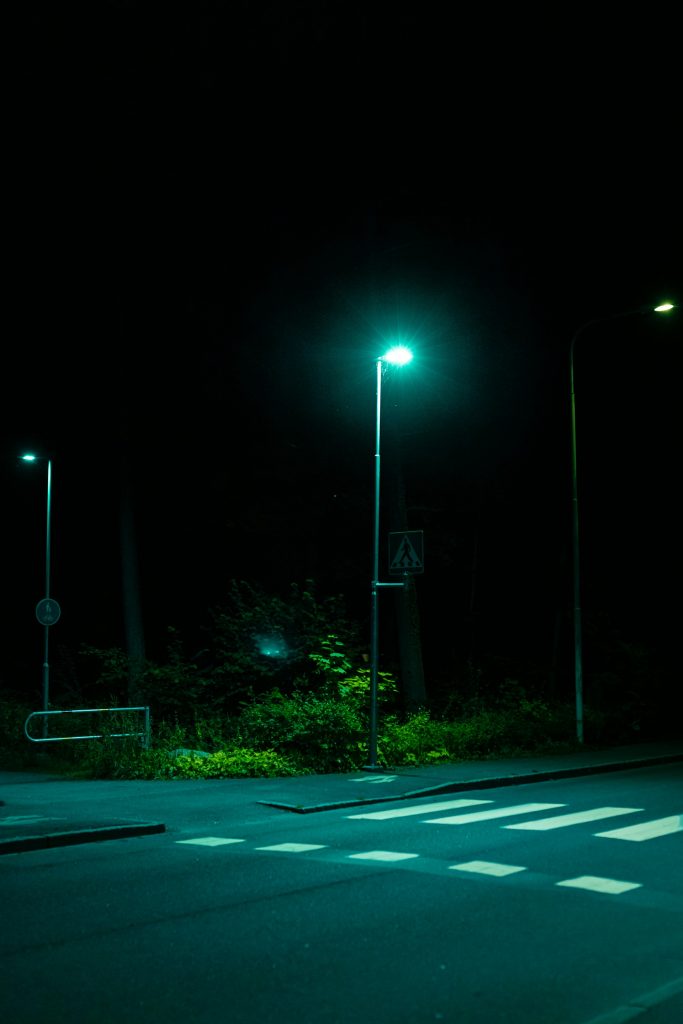
Catch them when you can
Harbor seals moving in waters near bridges with lights have been found to catch salmon smolts better when the lights were on at night than in the dark. Chinook salmon populations declined in those regions although the seals added some extra calories to their daily meal.
Presence of lights at night makes it hard for diurnal animals to find safe refuges for the night and they often end up having discovered by predators.
Not all lights will guide you home
The most fascinating example of the threats of ALAN is found in newly hatched sea turtles that fail to complete their seawards migration. After hatching out of their eggs, the baby turtles prepare for migrating towards the waters. They determine that direction by observing the direction light is reflected from, which under a natural setting should be the sea horizon. But due to the presence of ALAN on seashores they end up moving inwards towards the land, never reaching the sea, meeting an unfortunate end from exhaustion, dehydration, predation or accidents.
Birds are known to use celestial cues for navigation. Lights at night interferes in their process of determining direction. Many migratory birds travel by night. Inability to decide on the proper path of movement often lands them in the danger of getting lost. They cannot find suitable habitats to rest and often arrive at undesirable destinations that act as population sinks.
The circle of life
Many of us have often used the phrase “like a moth to a flame” to describe unhealthy relationships between people but most of us have pleasantly ignored the vast number of them that actually circle around streetlamps each night and are dead before the sun rises again next morning.
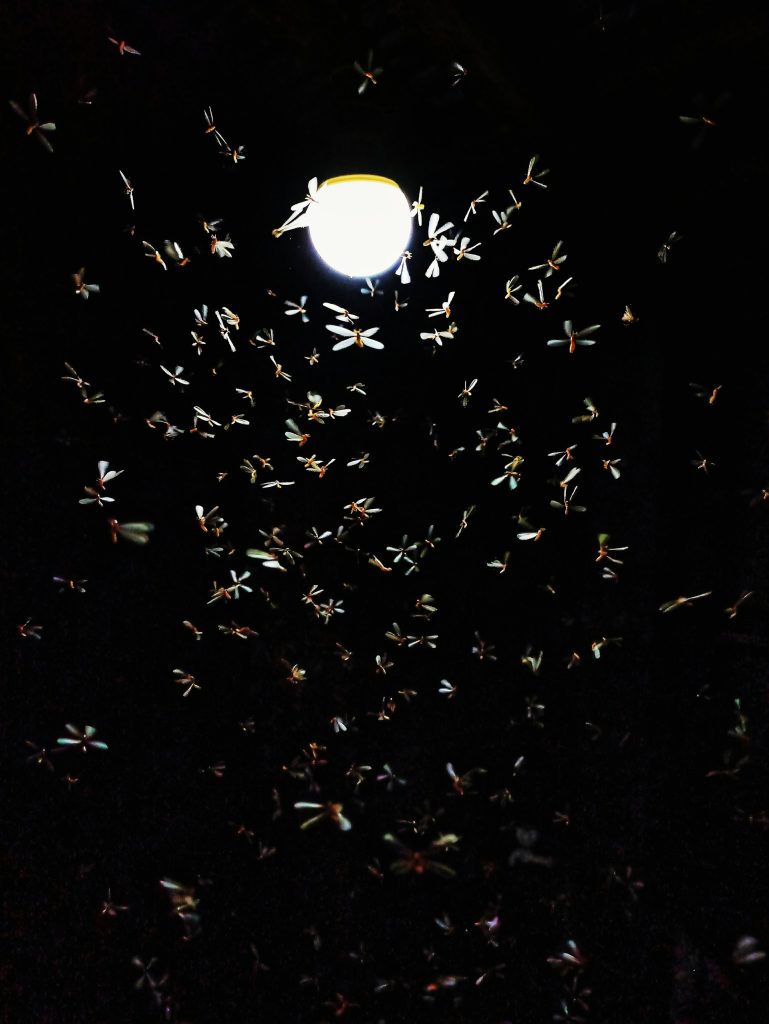
The phenomenon is called dorsal light reflex, an innate behaviour that allows moths and other insects capable of flight to orient their back to the brightest light source during flight, which at night in a natural setting is the starlit sky. The current lit night set-up arranges for many a bright light spots for these insects to orient to. Thus, streetlamps are confused for celestial light and moths naturally drawn to it circle the life out of itself attempting to orient its back to the bright light which it believes will help find the right flight direction.
ALAN is the reason behind massive drops in nighttime pollination rates and the effect spills over to diurnal pollinators as well.
A messed up molecular clock
Melatonin, the wonder molecule that signals the arrival of darkness, regulates day and night activities for most vertebrates including birds. Melatonin secretion changes in response to changes in hours of light and darkness signaling the shift in seasons. Such information helps birds to undertake activities suitable for the time of the day and period of the year.
ALAN disrupts melatonin rhythms and interferes in the sequence in which daily activities are undertaken. For example, birds experience a corticosterone spike with arousal that regulates waking and commencement of activity. ALAN influences this hormonal spike inducing birds to wake up early and sing before dawn break. Such mistiming negatively impacts mating behaviour, exposes them to predators and ultimately leads to a decline in their numbers.
The light-struck frog prince
Calls in male frogs is the principal way they attract mates. With ALAN they call less and complexity of the call, which is a critical feature employed by female frogs for mate assessment, is also lost. ALAN is one of the reasons other than water pollution and habitat loss for the global decline in amphibian populations.
No more Spring, Summer, Fall, Winter… and Spring
Changing duration of days and nights signal the change of seasons and such photo-periodic information are interpreted as cues to undertake certain activities that are essential for the survival of the species. Shortening days signal the arrival of winter promoting food storing behaviour, increasing fat storage and search for suitable places to fare through the winter. Longer days means arrival of spring characterised by new growth, ample food and fair weather. It prepares many animals to mate and produce offspring at a time when food is abundant and chances of survival high. ALAN interferes in the interpretation of these cues which are so very intimately associated with the life cycle of an organism. It disrupts the normal functioning of the life process and jeopardizes the survival of such organisms under the direct and indirect influence of ALAN.
Preserving the dark
At the beginning of their evolutionary journey as a species, humans feared Nature as much as they revered her for sustaining them. With time humans gradually learnt to tame the various elements and forces around them progressing to a stage where total control is said to have been gained in certain areas. With no other equally intelligent and powerful species to humble them, Homo sapiens have scaled to the level of arrogance and disregard for everything that is normal or in better words, follows the laws set by Nature. He desires to set his own rules in his own world. We have witnessed many instances where there is first-hand proof on what the consequences of trifling with the natural way of things can be. Yet we choose to remain ignorant unless and until the impact exclusively involves our own selves.
Too much ALAN is one such disregard for the natural hours of darkness. And interestingly even humans themselves are not spared from its ill effects. We must work towards preserving the darkness. Excessive ALAN is not only a threat to the health and proper functioning of the ecosystem around us but also a waste of energy and resources. We cannot immediately do away with ALAN, but we can definitely move towards reducing it and the whole international community must work diligently to this end.
It is high time we realise the damage our own actions are causing on the biodiversity and ecology of our planet. The realisation that we are not detached from the planet and everything that happens on it must seep in. Only in taking accountability can we dream of a better future.