
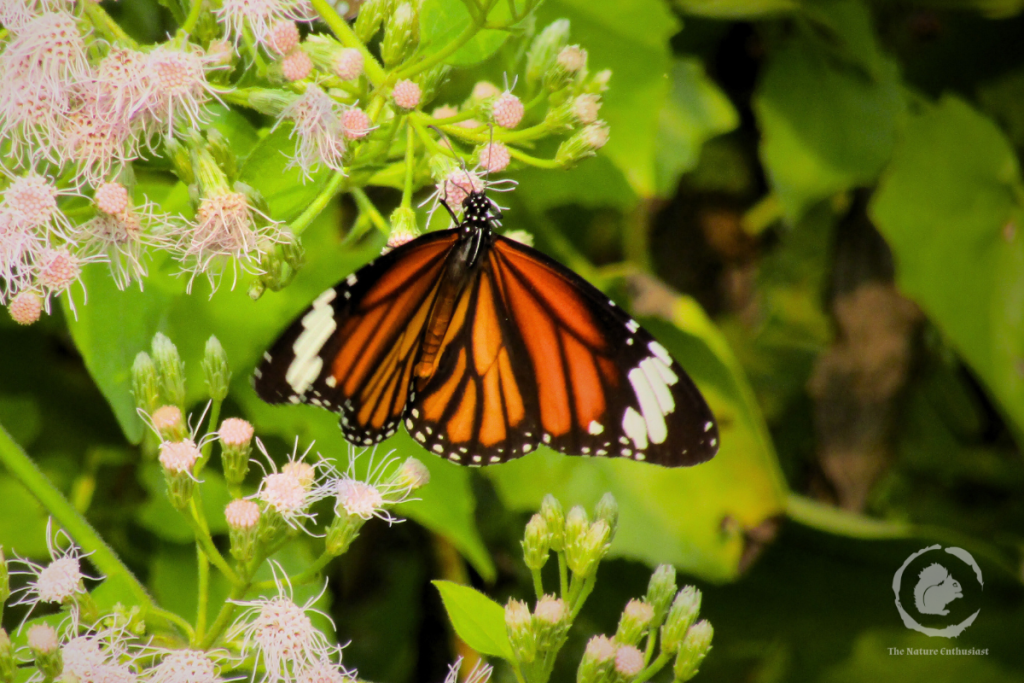
The brilliant colours on butterfly wings are not just a show but holds the key to a strategic survival plan that helps the fragile insect persist against all odds of nature.
Butterflies – one of nature’s most magnificent creations. The colours on their wings selected from nature’s own palette, refined with precision, an artist’s masterstroke. As children our young eyes have looked wide with awe at the spectacular display of hues and patterns on butterfly wings as they pranced around from flower to flower in our small backyard gardens.
Butterflies are harmless to humans – they don’t bite, they don’t sting, they don’t transmit diseases. They are part of our happy memories.
But their colourful wings hide a dark secret. What appears to be a grand display of glamour to us is actually a well-thought-out survival strategy for the butterflies. All those happy colours are just a means to avoid ending up in a predator’s belly.
The need for survival overrides sexual attraction
In most sexually dimorphic species, the males are built differently often displaying bright colours, sexual handicaps, large sizes, loud calls, dancing, singing, fighting and nest building ability, and much more. Maintaining such extravagant features require energy and also make the males conspicuous to predators that easily lock target on them for their next meal.
The same is true of butterflies. Males are brightly coloured with conspicuous designs on their wings. Females prefer such loud displays. But, what is the use of these ornaments if they can send the male to their doom? What is the point of being sexually attractive if one dies before leaving any offspring? The attractive offspring are also marked for death just like their father. If the only outcome of being attractive is early death then existence of such sexually attractive traits make no sense.
However, the real scenario is something different. Butterfly females choose only those males to mate with who have strong prospects of surviving in this long game of natural selection. Sexual selection and natural selection merge paths here on butterfly wings. Wing colours and patterns that score high on sexual attractiveness also last the longest in the survival game. And butterflies survive in nature by avoiding predators.
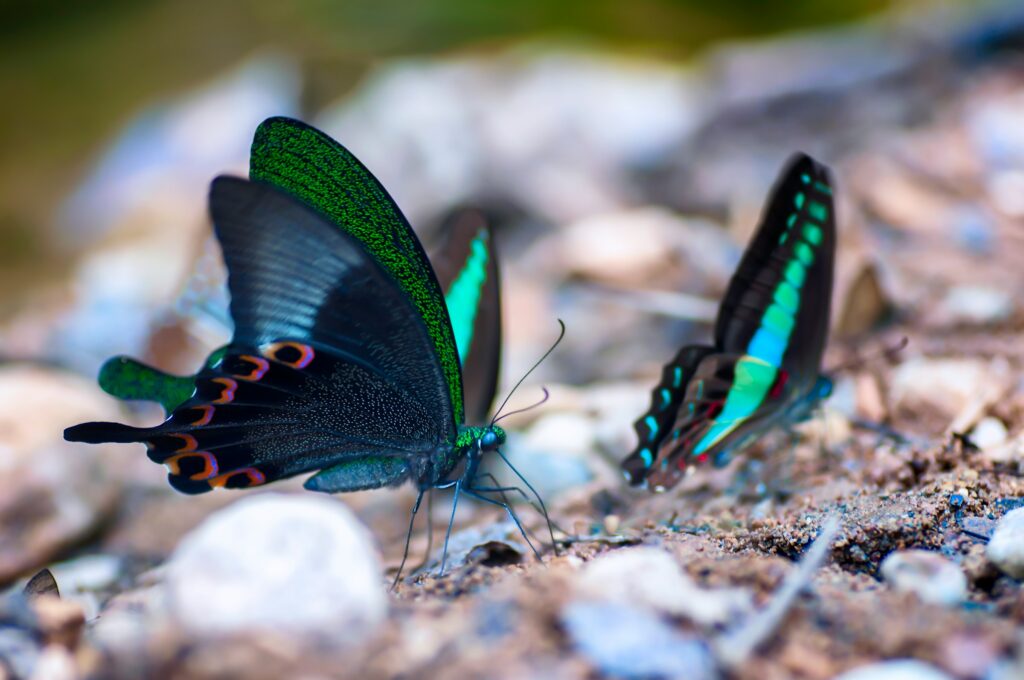
A Warning Signal – too much colour scream danger!
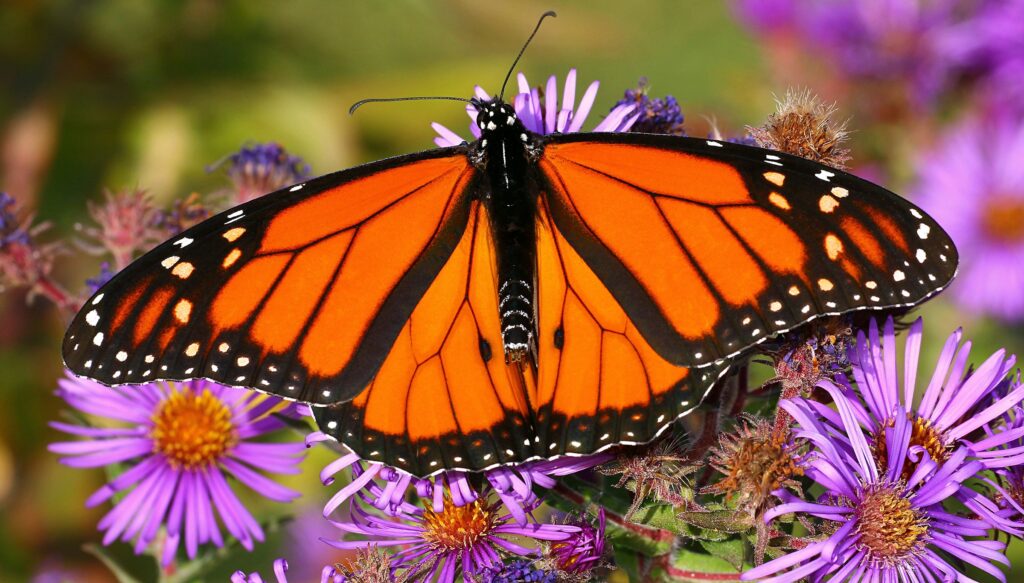
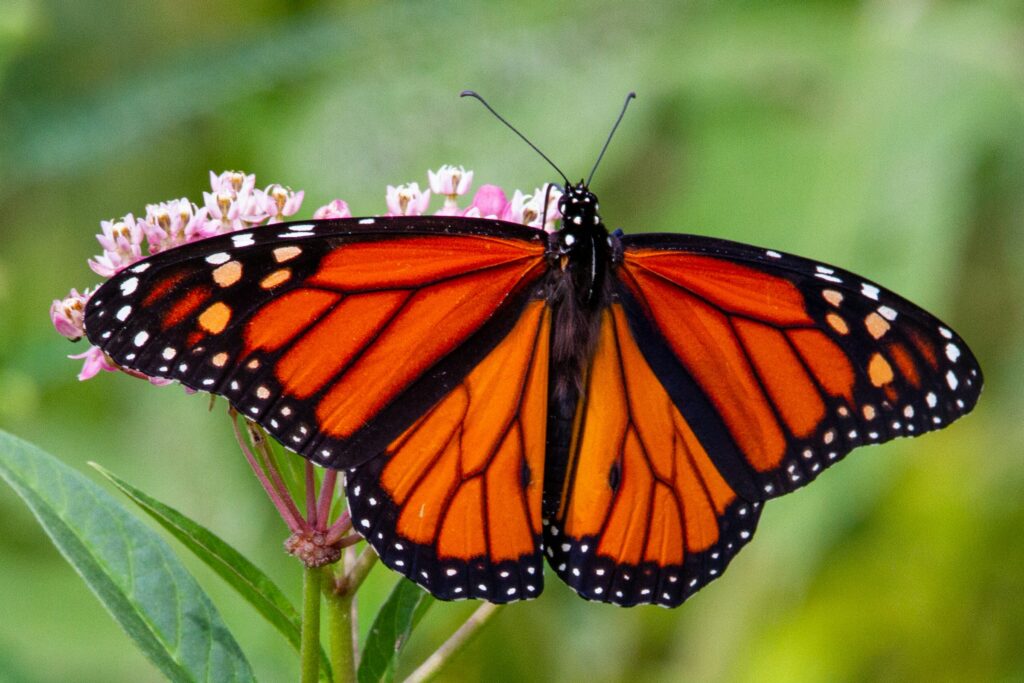
The phenomenon is called Aposematism. Here butterflies display their poisonous and distasteful nature with bright contrasting wing colouration. The most famous example of warning colouration in butterflies is perhaps the Monarch butterfly (Danaus plexxipus). As larvae, Monarchs feed on milkweeds, accumulating chemical compounds called cardenolides that impart an annoying taste and toxicity to both the larva and the adult butterfly. Monarchs inform predators about their distasteful and toxic nature with bright orange and black patterns on their wings.
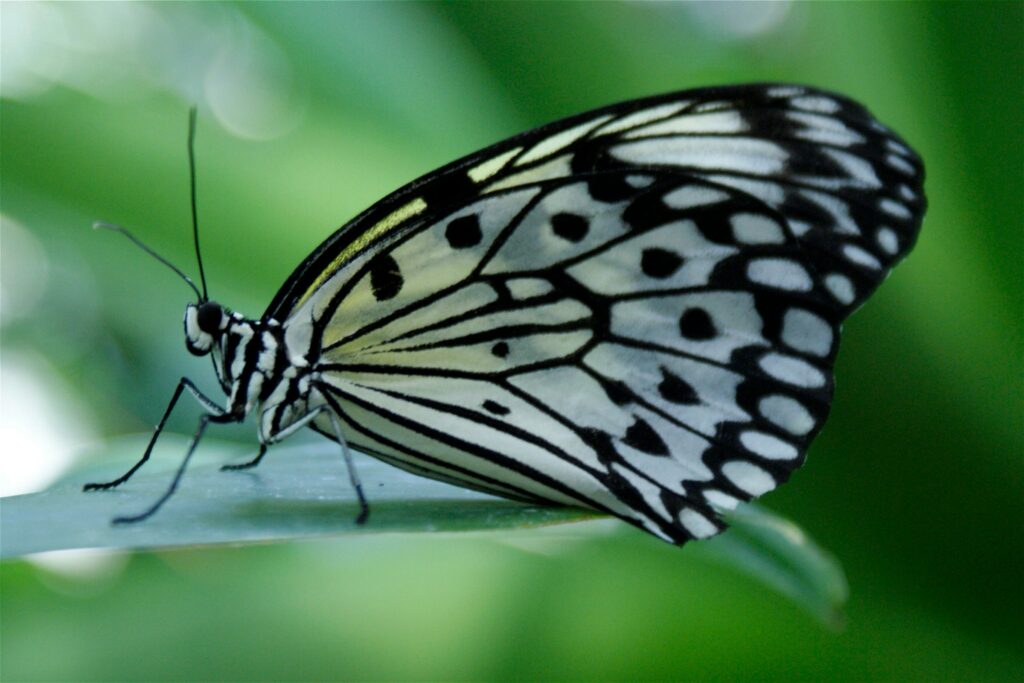
The Paper kite butterfly (Idea leuconoe) tell their toxic story in black and white. The striking contrast created by these two extreme colours on their wings easily draw attention from their predators, etching the pattern on their memory after an unpleasant encounter.
Poisonous prey detected. Activate defense!
Warning colouration, a defensive strategy by the prey puts predators on a “defensive mode” after a bad food experience.
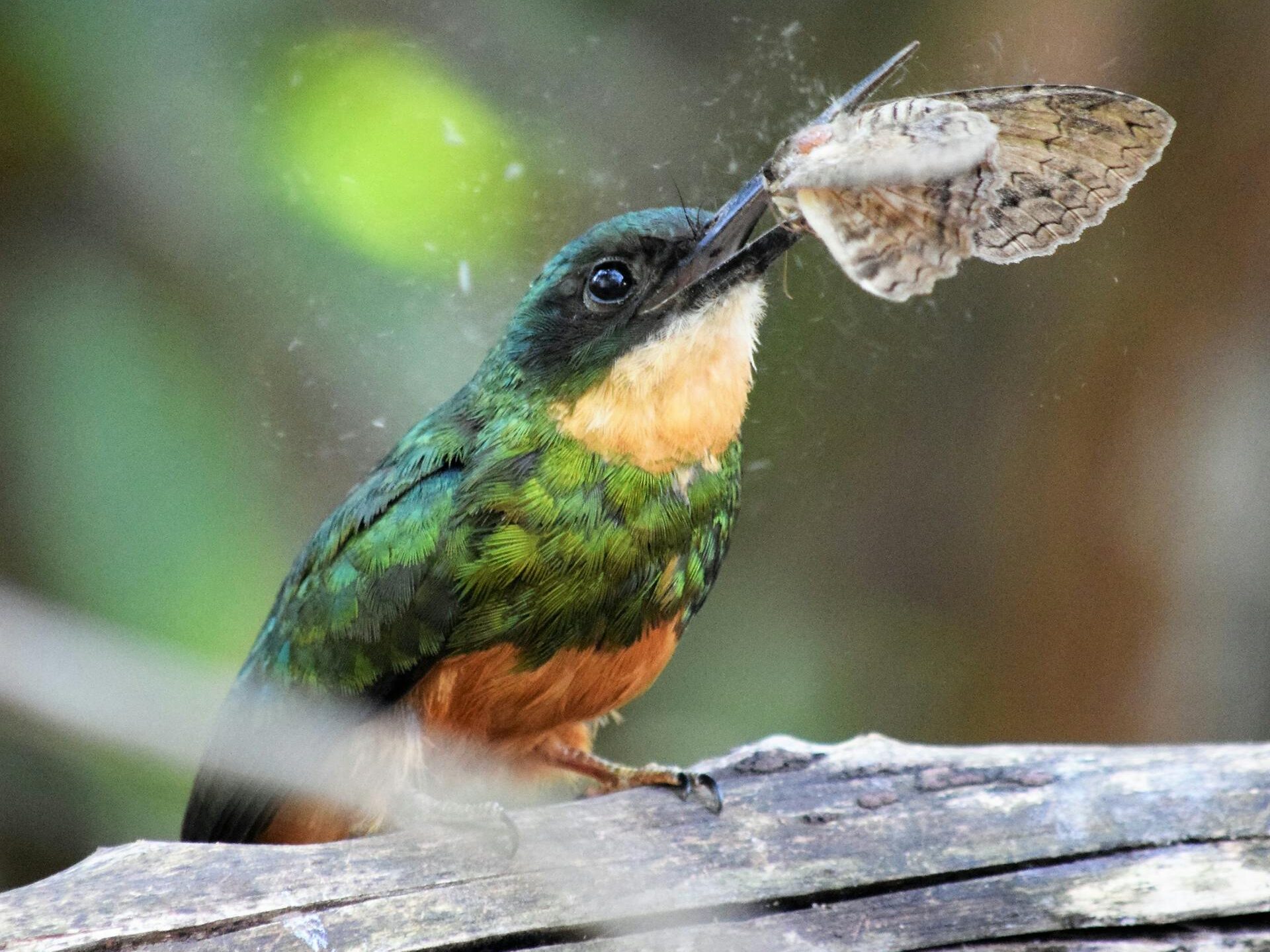
Some visual predators feeding on butterflies, like birds, have the ability to learn. Colour pattern recognition ability may be genetically transmitted or develop after some learning experience in novice individuals. Inexperienced predators, once they encounter such a distasteful butterfly remember the event associating the wing colour pattern with the noxious nature of the prey.
Many toxic butterflies have leathery wings which prevents excessive damage, often allowing them to fly away unharmed when predators regurgitate them whole after tasting their bad flavours.
Sometimes, nauseous flavours may not even confer any protection to the individual butterfly but the experience prevents further attack by the predator on related individuals and the greater community of the species as a whole. The poison stored in the butterfly body may be a slow releasing one, showing its effect only after digestion starts. In that case the individual does not survive but the predator may die or fall sick which creates a learning experience for the predator to avoid such prey in the future.
The best “defense” predators can adopt against such noxious butterflies – simply avoid them!
Work smarter. Not harder.
Inventing striking new wing colour patterns for every new toxic butterfly species born and educating predators over and over again about their toxic nature before they finally learn is an irritating task. Instead, unrelated toxic butterfly species follow the same colour code. It’s like getting their dresses made from the same fabric!
The phenomenon is called Müllerian mimicry after the German naturalist Fritz Müller. Often late-emerging prey species mimic the early-emerging prey species. The late emergers gain advantage out of the near complete task of educating novice predators accomplished by the early emergers. It was observed that in one season, novice predators attack a certain number of butterflies before learning to associate their wing colour patterns with their bad taste. To distribute that load among the prey, unrelated toxic butterflies mimic one another ultimately having a common wing colour pattern to be identified with their distasteful nature.
Tasty mimics that give hollow threats
If the phrase, “fake it till you make it”, could find a better meaning it would be among Batesian mimics. Batesian mimicry is a phenomenon where palatable non-toxic butterflies copy the wing colour patterns of toxic unpalatable butterflies. A little investment on their brightly colourful wings impart the mimics the advantage enjoyed by toxic butterflies due to predator learning behaviour. It spares them the trouble of consuming toxic plants for accumulating toxins during any phase of their lifecycle. The common African mocker swallowtail (Papilio dardanus) females can mimic the wing colour patterns of up to five different poisonous butterfly species.
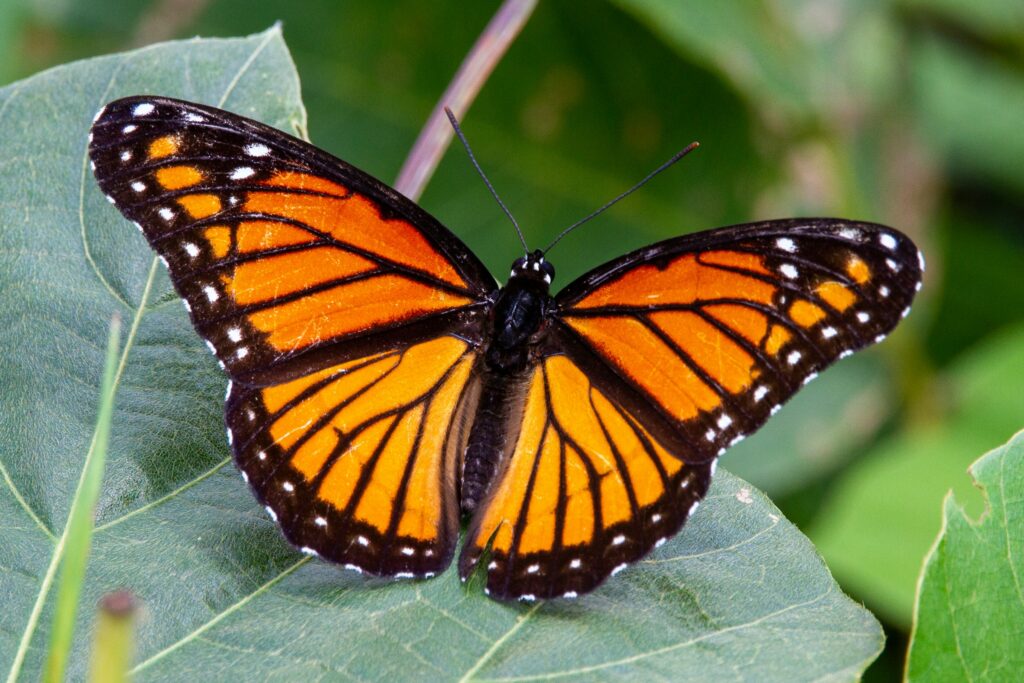
Sometimes harmless mimics can develop some level of toxicity to avoid predators where the toxic model species are rare. This has occurred in the Viceroy butterfly (Limenitis archippus) which share appearance with the toxic Queen butterfly (Danaus gilippus). In habitats where Queens had a small population size, the Viceroy developed toxicity, hence tasting noxious to their predators.
Catch me if you can or watch me slip away
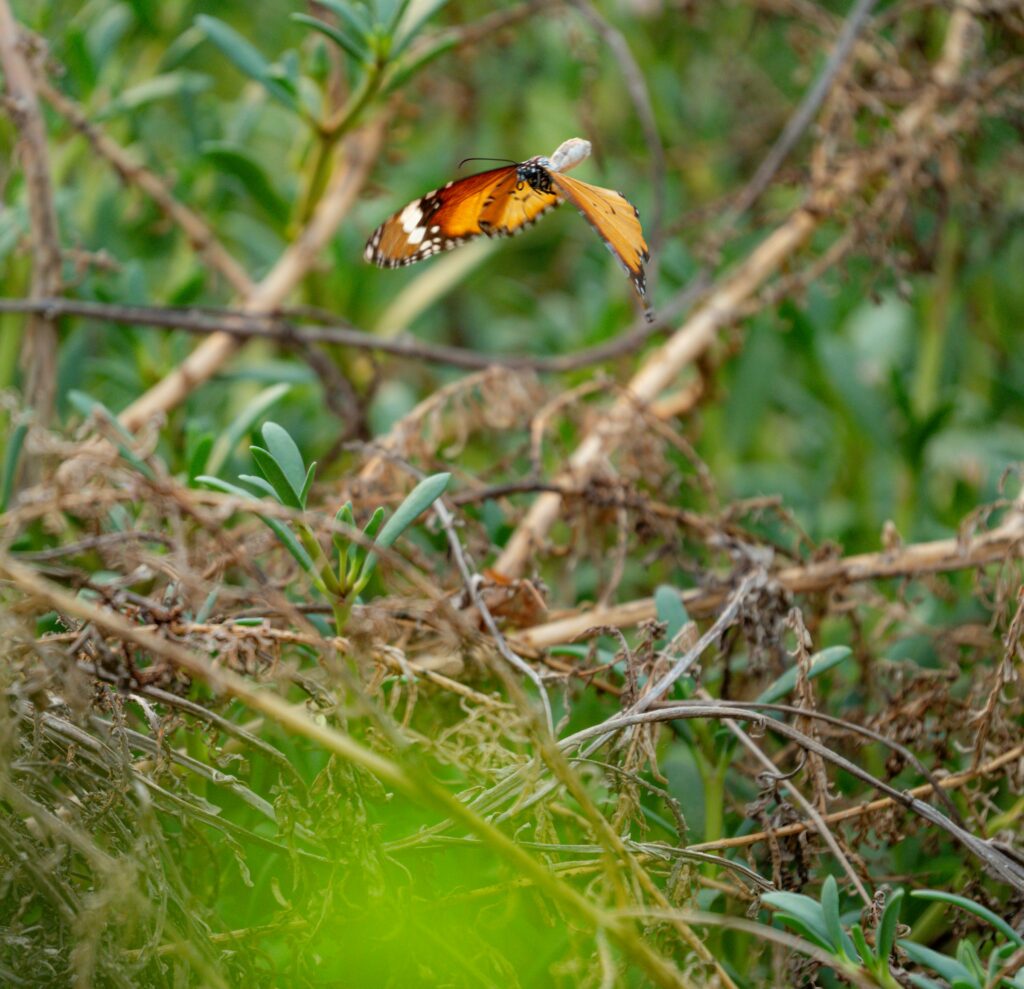
Palatable butterflies with bright colouration are better fliers. A larger thorax with stronger flight muscles, a short abdomen keeping the center of gravity close and erratic flight patterns enable them to escape predators that hunt in the air. Palatable butterfly mimics have softer brittle wings compared to their unpalatable aposematic models. When attacked by predator they can escape with a small bit of the wing being torn off without suffering major damages.
Palatable mimics have erratic flight patterns and better flight speed, a behaviour called “evasive mimicry”. Predators hunting these butterflies during flight recognize such visual cues and avoid chasing them as they know that it will only be a futile endeavour, a wastage of valuable energy for they always escape unscathed.
Peekaboo!
Many palatable butterflies have eye-like patterns called eye spots that imitate vertebrate eyes on the dorsal side of their wings. When threatened by approaching predators they suddenly flash their dorsal side to startle them. The predator thinks it is facing a much larger animal like an owl and backs off which gives these butterflies that essential few seconds to escape. This phenomenon is called the “deimatic display” or “startling display”.
Sometimes butterfly wing eye spots and patterns work by deflecting predator attacks away from the vital body parts like the head and thorax to the fringe areas of the body like corners of the wings.
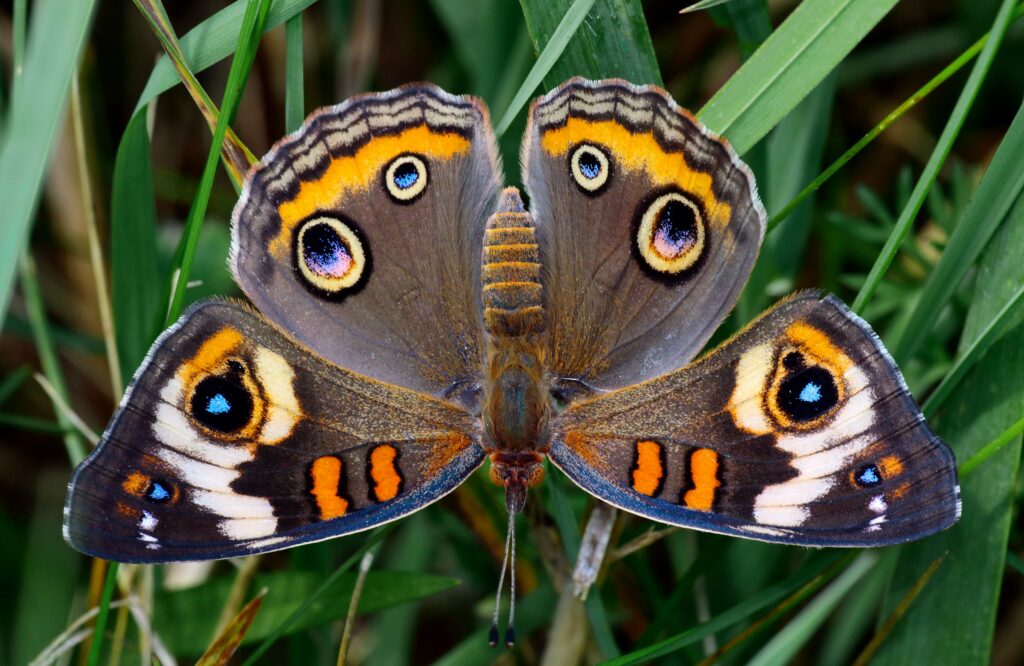
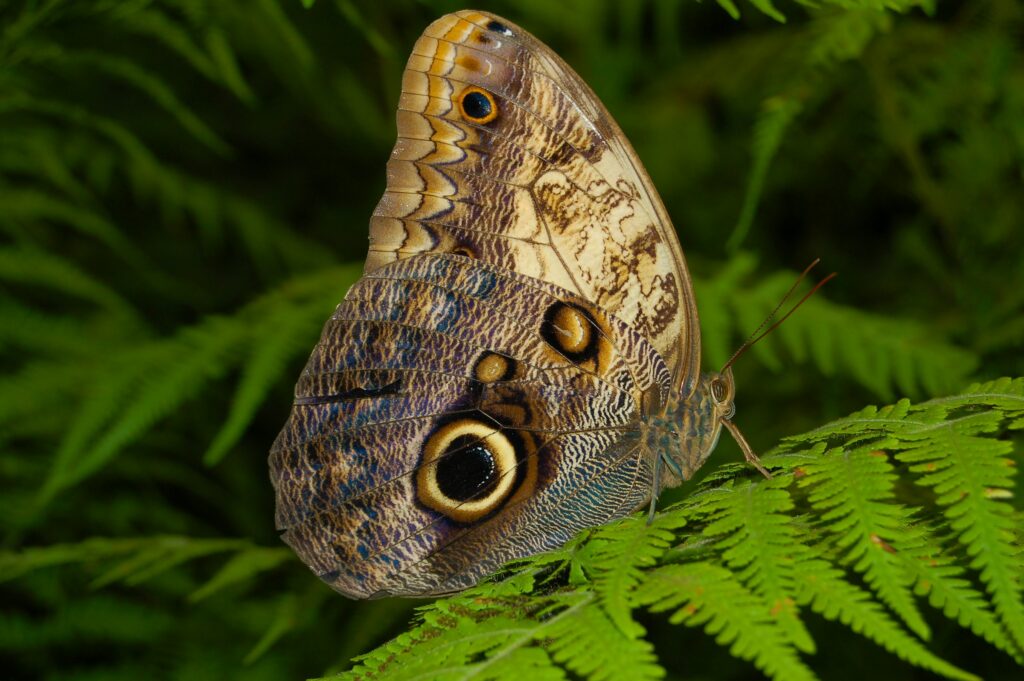
Many palatable butterflies show cryptic colouration only on the ventral surface of the wings that remain exposed when the butterfly sits with their wings closed vertically. This phenomenon is called “masquerade”, that allows the butterfly to rest camouflaged against the backdrop vegetation undetected by visual predators. They have bright colours on the dorsal surface of the wings which become visible only when they are flying or sit with their wings spread open horizontally.
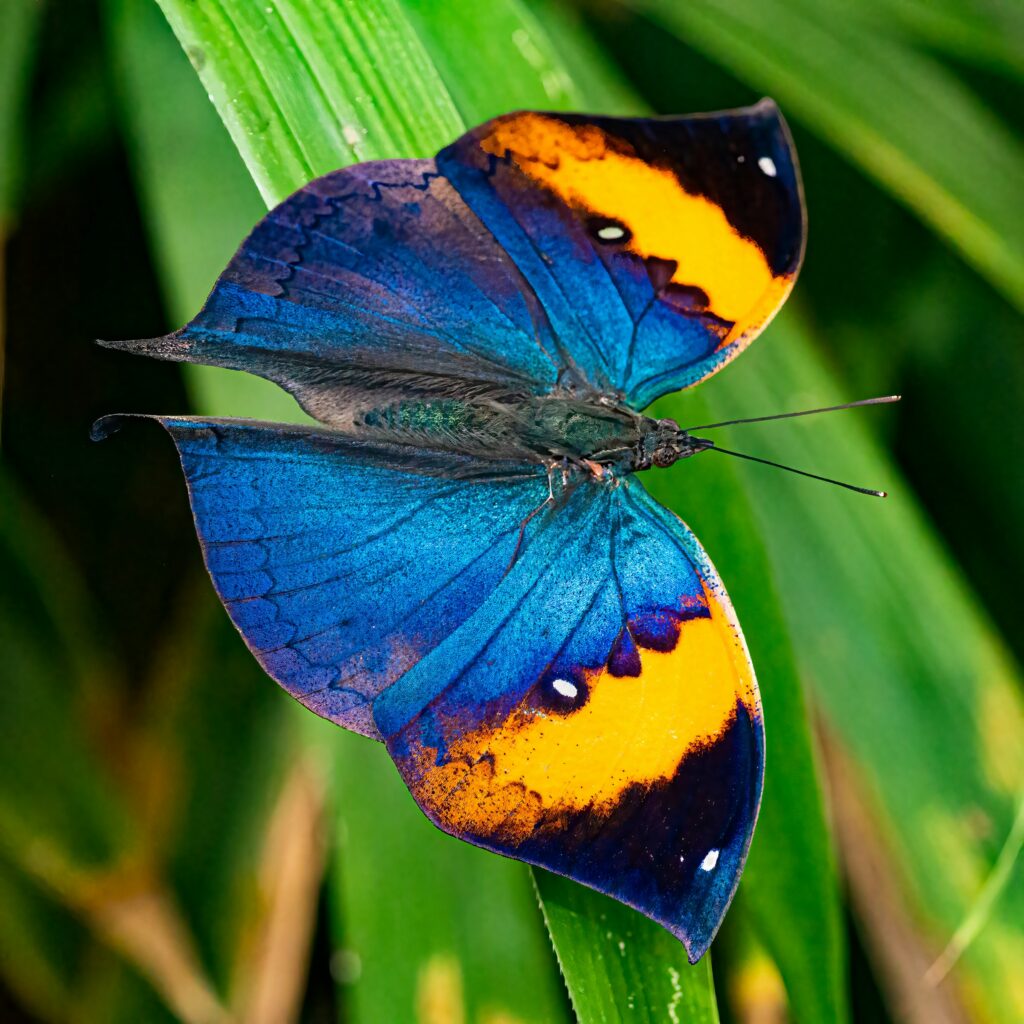
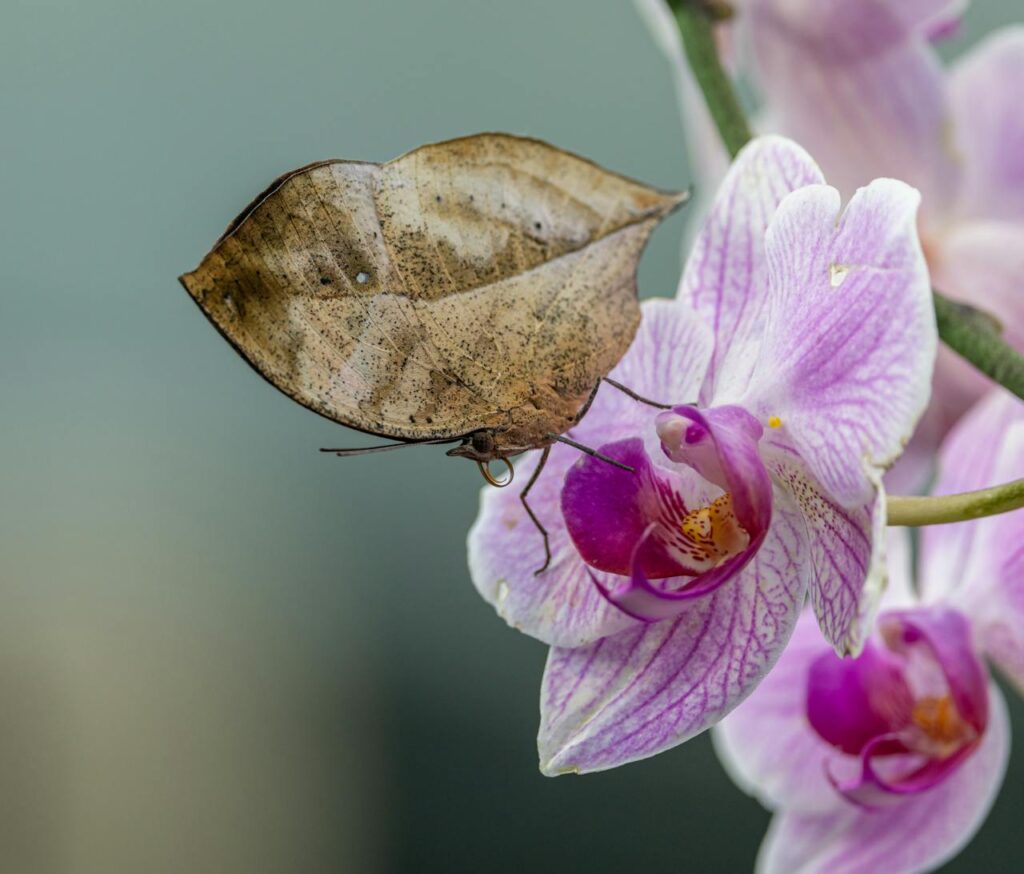
The Indian oakleaf butterfly (Kallima inachus) is the perfect example here. The ventral wing surface of the butterfly is the splitting image of dead dry leaves complete with the midrib and zig-zag veins. The dorsal wing surface, however, is brightly coloured with false eye spots. When detected by predators they suddenly open their wings flashing the colours, startling the predator. This gives them enough time to escape. When in flight the bright colours are visible. When under pursuit the butterfly suddenly drops dead on the forest floor masquerading among dry leaves hidden from the scrutinizing eyes of the predator. This strategy is called the defensive flash colouration.
Solve the puzzle
Butterfly species that use camouflage to avoid visual predators have cryptic colours on both dorsal and ventral sides of the wings. They blend perfectly with their background and fly undetected by predators. They are mostly found in forested areas under low light conditions. With time predators develop better prey detection strategies which then select for butterfly wing patterns that match more accurately with the background. Catching these cryptic butterflies is nothing less than solving a puzzle of optical illusion for the predators.
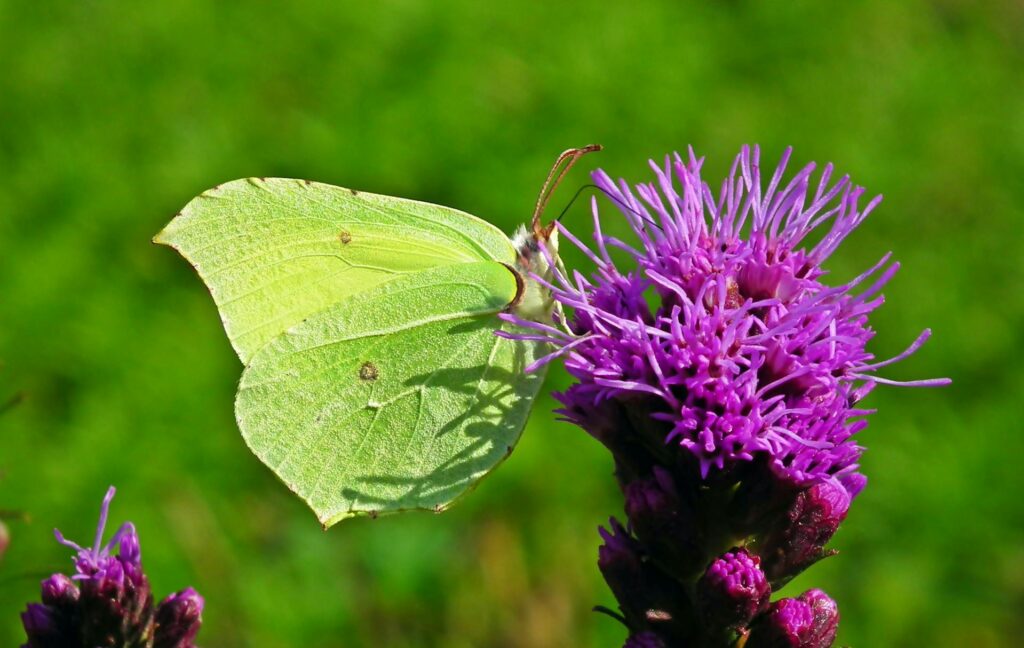
The common brimstone butterfly (Gonepteryx rhamni) is a good example to understand camouflage. Their wings resemble leaves in shape, colour and pattern on both sides, even including the leaf vein structures. When disturbed they assume a rigid form hiding their legs from view easily mistaken for leaves.
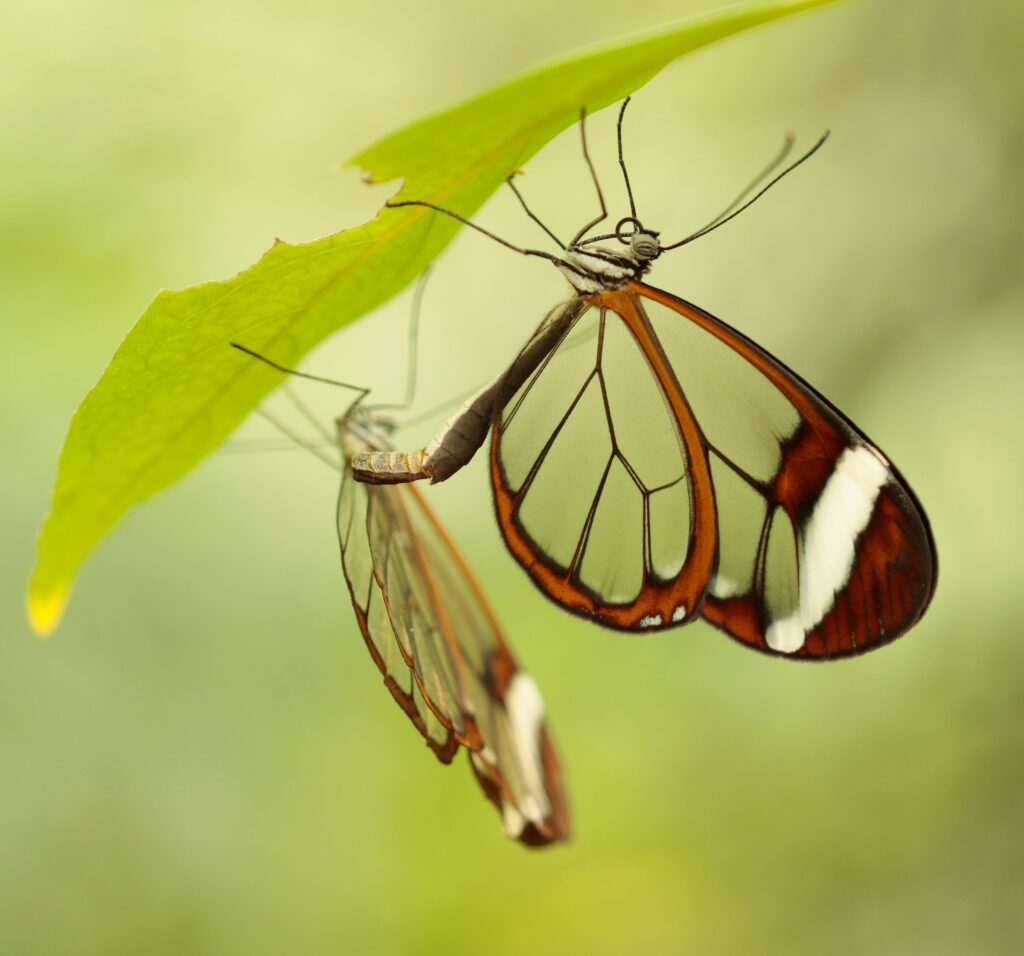
The transparent wings of the Glasswing butterfly (Greta oto) might lack pigments and has a glossy appearance but is actually see-through, confusing predators about their actual body boundary and location. A great way to camouflage is to simply dissappear!
Moths are expert at camouflaging. The buff-tip moth (Phalera bucephala) resembles a stick with the perfect colour and shading to make it look three dimensional. The olive shaded bird-dropping moth (Ponometia candefacta) looks like bird poop and hence ignored maybe even with some tinge of disgust. The moth Uropyia meticulodina mimics a dead leaf hiding in plain sight of predators looking for a tasty snack.
Dazzled by shine
Iridescent and glossy butterfly wings displaying bright colours act as deterrents for visual predators. Glossy surfaces produce flashes of light and accompanied by speed creates a pattern that makes it difficult for predators to outline the body of the prey. Sit-and-wait predators like the praying mantis may drop such glittery butterflies from their menu dazzled by their shine.
Metalmark butterfly species like the Castalia metalmark (Caria castalia) fits the bill here with a glossy metallic green colour for the wings.
A world without colours is a dead one
As habitats are destroyed and biodiversity is lost a colourless future unfolds. Nature’s brilliant colours face a threat called “ecological discolouration”. Miles and miles of lush vegetation are replaced with monochromatic landscapes like monocultures and open grasslands for cattle farming. Animals that adapted themselves in a colourful habitat for millions of years face extinction. The same colours that once protected them from discovery by predators now make them more conspicuous as they struggle to fit in a dull environment.
A study in the Amazon rainforest shows that colourful butterflies are declining in numbers and being gradually replaced by dull coloured species as forests are cut down. Colours are no longer necessary but instead it is turning out to be a threat to the owner. Thus, sexual selection is favouring muted coloured individuals over colourful ones as they survive better in today’s drab environment.
At this rate we apprehend to lose not only our planet’s biodiversity and the ecological services provided by them but also colour from our world before even greater catastrophic events occur.