
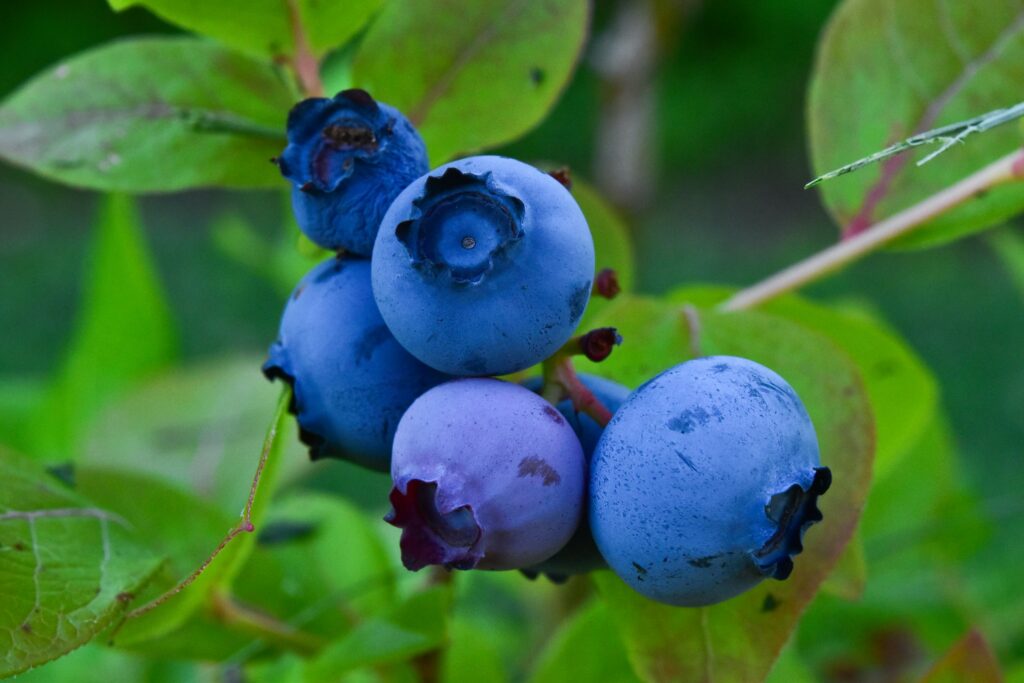
Blueberries are not blue inside. The characteristic indigo blue colour of blueberries arise not from pigments but from a thin layer of wax crystals that coat the fruit surface.
Blueberries may look blue on the surface but once the berries are squished, they squirt out a dark reddish juice, not anything near blue. It is clear that the blue colour of blueberries is not inside the fruit nor can it be hammered out of the skin of blueberries. Instead, on scraping the skin of blueberries, a powdery white waxlike substance can be dusted off after which the bare fruit looks very dark, nearly black.
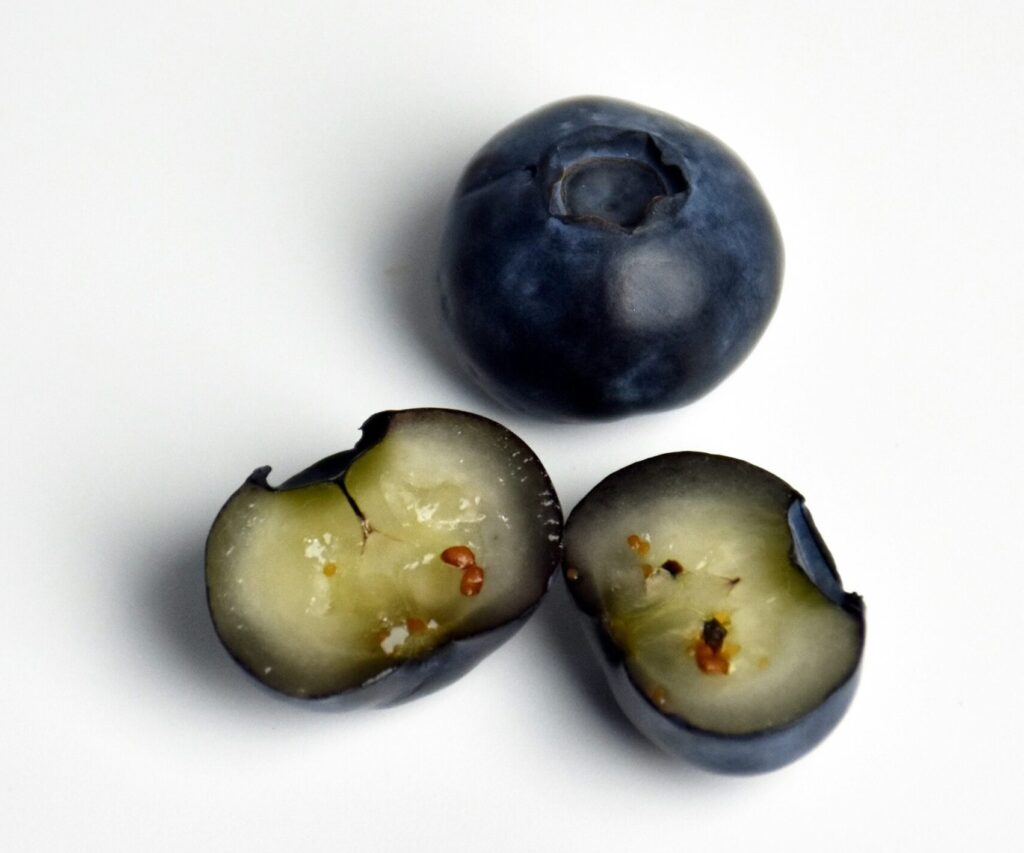
So where does the blue colour of the blueberry reside? Or is it just an illusion, something utterly fictional? The actual situation may be akin to the later.
The characteristic indigo blue colour of blueberries arise not from pigments but from an optical illusion created by a thin layer of wax crystals that coat the surface of the fruit. You will be shocked to know that the phenomenon that gives blueberries their blue colour is not very different from the one that make our skies appear blue.
The real pigments in blueberries are red
Anthocyanins are the pigment molecules found in blueberries. When viewed under a transmission electron microscope, anthocyanins show dark red pigmentation having a high red light scattering profile. A very high concentration of anthocyanins in the blueberry skin gives it a dark colour almost approaching black.
Anthocyanins are nutritionally rich but their dark colour can make the fruit visually inconspicuous to seed dispersing animals. So, plants rely on structural colours to make these nutritionally rich dark fruits appear colourful.
Transparent wax coating makes blueberries blue
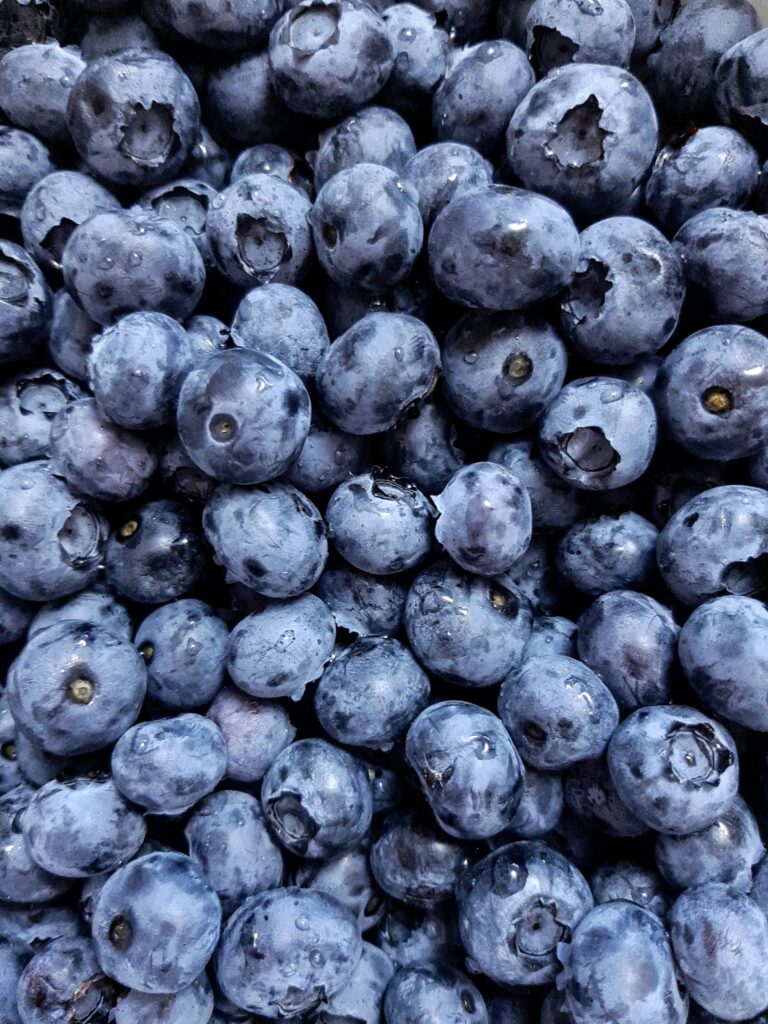
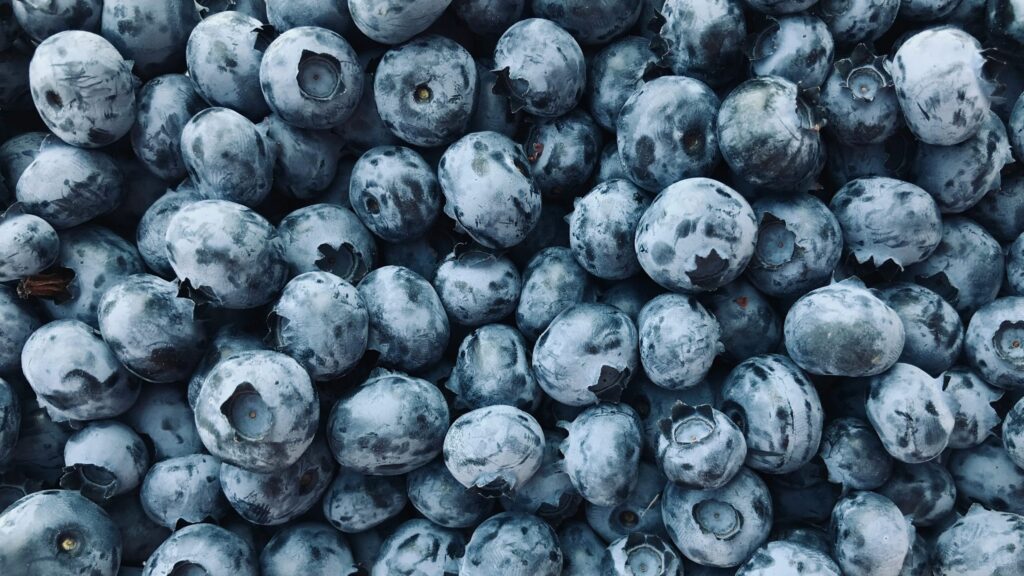
Blueberries and many other fruits have an epicuticular coating of transparent wax crystals called “bloom”. This wax crystal layer develops on the plant cuticle (the external cell layer) and has several functions. The wax coat keeps the surface clean, protects the fruit from getting wet and acts as a resistance against insect attacks and microbial infections.
The wax crystals are tubular in shape and do not follow any regular pattern of arrangement. Instead, the crystals are laid haphazardly on the fruit cuticle. Much like vermicelli sprinkles (jimmies) spread over desserts but at nanoscale!
The nanostructure array created by such irregular arrangement makes the light waves falling on the wax surface to undergo interference. A phenomenon similar to Rayleigh scattering (that gives the sky its blue colour) called Mie scattering occurs here (since size of wax crystals are similar to the wavelength of light). Light waves with short wavelengths like blue and ultraviolet are scattered more. Since the individual wax crystals are not spaced regularly and are variable in size the colour produced from light reflectance is not saturated but a mute hue.
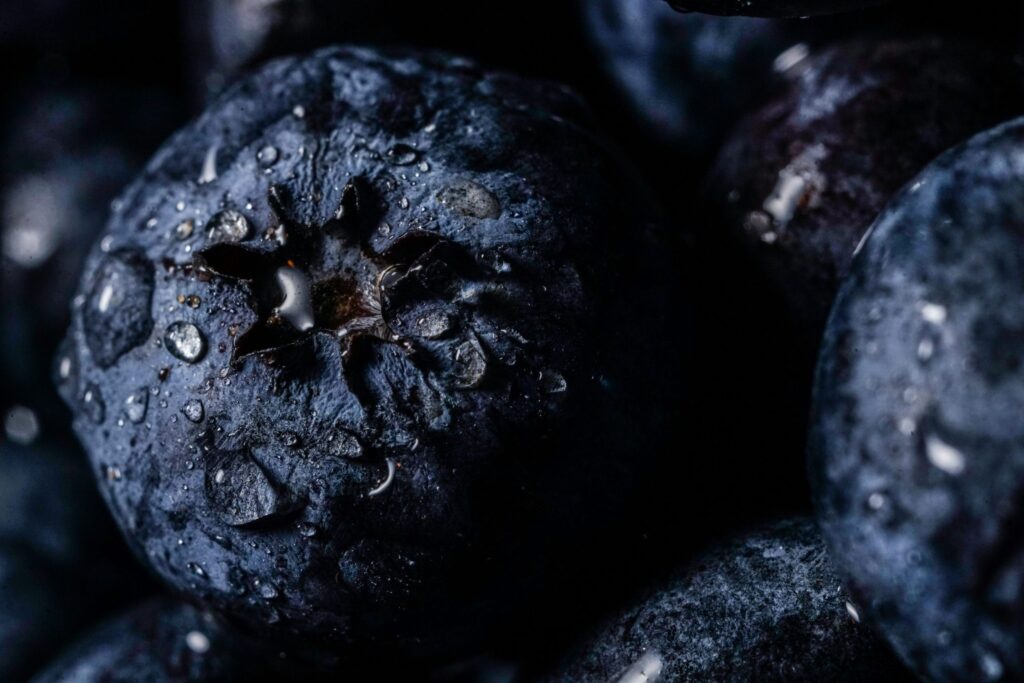
We humans cannot see ultraviolet light so blueberries appear blue to us. But birds have UV vision so they see a blue-ultraviolet coloured blueberry.
Why blue of all colours?
Blue is a salient colour in vertebrate vision. Most vertebrates can identify blue chromatically. Hence, blue colour is an invaluable signal for plants that are dependent on frugivores for seed dispersal. Plants that bear blue fruits exploit the blue sensitivity of vertebrates to reach their ultimate objective, that is, obtaining a higher fitness value by increasing the survival of offspring.
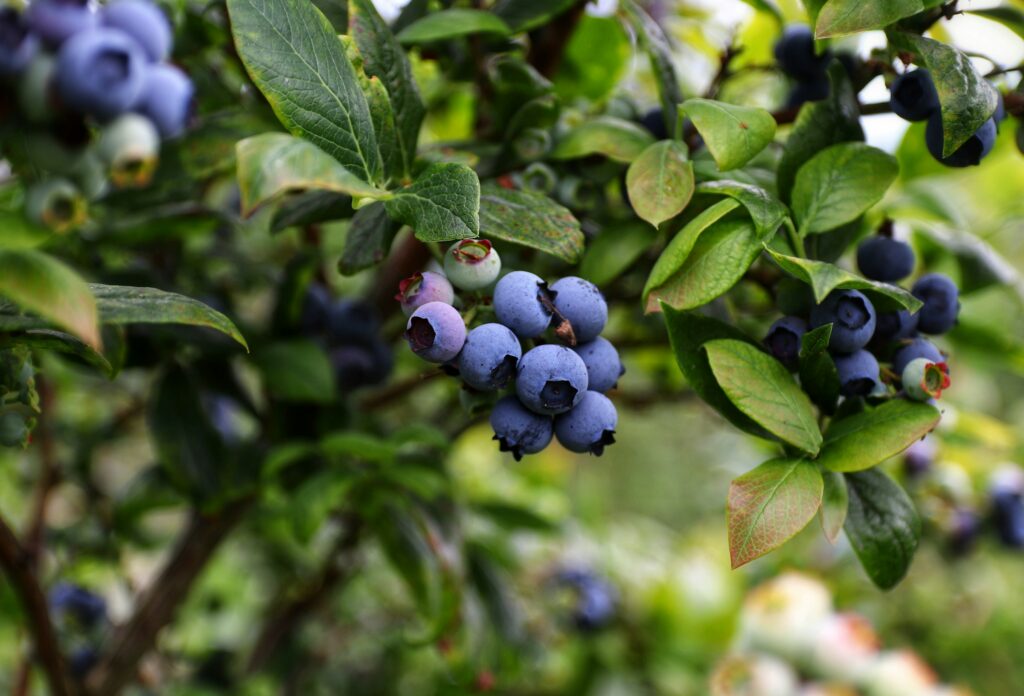
The background colour created by the foliage against which the fruit is borne is as important as the colour of the fruit when it comes to fruit visibility to vertebrates. Waxed blueberries do not differ much in luminance to the leaf background. But in terms of chromaticity the blue colour waxed blueberries stand out against green coloured foliage providing the stark colour contrast necessary for frugivores to spot the fruit out. Whereas blueberries with the wax coating removed do not stand out against the colour of the foliage and can be easily lost visually.
Why structural colour and not an actual blue pigment?
Blue is an expensive colour and thus very rare to find in nature. Those plants that choose to bear blue pigmented fruits and flowers must make a heavy sacrifice to obtain the benefits of blue. Blue fruits and flowers reflect the high frequency low wavelength part of the light spectrum comprising blue and ultraviolet light. This means the pigment molecules must absorb lower energy green, yellow and red light, reflecting back higher energy blue and ultraviolet light.
While being energetically expensive to create for the plant, true blue pigments are almost non-existent in nature. Synthesizing such energetically demanding chemical substances are unsustainable because they will ultimately run at a loss in the long run. Plants however have found a less expensive way to look blue. Instead of a chemical substance they have adopted a structural approach that reflects blue light.
Replicating the blueberry blue on paper
Can we adopt the same structural approach to make things look blue without being actually blue? The answer is yes although more research is needed.
A team of researchers have successfully extracted the epicuticular wax coating from the surface of blue “bloom” fruits using chloroform dissolution and recrystallized the wax on a black card giving it a blue hue similar to the one found on the fruit.
Replication of such naturally occurring structural colours on items like fabrics, cars, walls etc., can make the colouring process much eco-friendlier and more sustainable. We need not depend on chemical dyes that are toxic and persistent in nature anymore, gradually moving towards greener structural colouring techniques in the future.