
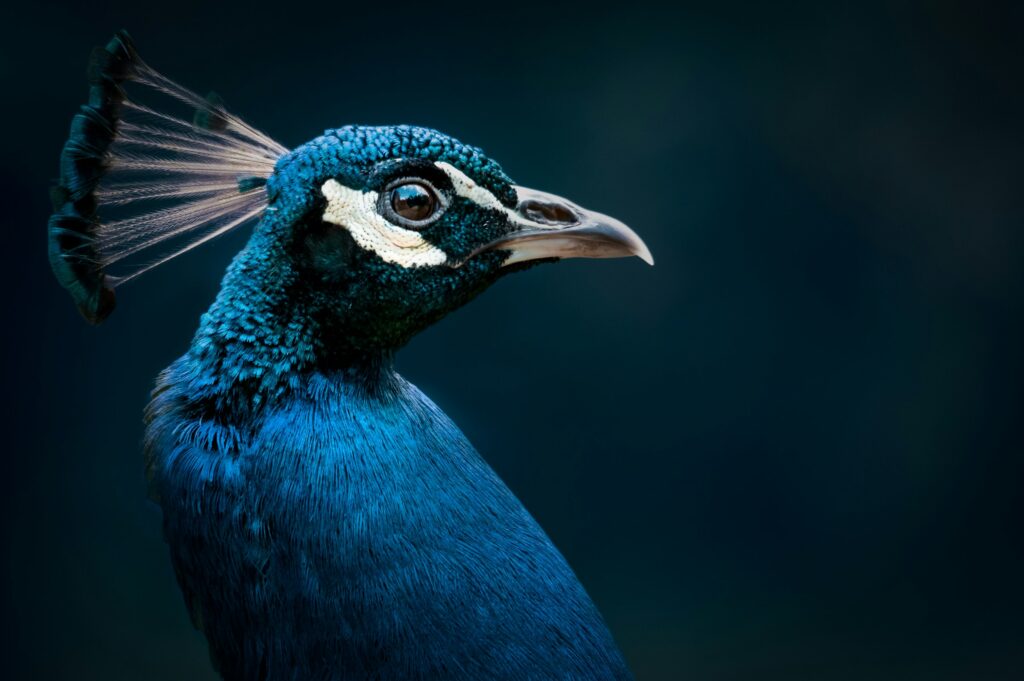
Blue is the rarest colour in nature. Blue flowering plants are rare, and blue animals are even rarer. But why is blue designed to be the rarest colour in nature? You might find the answer amusing.
Blue is everyone’s favourite hue. As early as the 1940s surveys showed this preference in the human population. With modernization and brand-new statistical tools available at hand to help analyse results, the trend achieved more clarity. Everyone prefers blue, in many different shades however, irrespective of country, culture, gender, economic status, ideology or political orientation.
Keeping its popularity aside, blue as a pigment is extremely rare in nature. In fact, blue is the rarest colour in nature. Less than 10% of all the 300,000 to 352,000 known species of flowering plants are blue. If we attempt to find the “true blue” ones out of them the number shrinks down to zero. Most plants appear blue by adjusting the pH of pigments called anthocyanins that give red in acidic environments, violet in neutral and blue under alkaline conditions. Others get help from metal ions, chemically tweaking the light reflected from them to appear blue.
Blue pigment in animals is even rarer to find. Till now, only one animal is known to produce a blue pigment and that is the Obrina Olivewing butterfly (Nessaea obrinus). All the rest of the blue seen across the animal kingdom is due to structural colouration derived from manipulating reflected light.
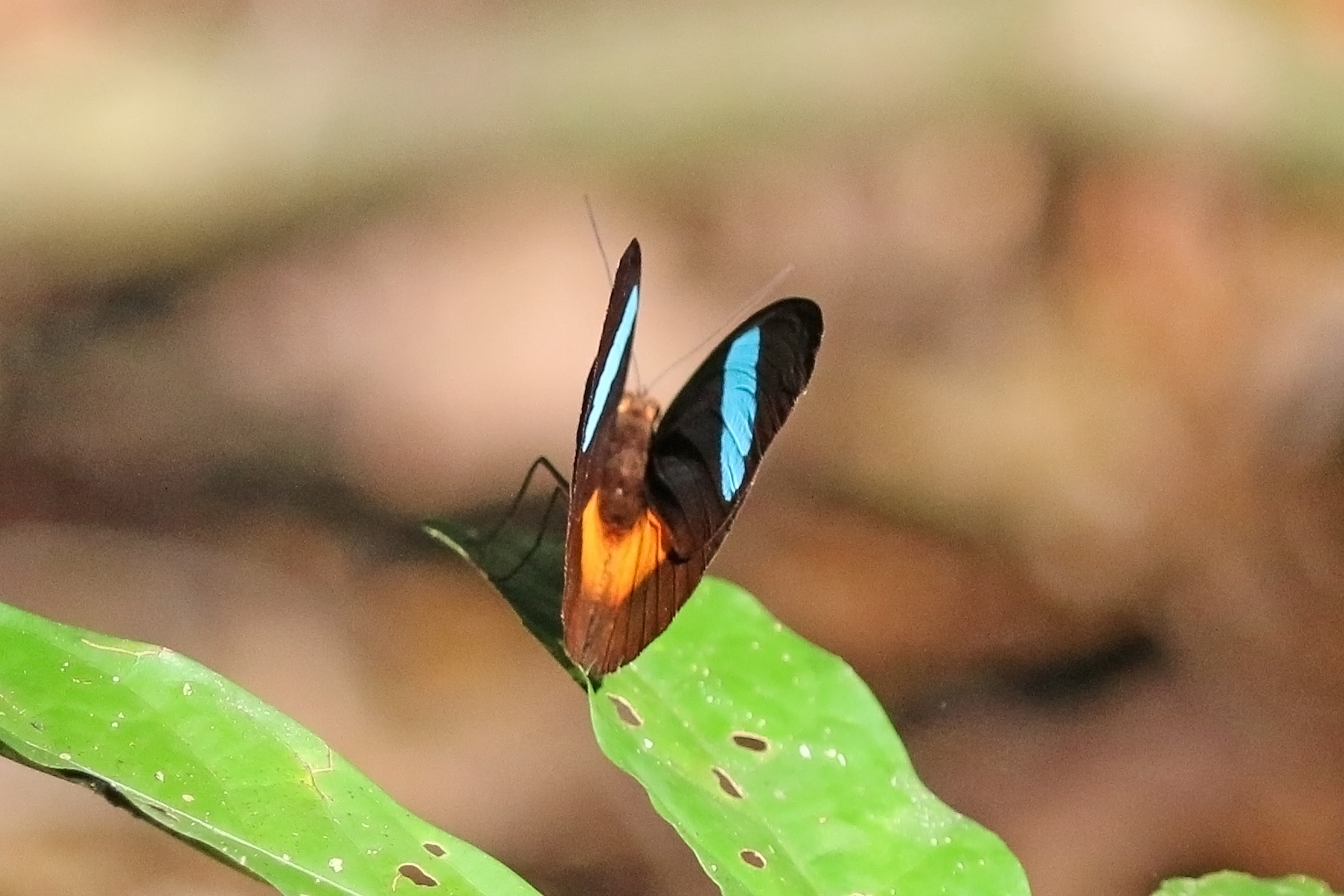
(Image source – Charles J. Sharp, CC BY-SA 4.0 https://creativecommons.org/licenses/by-sa/4.0, via Wikimedia Commons)
The highly coveted blue eyes? That too is an illusion. There is no blue colour in blue eyes. It’s just the iris around the pupil of the eye playing with light, scattering different wavelengths of light differently. The tissue of the iris in people with blue eyes lack the pigment melanin. Hence, it absorbs all colours and reflects only the blue part of the spectrum tricking our brain into seeing blue. The effect is similar to the blue of the sky and the water.
But why this rarity? Before we get to that we must first understand how we see colours.
Why we see what we see – the mystery behind colours
White light or the predominant form of light received from the sun, is made up of different wavelengths of light. The different wavelengths of light activates different receptors in the eye and the brain perceives them as different colours. The wavelengths we can see is called the visible spectrum. The invisible part beyond either side of the visible spectrum is called the ultraviolet and infra-red part of the spectrum.
When light falls on an object some of these wavelengths are absorbed and some of it is reflected back. An object appears white when all the different wavelengths visible to us are reflected back and appears black when all of them are absorbed. Objects that reflect back only a part of the light spectrum appear to have colour.
The nature of the surface, its physical structure and chemical composition determine the wavelengths of light that will be absorbed and the ones that will be reflected back. All of these factors influence the colour of the subject.
The human eye like any other vertebrate eye has receptors called cones that sense colours. Human vision is trichromatic due to the presence of three different types of cones in the retina with peak activity at blue, green and red wavelengths of light. Other vertebrates like dogs have dichromatic vision with only two types of colour receptors. Most birds are tetrachromatic and can see into the ultraviolet part of the spectrum. Reptiles can see infra-red light.
Invertebrates do not have cones for colour receptors but similar opsin containing photoreceptor cells in their compound eyes sense colours. Most insects are trichromatic with UV vision. The mantis shrimp has the most complex colour vision with 16 different types of photoreceptor cells.
The physics behind the colour blue – structural colours
Most of the blue we see around us is an action of physics. The sky appears blue due to the scattering of light by gaseous molecules in our atmosphere. Since shorter wavelengths like blue are scattered more than longer wavelengths like green and red the sky appears blue. The phenomenon is called Rayleigh scattering. And water appears blue because it reflects the blue colour of the sky.
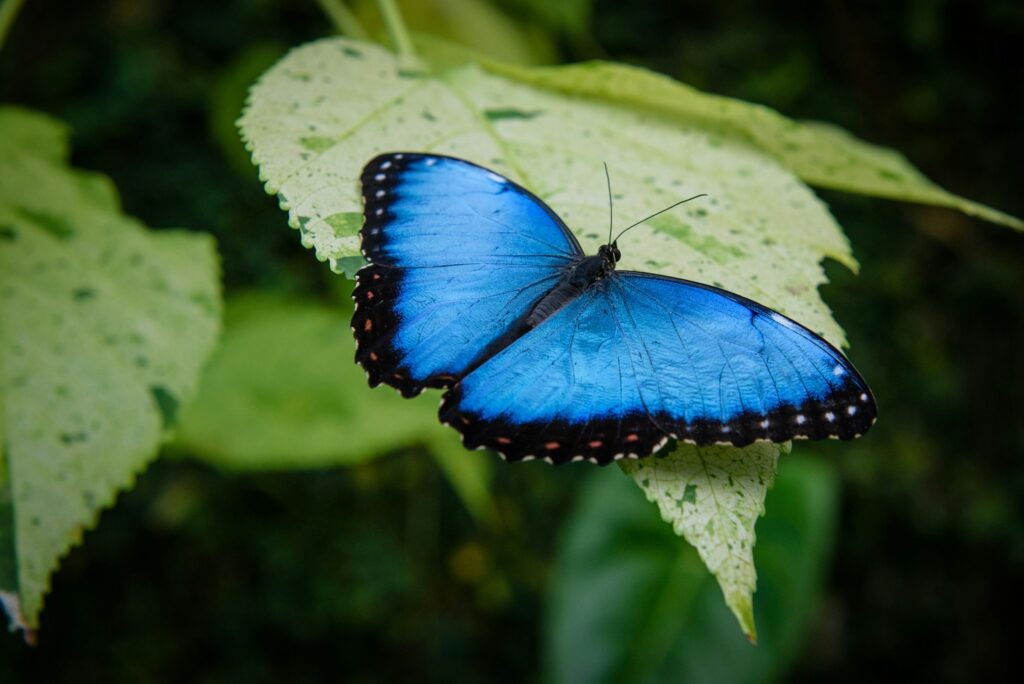
Something very similar happens in animals. Most of the blue colour we see in the animal kingdom is the outcome of structural colouration. The best example is the Blue Morpho butterfly. The scales on its wings creates regularly arranged nanostructures that scatter light rays falling on them. The longer wavelengths cancel out and only the shorter wavelength blue light escape giving the butterfly a bright blue colour.
The blue feathers of Blue Jays also result from structural colour. The keratin of their feathers contain the black pigment melanin but the nanostructure array of the keratin molecules and the air pockets lying above them creates a situation where only blue light can escape. Melanin absorbs the red and green part of the spectrum.
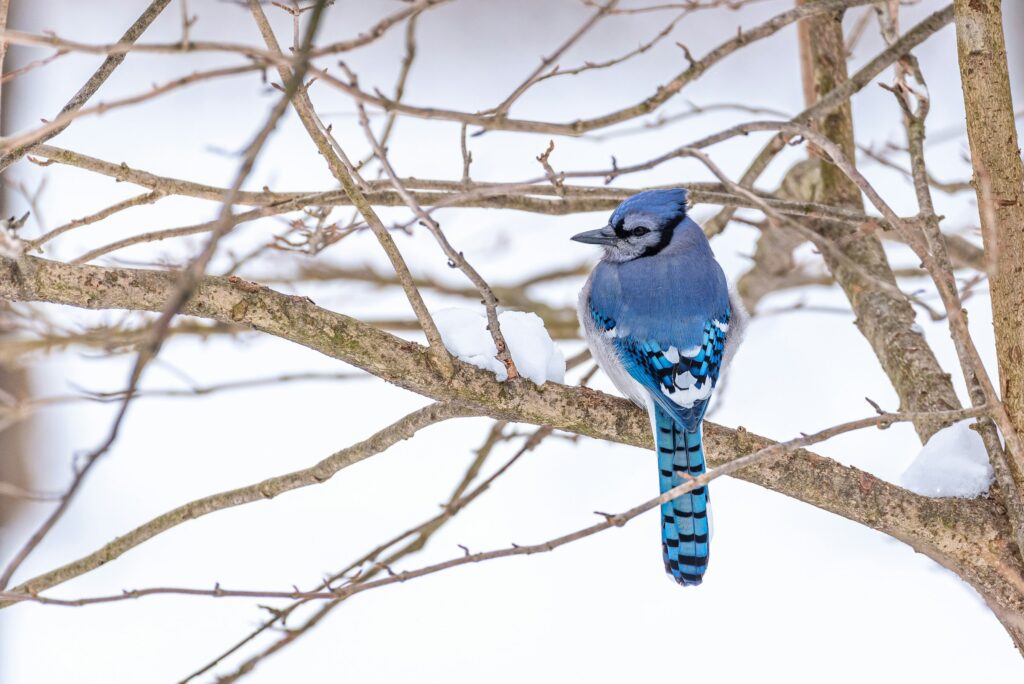
Thus, most of the blue in animals is the outcome of physics splitting light into its component colours and scattering only blue.
Why is blue the rarest colour in nature?
For animals much of their colour is obtained from the food they eat. Take Flamingos for example. Flamingos are born with whitish or grey feathers but gradually develop that bright pink and rich orange-red colour as they consume carotenoid containing shrimps. The shrimps again had obtained that colour from feeding on algae that produce carotenoid pigments which give them that red-orange hue. Now, there is no such thing as a “blue pigment” in plants that the animals can obtain from their diets to paint themselves blue with. When blue plants are scarce blue animals are almost absent.
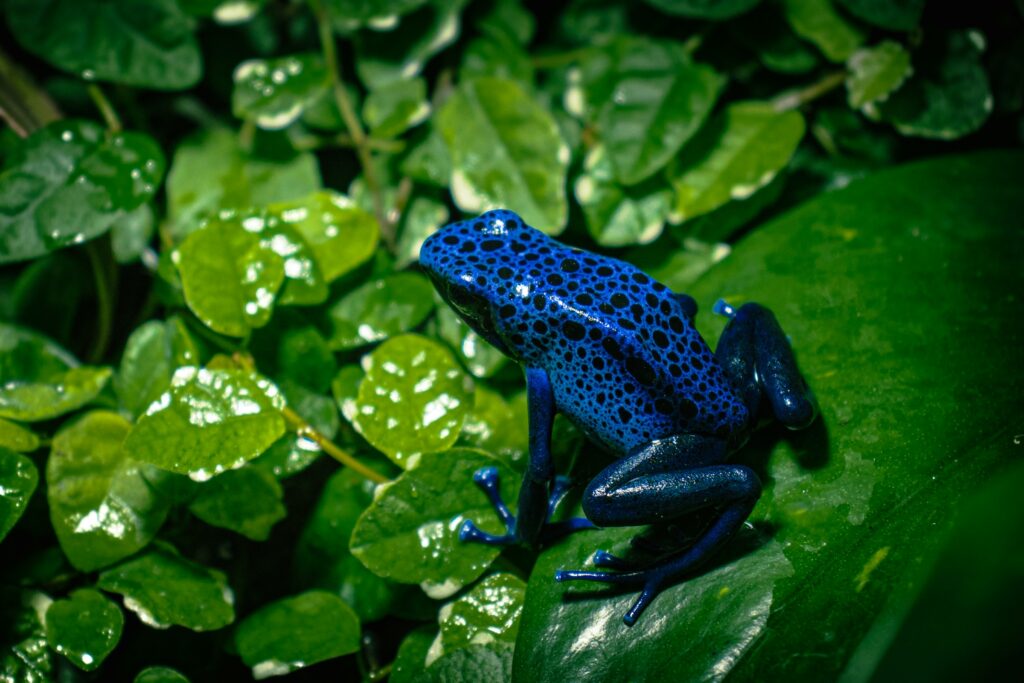
Blue as a colour is difficult to produce and demands heavy investments of energy. Chemical synthesis and modifications being highly complex and energy intensive is not an economical option. Structural modifications of body surfaces that reflect light instead is a less costly alternative. Hence, structural colouration is the conventional technique used by animals to get all the majestic shades of blue we see in the animal world. Be it the blue Morpho butterfly from the social media emoji or the Blue jay or the majestic Peacock or the venomous Blue poison dart frog, all employ physics to manipulate visible light.
As for plants while blue flowers are a rare creation in itself, blue foliage is almost absent except for some tropical plants found in the understory of rainforests. The magnificent blue flowers we see are not truly blue but a consequence of pH manipulation of the red pigment anthocyanin. Even the blue of blueberries is an outcome of structural colouration resulting from the waxy coating on the skin of the fruit.
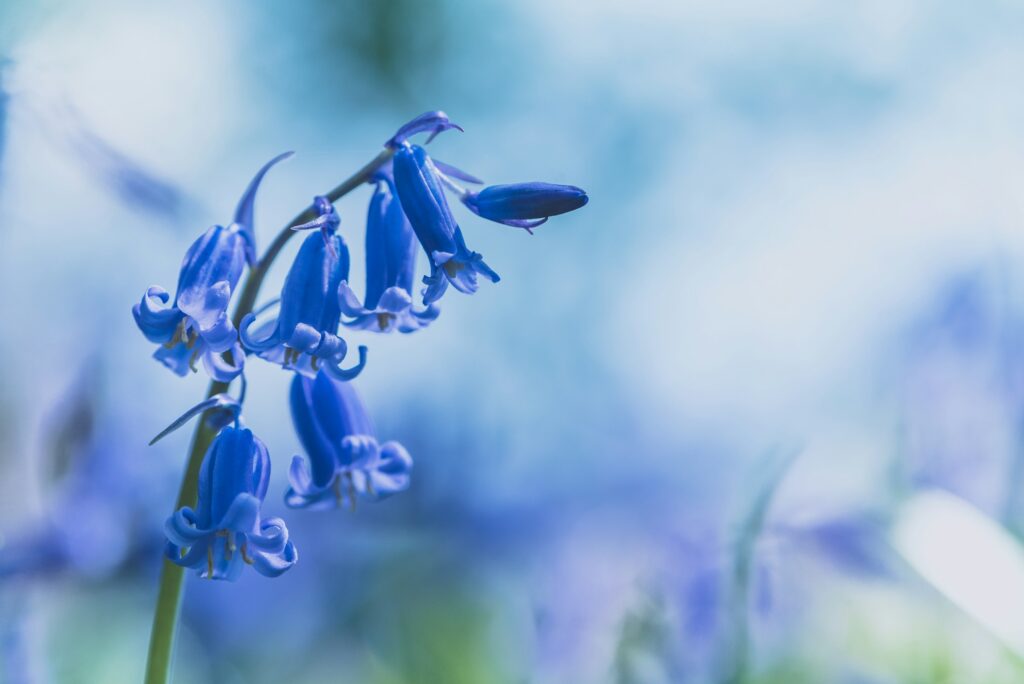
The answer lies in “energy” again. While creating a pigment that reflects high energy short wavelength blue light is energy consuming, giving up this energy rich resource seems like blatant foolishness.
Blue light carry the highest amount of energy among all the wavelengths of the visible spectrum. Plants and animals depend on this high energy light from the sun for various processes be it photosynthesis or thermoregulation. So, since blue is essential it is absorbed. The object is coloured with only that wavelength of light which is rejected or unwanted. Subjects that appear blue actually reflect blue light – sacrificing a valuable energy resource to appear that colour.
But, what do they gain from this sacrifice? Does the benefits of being “blue” overtake the costs incurred to appear blue?
Blue on demand? The necessity of blue in nature
Blue colour reception arose some 500 million years ago in animals. The ability to see blue light existed but synthesizing blue pigment was difficult. Some plants evolved to exploit blue vision in insects through pH changes and chemical modifications of their existing pigments. There is no true blue pigments but anthocyanins that give blue colour under alkaline conditions. Some metal ions also impart blue colour to plant pigments.
If anything different in the colour of a flower has the potential to grab attention from pollinators it gives a competitive edge to the plant. Blue flowers are attractive to pollinators and bees are known to have a special affinity towards blue and violet hues. Since blue is a rarity in nature, having blue flowers makes the plant stand out to its pollinators giving it a reproductive advantage over other non-blue species.
The same is true for mate attraction in animals. Having a rare colour can make the animal stand out helping with both species identification and mate attraction in an environment filled with variously coloured species.
Blue functions as a warning too. Being an unique colour it is easily spotted by animals with blue vision. Many poisonous animals warn their predators of their toxic nature with bright blue hues. The phenomenon is called aposematism or warning colouration.
Sometimes light blue colours can help in thermoregulation. Blue helps with cooling down animals in warm environments with high radiation by reflecting back the high energy blue wavelength and absorbing only the low energy green and red wavelengths.
So, even if blue is the rarest colour in nature it has many unique functions. Perhaps the rarity of blue itself makes it all the more attractive.
People love blue and want more of their favourite colour. Many commercially popular flowers are not blue. Scientists in Japan have developed a blue chrysanthemum by genetic engineering of blue colour producing genes of two different species of blue flowers, challenging nature’s design. The day may not be far when we shall be able to tweak genes to make our favourite pets look pretty in blue hues.