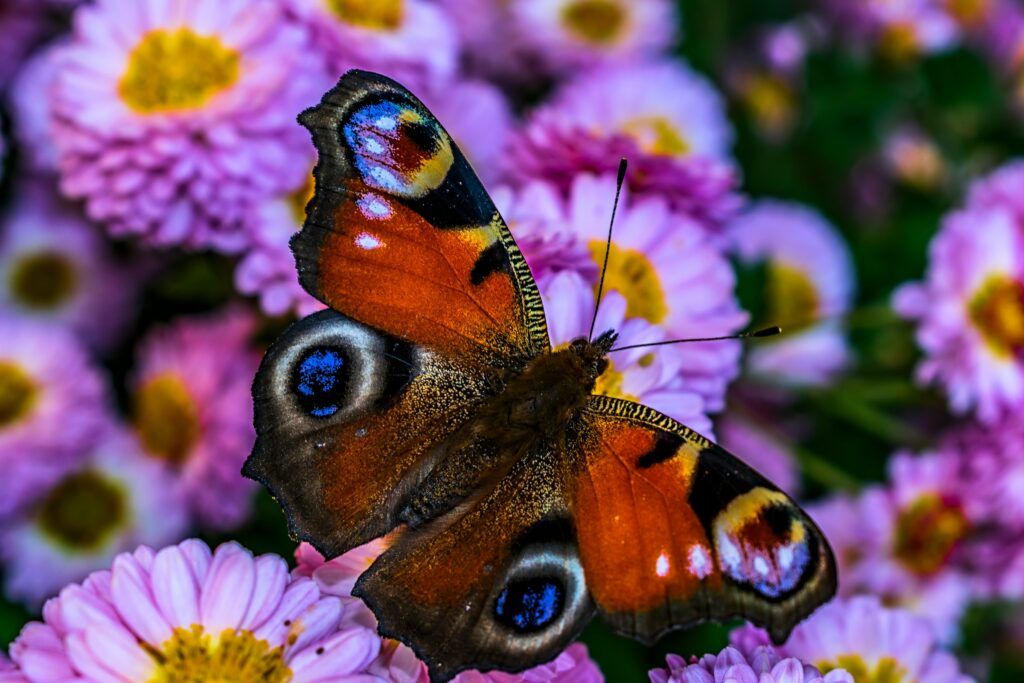
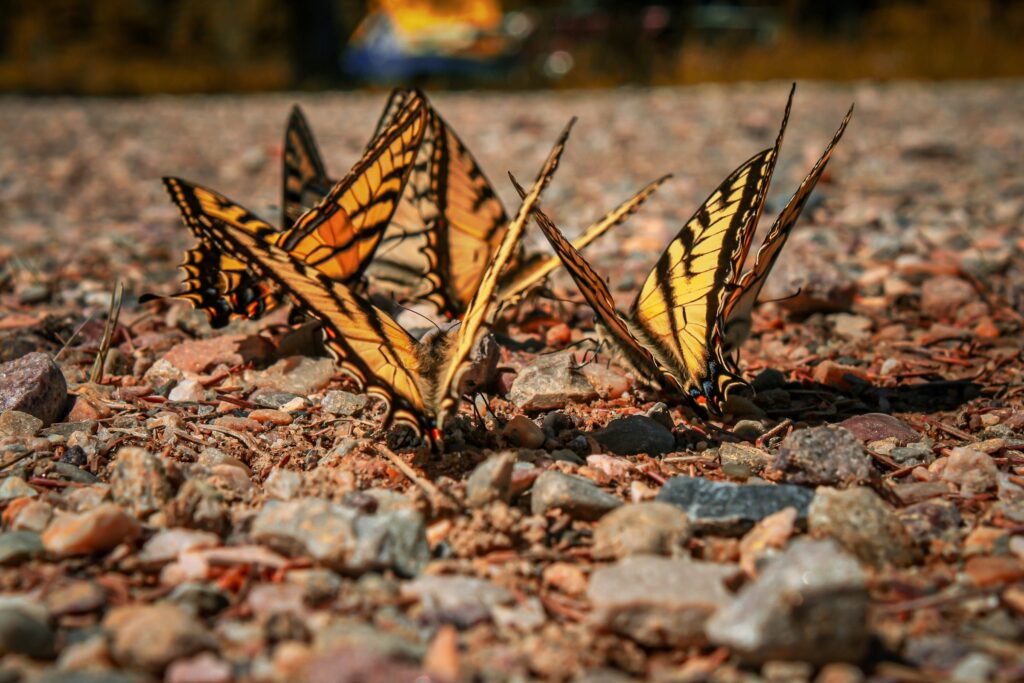
Deforestation is turning once brightly colourful butterflies duller by the day as they gradually fade into their surroundings to survive.
Survival in nature means adaptation to its various elements. For butterflies, sadly, survival translates to losing the colour from their wings. The rich colour on their wings that make butterflies uniquely distinct from any other insect, are bleaching, as large scale deforestation gradually wash out nature’s colour palette.
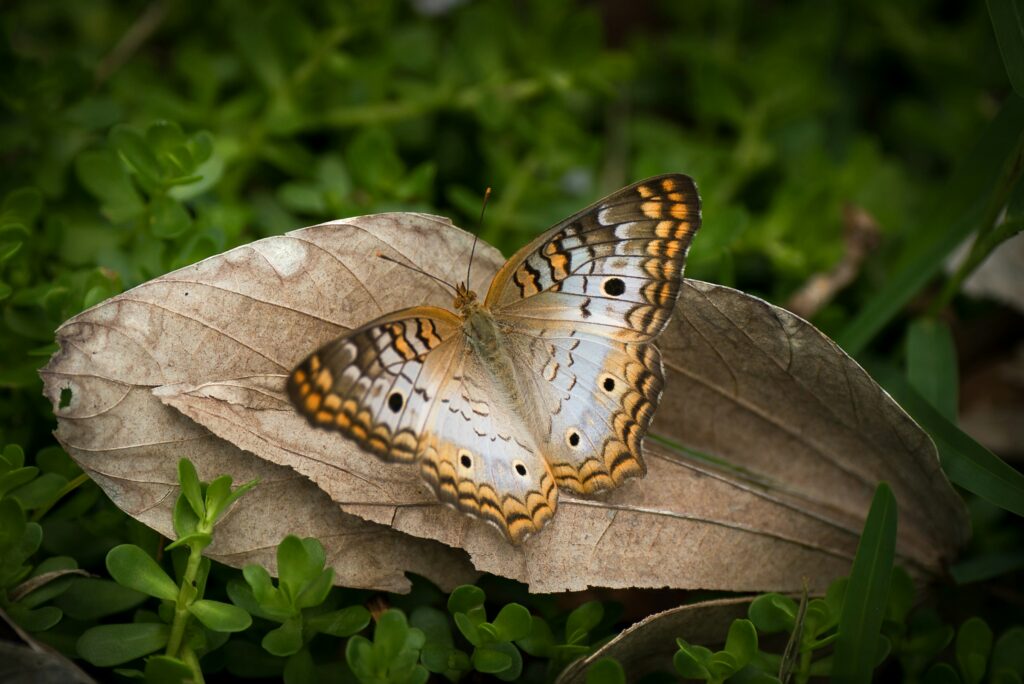
The bright colours and patterns on butterfly wings serve purposes like mate attraction, giving warning signals and predator avoidance. Most butterflies rely on cryptic colouration to hide from predators. They camouflage by matching their wing colour patterns with the substrate they sit on.
But as their once diversely coloured lush habitat teeming with vegetation transform into monotonous greens, yellows, browns and greys, the colour on butterfly wings becomes more of a threat than an advantage to their survival. Bright colours are easy to spot against a dull background. Only dull coloured individuals that can match the muted shades of their new surroundings survive. The world ends up with more dull coloured butterflies because they are the only ones that live to reproduce.
Why do butterflies need colours?
In butterflies, the wings are the most conspicuous feature of the body. The colour, pattern and structure of their wings serve several purposes ranging from mate attraction and thermoregulation to predator avoidance with warning colouration and camouflage.
Sexual selection acts on butterfly wing colour and pattern depending upon what the other sex prefers. Bright bold colours evolve in butterflies to warn predators of their distasteful or toxic nature. Most times both sexual selection pressures and selective forces acting on evolution of warning signals coincide. That which survives best in nature is preferable to females.
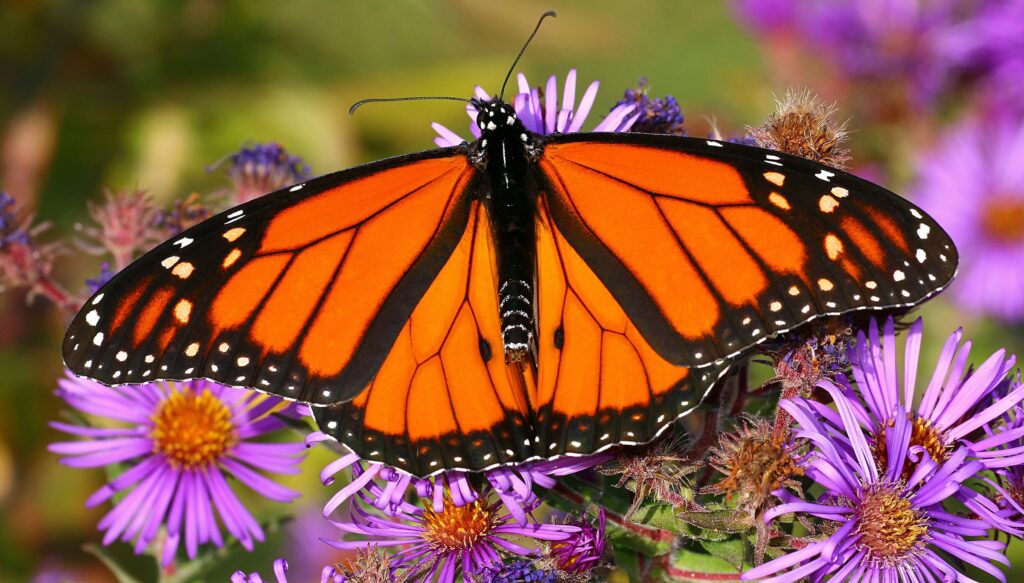
Due to phenomenons like aposematism, Batesian and Müllerian mimicry both unpalatable and palatable butterflies use bright colours to signal difficulty of capture to predators.
Butterflies are ectothermic by nature, depending on external heat for regulation of body temperature. Dark wing colours evolved in cool forested environments since dark colours absorb more heat and are useful for thermoregulation.
Habitat characteristics however exercises the strongest selection pressure since the environment decides what persists and what doesn’t. That is why most butterflies show cryptic colouration, blending perfectly well against the backdrop of their surroundings. But camouflaging doesn’t necessarily mean that butterflies will have to be of muted shades. Old growth tropical forests have a large assortment of substrates like mosses, barks, patterned leaves, colourful stones and decaying leaves, that are intricately patterned with complex colour variations. These surfaces offer variety for butterflies to match their wing colour patterns to. Thus, even the most cryptically coloured butterfly in a tropical forest shimmer in hundreds of shades of colour.
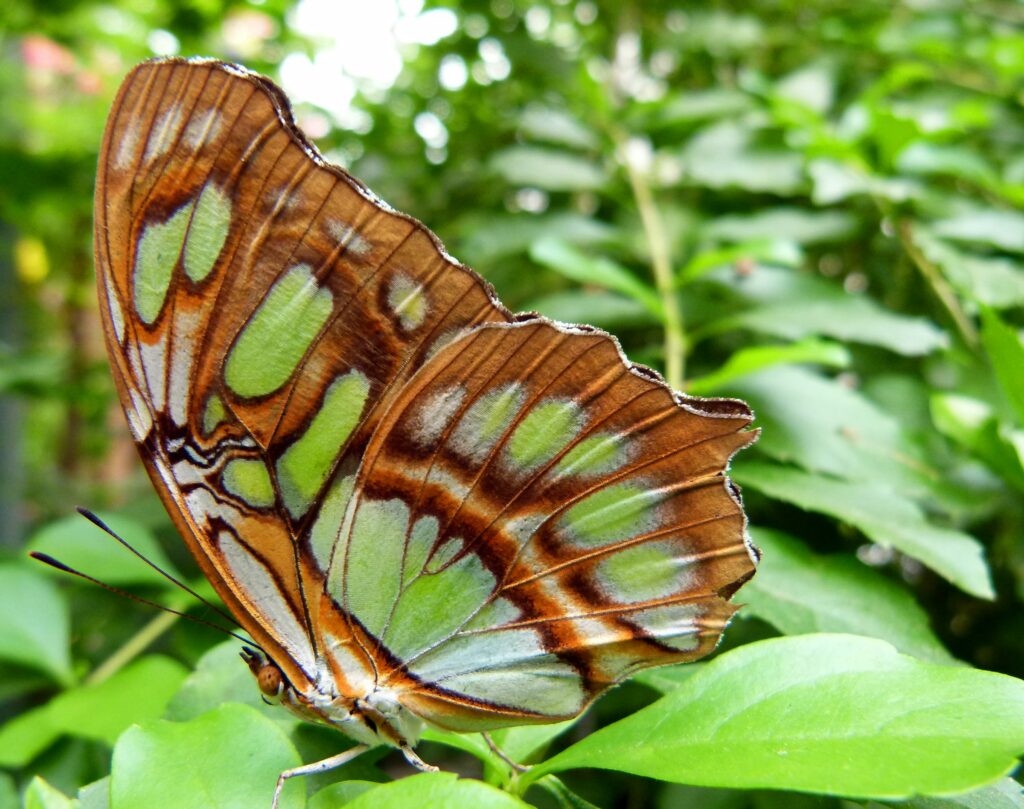
Deforestation, changing habitats and a glitch in predator avoidance strategies of butterflies
Butterflies have four major types of anti-predator strategy – camouflage, transparency, wing eye spots and warning colours.
Dark and transparent wing colour serves to camouflage butterflies well in the low light conditions found under forest canopies.
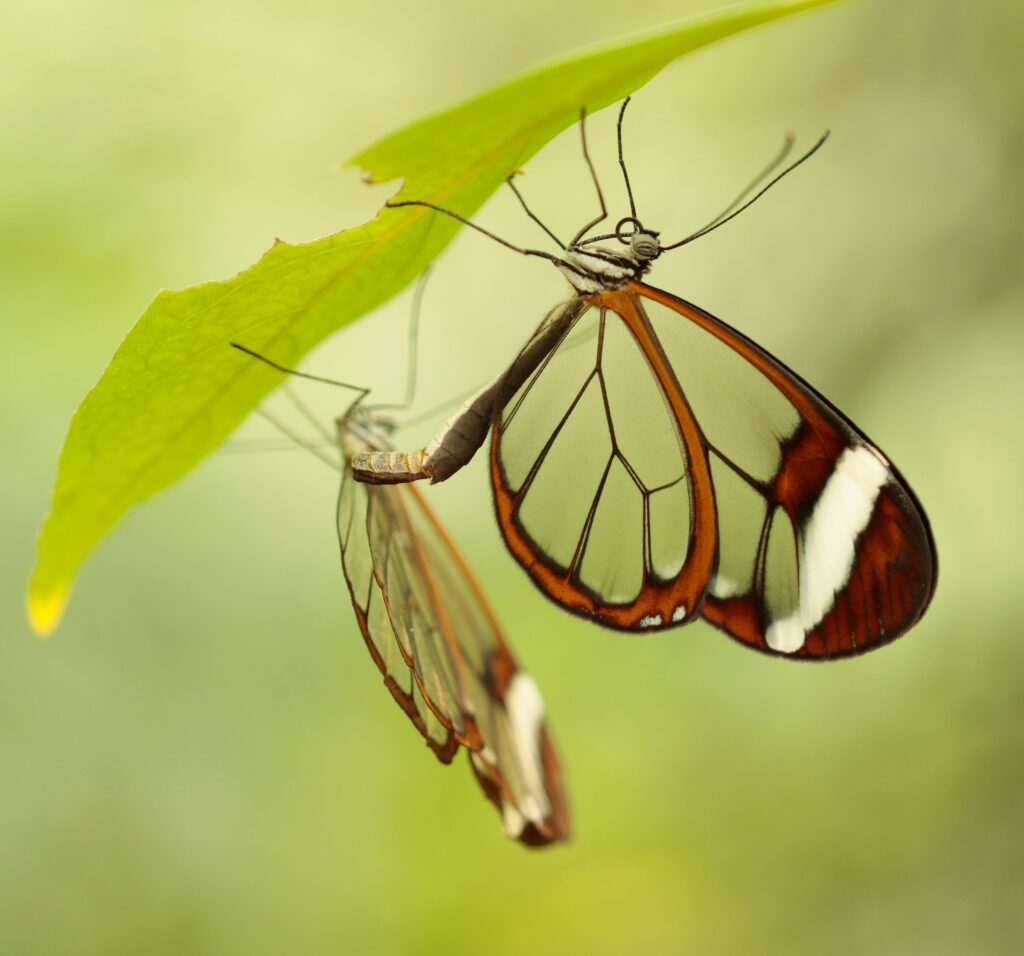
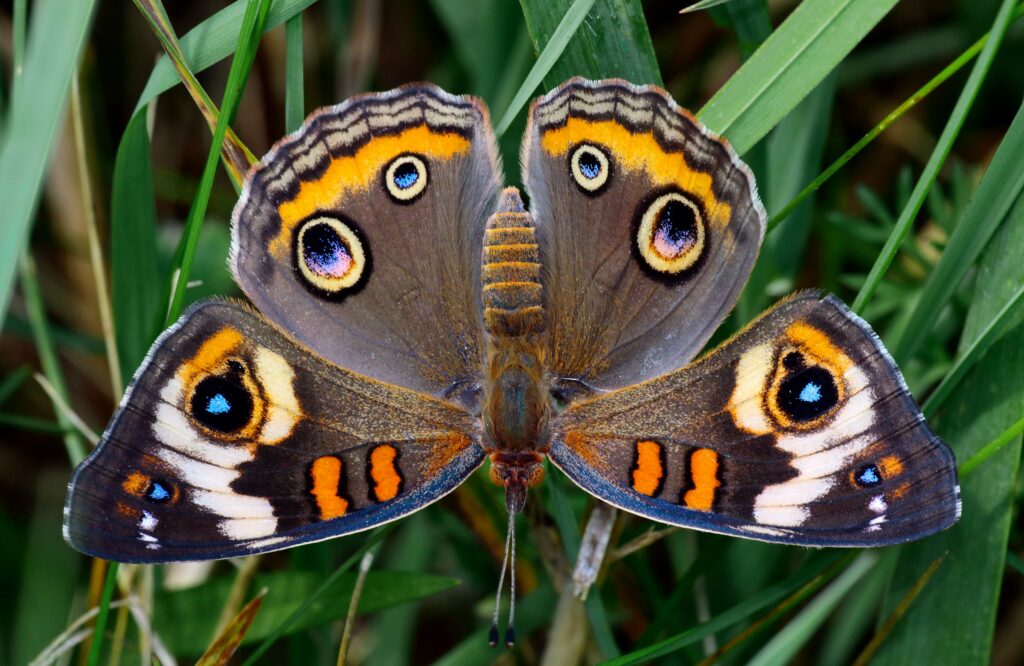
Even wing eye spots are more common in undisturbed and intact old growth forests. When a predator is too close for escape, butterflies flash the eye spots on the dorsal side of their wings, startling predators by mimicking larger animals that are a threat to the predator itself. Eye spots are often located on the fringes of the wing and redirects predator attention away from vital parts of the body like the thorax or head. However, out in the open with no foliage to create the illusion of a larger animal hiding in the thicket, eye spots are but a “handicap” drawing unnecessary attention.
Visual predators learn to associate bright warning colouration found in unpalatable butterflies with unpleasant experiences. This learnt behaviour prompts predators to avoid them in the future. However, when habitats change new predators that are naive to all this knowledge take entry. Warning colours are of no avail in preventing predation in the short term as it takes time for new predators to learn the association.
Camouflage, however, is the most common predator aversion strategy among butterflies in the tropics.
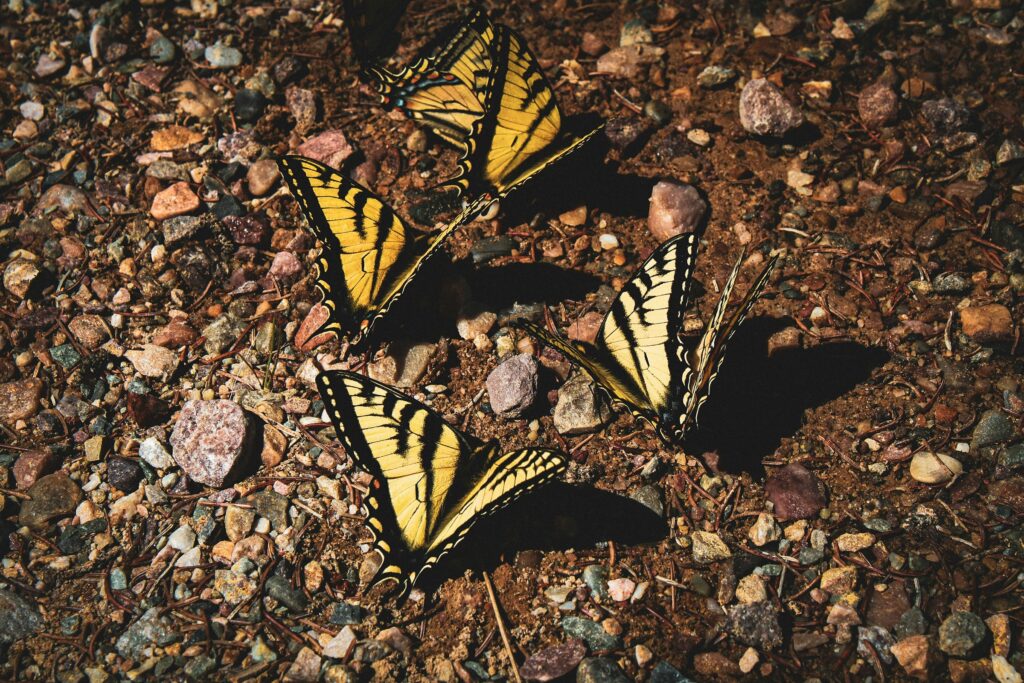
Dull coloured cryptic wing patterns fare fairly well in both forested and disturbed areas.
Colourful conspicuous butterflies are the first to disappear in deforested areas. Butterfly wings show a dip in colour saturation as old growth forests face deforestation.
Predator aversion strategies that took thousands of years to evolve in a lush environment fail to function under changing habitats. Once successful strategies, now they gradually disintegrate and demand evolution of novel techniques tailor-made for a new environment.
Deforestation and drastic habitat change dilute years of adaptive evolution
Deforestation removes tree cover allowing more light to come in. Rise in incoming radiation create heat raising body temperatures of dark coloured butterflies. Evolving under cool forest canopies, the hot open patch is unsuitable for their survival. Due to higher light exposure, dark coloured butterflies are quicker to spot, and they become easy targets for predators. Lighter coloured butterflies predominate open deforested habitats.
Warning colours and bold colour patterns that have evolved in butterflies for predator aversion are maintained because predators perpetually learn to avoid such colour patterns on butterfly wings after years of adaptive coevolution. Disturbance and habitat degradation also effect predator species which are lost from the area and years of learnt behaviour are also lost with them. Naive predators make their entrance, attacks the butterflies they have no knowledge about, leading to increased death of the more conspicuous species sparing only the dull coloured well camouflaged ones that succeed to survive.
Even if camouflage is the dominant strategy for predator aversion it doesn’t necessarily mean that butterflies will be dull coloured. In tropical forests there is ample variety of substrates, like mosses, barks, patterned leaves, colourful stones, decaying leaves and other colourful surfaces, to match their wings to. Whereas, in degraded landscapes this very chromatic variety is lost, the result being dull wing colours in the resident butterflies. Colour and intricate patterns which took years of natural selection to attain an exuberant palette are lost in the blink of an eye as deforestation spread like a disease on the planet.
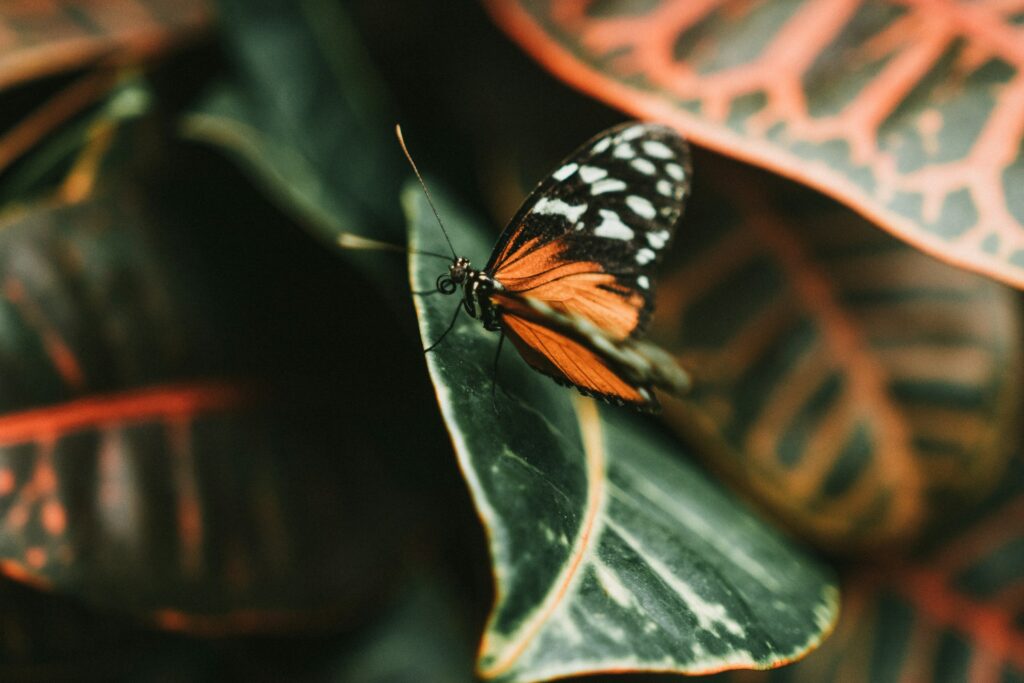
Deforestation is not only degrading landscapes but also taking away colours from our world
Butterflies depend on plants for their wing colours. The raw material for synthesising the pigments is derived from particular species of host plants. So, when a habitat is destroyed and the plants along with it, the source for the butterfly wing colour is lost too.
Those butterflies that are brightly coloured with bold patterns on their wings are the ones that are generally unpalatable. This phenomenon is called Aposematism. The larval stages of aposematic butterflies feed on poisonous host plants from which they derive their toxic chemical compounds. When these plants are lost due to deforestation and habitat degradation, their lifecycle is cut short. Their numbers decline and they gradually disappear.
As for butterflies with cryptic colouration, when forests colourfully rich with biodiversity gradually turn into drab degraded lands or monochromatic monoculture farms, the background against which to camouflage is very different from the one that had existed before. Only the duller ones make it against the new backdrop.
Natural Selection at play
For students of evolutionary biology, the story of industrial melanism in the peppered moth is perhaps the most famous example on Darwin’s theory of Natural Selection. Here in our deforested degraded world, we have another “Natural Selection” event unfolding which is characterised by ecological discolouration of butterfly wings.
For butterflies under the present environmental setting, survival means dialing down on bright bold colours. The only option left is to paint their wings in dull muted shades that blends well with the bland landscape they are living in.
In nature only the fittest survive. It is a race against selective forces that decide who shall emerge winner at the end. The criteria for selection in this particular scenario are made by man himself. Knowingly and unknowingly, we have created a monochromatic environment which is forcing our winged companions to say goodbye to their wonderful colours.