
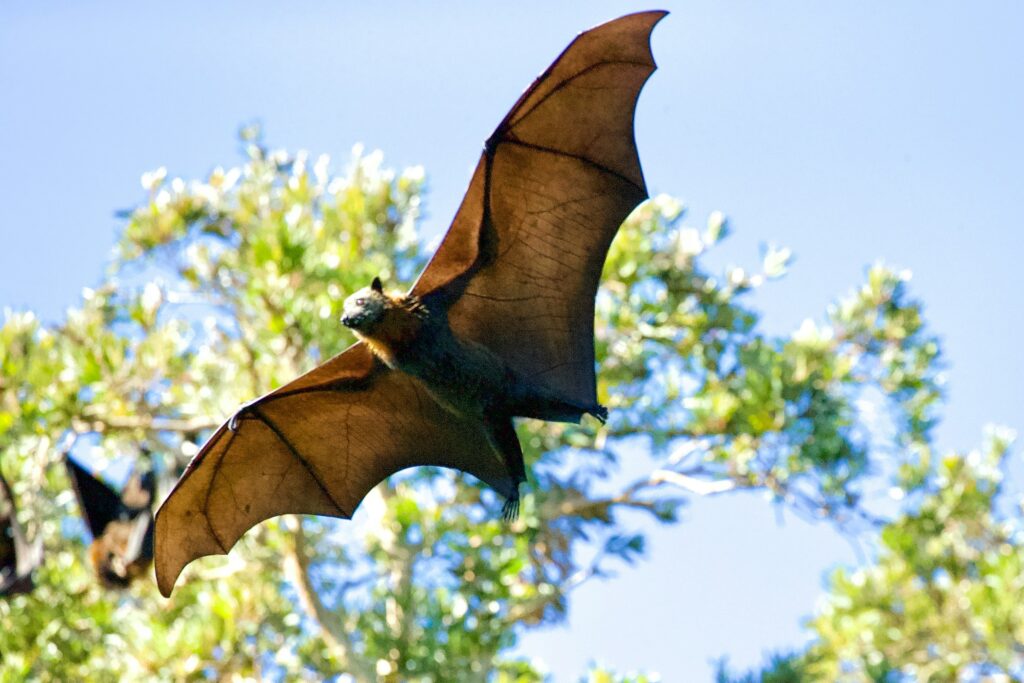
Bats are a storehouse of fatal viruses like Ebola virus, Nipah virus, Corona viruses, Marburg virus, Hendra virus and rabies. But bats carry these deadly viruses without getting sick. How they do it has puzzled scientists for many years. Research in the field is gradually solving many mysteries surrounding this flying mammal of the dark.
It has been more than 5 years since the COVID-19 pandemic yet many of us are still struggling to recover from the crisis. For some of us it is about lost time, opportunities and loved ones for others it is more about deteriorated physical and mental health. But the most important thing the pandemic has taught us is that we are not prepared to combat another or at least not without severe losses. So, most naturally resurging news of another Nipah virus outbreak is sufficient to make cold sweat trickle down our spine.
The 2019 pandemic has done an ingenious job at reestablishing our inherent fear of bats. For, if you remember correctly, the SARS-CoV-2 virus was supposed to have spilled over, directly or through an intermediate host, from bats.
By now we are very much certain that bats are a storehouse of deadly pathogens starting with the likes of Ebola virus, Nipah virus, Corona viruses, Marburg virus, Hendra virus and rabies. The pandemic simply added another strong argument to the already long list of – “Reasons why we need to hate on bats?”
However, the burning question remains – How do bats carry so many fatal viruses without getting sick? It has puzzled both scientists and the common man alike for years. But we are seeming to be nearing the answer more and more as new research outcomes pop up. Let’s take a look at what we know so far.
Diversity in bats translates into virus diversity
Why so many different viruses? The answer may lie in bat species diversity. There are over 1400 species of bats which makes up about 20% of mammalian biodiversity. Such high bat species diversity ensures that diversity of viruses in them never fall far too behind.
Bats go back a long time on the evolutionary calendar
Bats have been on this planet for over 50 million years. Such a long time-span has given them plenty of opportunity to evolve alongside deadly pathogens including viruses. Coevolution of the host and the parasite for long periods results in a type of understanding at the adaptive level. We might say bats have got adapted to the presence of these viral guests within their system to the point where they have learnt to ignore them.
Sticking close has its advantages and disadvantages
Bats are social animals and live in large colonies. They groom each other, feed each other, the ladies help one another during childbirth and basically live in social harmony like any other community would. But such close contact in such large numbers is the perfect recipe for rapid spread and maintenance of viruses. Even if an infected individual successfully clears a virus from its system constant re-exposure to the viruses from other members in a crowded colony creates perpetual infection cycles. This enables the viruses to stay within the population.
For bats all troubles take flight with flight
Bats are the only true flying mammals. Flight in bats confers them with many advantages unavailable to any other mammal. Flight enables bats to explore new habitats, access food resources spread across large areas, evade predators and maintain population continuity over a wide biogeographic region. However, flight is also the reason bat viruses spread so quickly so far.
Flight has another curious benefit for the small mammal. It helps prevent the resident viruses from wreaking havoc on the animal protecting it from a full-fledged viral infection. You must be left wondering – how? Here’s the explanation. Flight raises the body temperature of a bat to 38° – 41°C and the metabolic rate by 15-16 times its resting rate. The rise in core body temperature is similar to a ‘fever’ in humans. If you remember correctly, fever makes the internal environment unsuitable for viral replication, kick-starting the immune system at the same time to take further action against the pathogen.
A constant feverish state prevents viruses from replicating and increasing in numbers. The raised metabolic rate on the other hand releases reactive oxygen species as metabolic by-products which can cause damage to genetic materials. The bat genome is protected from this damage by their very own DNA repairing enzymes whereas the viral genetic material is left unguarded. So, the high metabolic rate of flight does the trick at limiting virus numbers by inflicting damage on viral genetic materials.
For bat viruses ignorance is bliss
Bats have an amusing immune response to viral pathogens. They ignore them altogether which allows them to stay fit despite carrying a storehouse of viral pathogens within their systems. Bats control inflammation, which is the primary symptom of a viral infection, with iron fists.
If you can recall most patients died during the COVID-19 pandemic from multiple organ failure stemming from inflammation. It was the immune system acting up to combat the viral load ultimately damaging the body’s own cells in the process.
Bats can reduce the production of inflammasomes (large protein clusters) that control release of other chemicals associated with inflammation. Interferons are chemical messangers that mediate the process of inflammation after a virus enters the body. Some interferons are kept in an always on mode even when viruses are absent. This immediately alerts the system when a virus enters and enzymes that damage viral genetic materials are released. By controlling inflammation – in other words not making a scene about the presence of the pathogen – bats are spared from the sickness of a viral infection.
Bats self-vaccinate themselves with small viral genetic sequences
Often viruses insert a part of their genetic material into the genome of the host cell. These sequences usually stay dormant sometimes reactivating when in a pluripotent stem cell. Then the sequence replicates along with the rest of the bat genome and produces the proteins they encode. The interesting thing here is that bats do not restrict these viral sequences or the protein products. These materials serve as natural vaccines against other similar viruses.
Longevity is not always good news
Bats live longer compared to other mammals of similar body sizes. Some bats can live up to 40 years in the wild. It should be good news if one is blessed with a long life. But a long lifespan translates to more viral infections and disease transmission. Constant bombardment with viral loads train the bat immune system to deal with them strategically. The smart strategy here is viral tolerance allowing the virus to coexist within the bat body. When viruses live within the body rent free it leaves the door open for future rounds of infection and recurrence of zoonotic spillover events like the one that triggered the COVID-19 pandemic.
Bats are not the enemy, we humans are
Just because bats have so many viruses doesn’t mean they are the enemy here. Bats are unlikely to infect humans under a natural setting. You don’t usually have a bat poop on your head when you are outdoors. But it is likely if you visit a cave where bats roost. The problem here is human encroachment of natural habitats.
Diminishing natural habitats blurs boundaries between wild areas and human habitated areas. While we mustn’t fear bats, we must remember that they are integral part of our ecosystem. Insectivorous bats keep pest populations under control by feeding on them. Nectar feeding and frugivorous bats are important pollinators of many plants including cash crops. They are flying seed dispersers too, excreting seeds of fruits they feed on to far and wide places enabling plants to grow in new locations.
Also, we must be careful about what we eat. If we decide to bite on a half-eaten contaminated fruit dropped from a tree we are asking for trouble. Some cultures traditionally consume different types of animal meat, but we must be vigilant about where the meat comes from. After all, most bat viruses either spread from wet markets or from bushmeat consumption.